
A jammed door can turn a normal morning into a stressful problem fast. Whether you are locked outside your home, unable to secure a storefront, or dealing with an interior door that will not open, knowing how to unlock a jammed door starts with identifying what is actually stuck. The right response can protect your door, lock, frame, and budget. The wrong one can turn a simple repair into an emergency replacement.
Before trying anything, make sure you have permission to access the property. If there is a child, pet, vulnerable person, active safety hazard, or medical emergency on the other side, contact emergency services first. For any other situation, stay calm, avoid forcing the hardware, and work through the likely causes.
Find Out Why the Door Is Jammed
A door may feel locked even when the lock itself is working correctly. In the Bay Area, moisture, temperature shifts, older buildings, settling foundations, and worn hardware can all affect how a door sits in its frame.
Start by checking the simplest possibility: Is the deadbolt or latch fully retracted? A key may turn but still fail to move the lock mechanism far enough to clear the strike plate. On a knob or lever lock, the spring latch can bind against the frame when the door has shifted or is under pressure.
Look for visible clues without taking the lock apart. A door that rubs at the top, drags on the floor, or has uneven gaps around the frame may be out of alignment. If the key will not insert smoothly, the problem may be inside the keyway. If the key turns freely but the door will not open, the latch, deadbolt, strike plate, or internal lock components may be the issue.
Do not assume the door is simply stuck because it is old. Forcing a compromised lock can snap a key, bend a latch, split the jamb, or damage a multipoint locking system. Those repairs cost more than addressing the original problem carefully.
How to Unlock a Jammed Door Safely
If you are using the correct key and have legal access to the property, begin with gentle pressure rather than force. While turning the key or operating the handle, push the door inward and then pull it outward lightly. The goal is to relieve pressure on the latch or bolt. Do not lean your full weight into the door or kick it.
For a door that appears misaligned, lift slightly on the handle while you turn the key. This can temporarily raise a sagging door enough for the latch or bolt to clear the strike plate. If the door opens, inspect the hinges and alignment before the problem happens again.
If the key is difficult to turn, stop before it bends or breaks. Use a dry lock lubricant made for lock cylinders if one is available. Avoid oil-based household sprays, cooking oils, and thick grease. They may make the lock feel better briefly, but they collect dust and grit inside the cylinder, often creating a worse problem later.
If the key is inserted but will not turn, remove it carefully and inspect it for damage. A bent, worn, or poorly copied key can catch inside the cylinder. Try a spare original key if you have one. Do not twist a damaged key harder in an effort to make it work. A broken key inside the lock usually requires professional extraction and may delay access even further.
For an interior privacy lock, check whether the door has an exterior emergency release feature. Many bathroom and bedroom privacy knobs have a small release opening designed for the manufacturer’s approved emergency tool. Use that feature only as intended and only for a door you are authorized to open. If it does not release easily, do not drill, pry, or dismantle the handle.
Avoid improvised entry methods such as credit cards, wire hangers, screwdrivers, or force against the frame. These methods can damage weatherstripping, bend latch parts, scar the door, weaken the jamb, and create a security problem after the door is opened. They are especially risky on deadbolts, commercial doors, electronic locks, and fire-rated assemblies.
If the Door Opens, Do Not Ignore the Cause
Opening the door is only the first part of the job. Test it several times while standing on both sides. Watch whether the latch enters the strike plate smoothly and whether the deadbolt extends and retracts without resistance.
A door that works only when lifted, pulled, or pushed needs adjustment. Loose hinges may need tightening, worn hinges may need replacement, and a strike plate may need repositioning. If the lock is intermittently sticking, the cylinder, latch, or internal mechanism may be worn. Repairing the cause now can prevent a late-night lockout or an unsecured property later.
When to Stop and Call a Locksmith
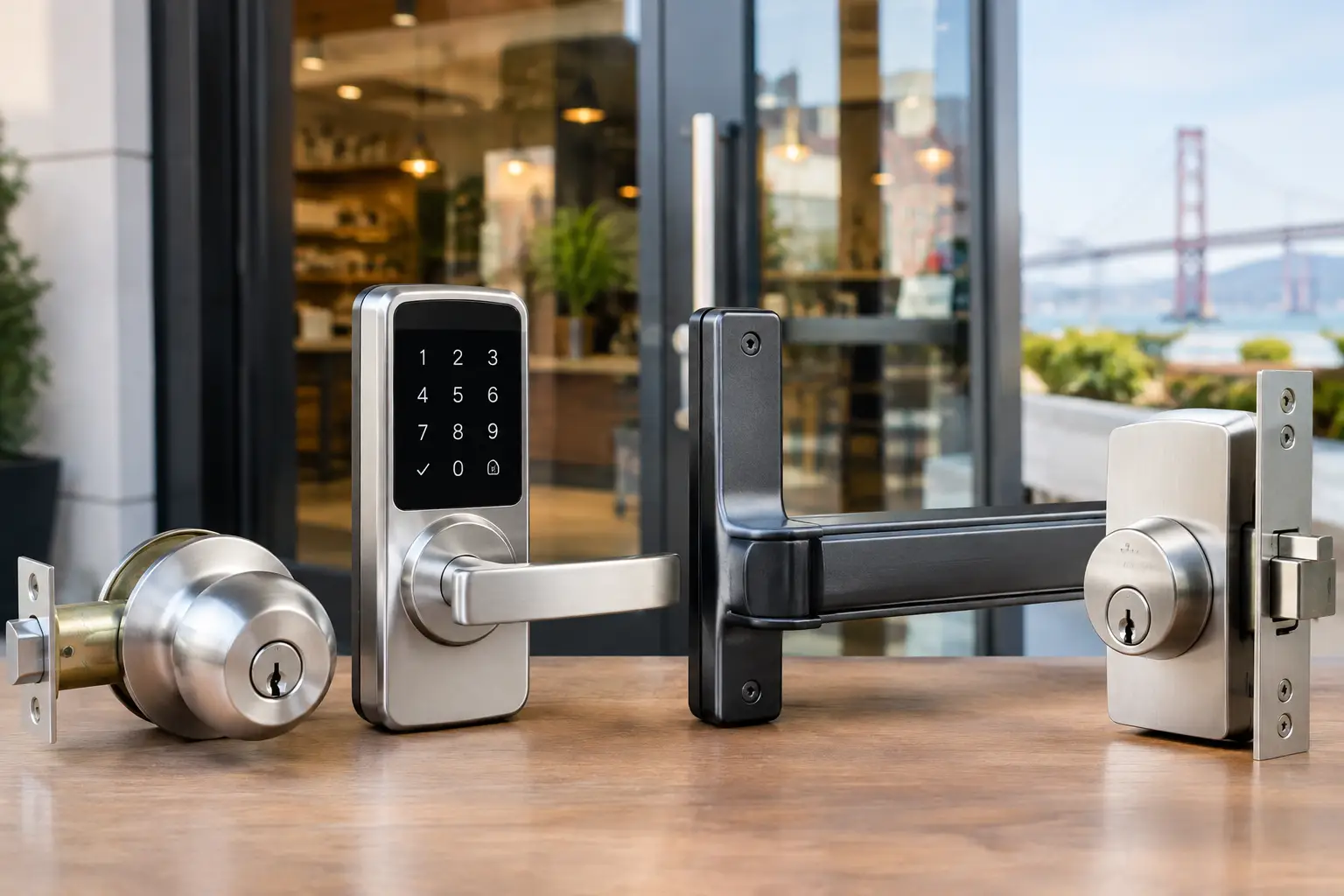
There is a clear point where careful troubleshooting should end. Call a qualified locksmith if the key is broken, the lock cylinder spins, the deadbolt will not retract, the handle is loose, the door frame is splitting, or the hardware is electronic or commercial-grade. These signs often mean the issue is inside the lock or in the door alignment, not something that can be fixed with more pressure.
You should also call for help when a jammed exterior door prevents you from securing your home or business. Leaving a door partly open, removing hardware without the right replacement parts, or damaging the frame can expose the property to theft, weather, and further repair costs.
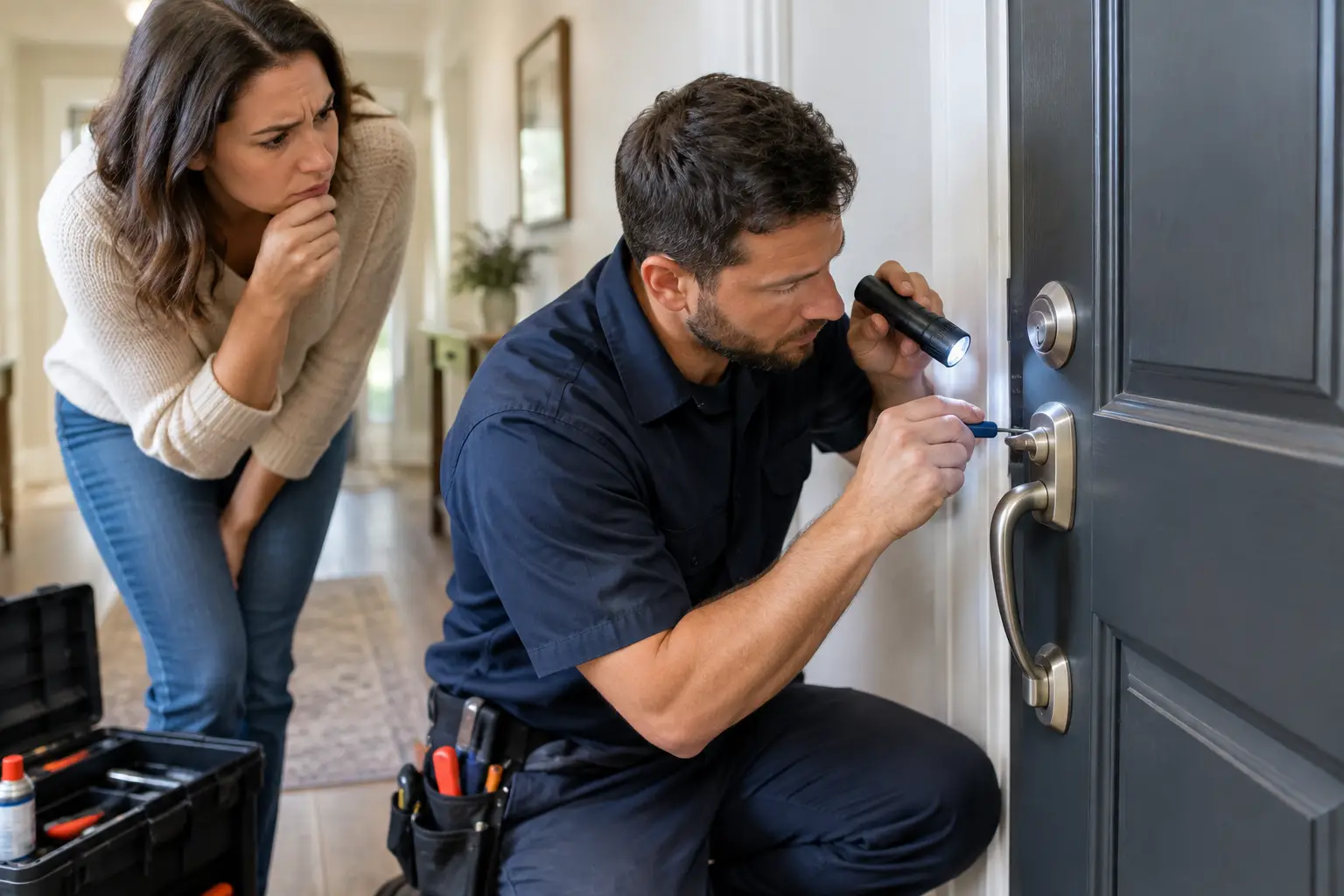
A mobile locksmith can diagnose the problem on-site and determine whether the existing lock can be repaired, re-keyed, adjusted, or replaced. The best solution depends on the condition of the door and hardware. A simple strike adjustment may be enough in one case, while a failed deadbolt or damaged commercial latch may require new components.
For residential, commercial, and emergency access issues in Daly City, San Francisco, and nearby Bay Area communities, YES Locksmith sends licensed, bonded, and insured technicians directly to the property. The goal is to restore access and security without unnecessary damage to your existing door or hardware.
Prevent Another Jammed Door
Doors rarely jam without warning. Pay attention when a key starts catching, a handle feels loose, or a door needs extra pressure to close. Small changes in operation are often the earliest sign of alignment trouble or failing hardware.
Keep exterior door tracks, thresholds, and strike areas clear of dirt and debris. Check hinge screws periodically, especially on frequently used doors and heavy solid-core or commercial doors. If screws no longer hold firmly, the frame may need professional repair rather than a quick tightening.
Use properly cut keys and replace bent or heavily worn copies. For rental properties and businesses, keep current access records and have locks re-keyed after tenant turnover, employee departures, lost keys, or security concerns. Preventive service is usually less disruptive than responding to a lockout during a busy workday or after hours.
A jammed door is frustrating, but it does not have to become a damaged door. Treat resistance as a warning, use only gentle and authorized measures, and bring in a trained professional when the lock or frame is fighting you. Fast, careful help protects more than access – it protects the security of the property behind the door.