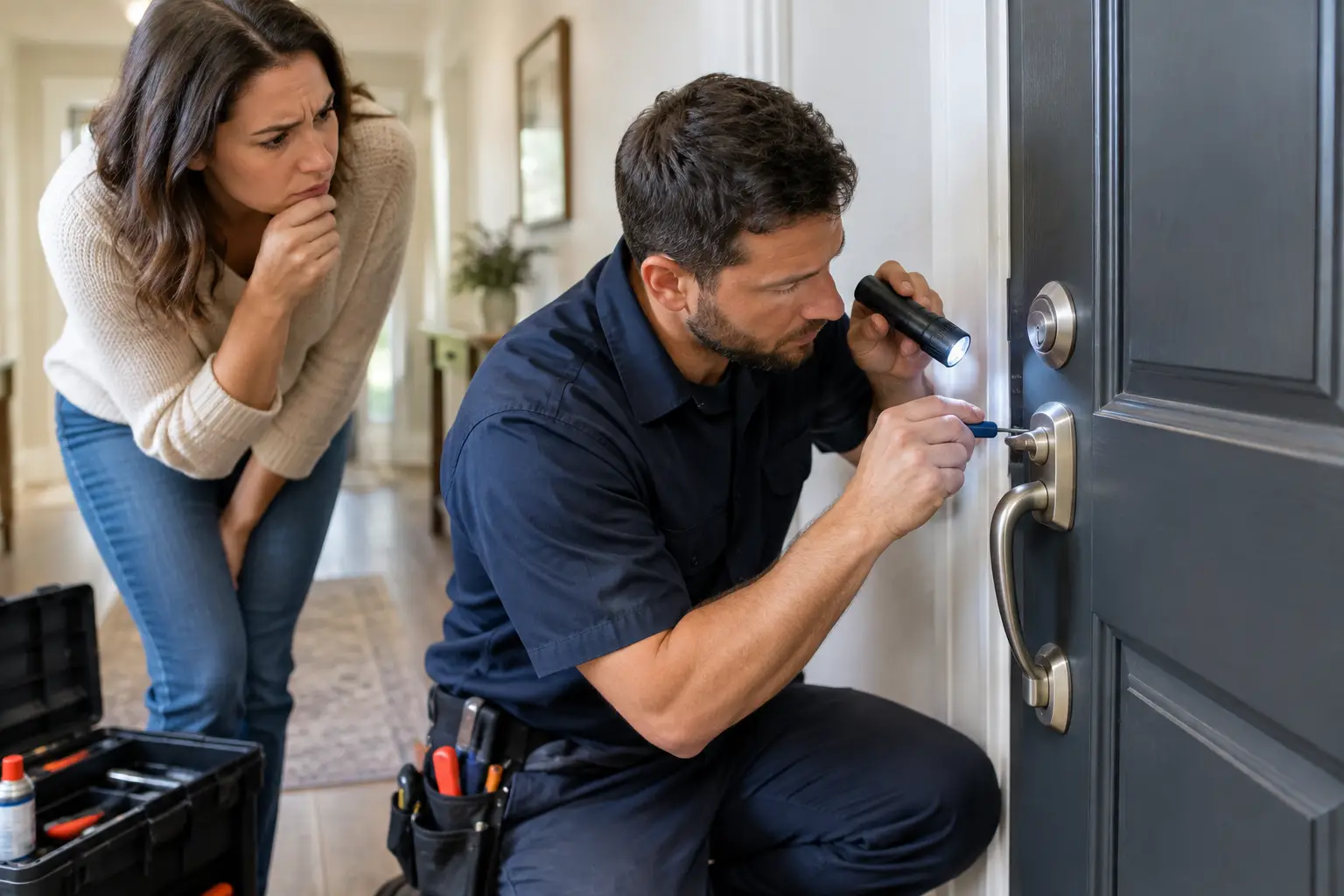

A commercial lock failure can stop business before the first customer walks through the door. A jammed storefront deadbolt, a former employee who still has a key, or a weak office lock can create an immediate security problem. Choosing the best commercial door lock types means matching the hardware to your door, traffic level, employee access needs, and the value of what is behind it.
For Bay Area business owners and property managers, the right answer is rarely the cheapest lock on the shelf. Commercial doors take repeated use, weather exposure, attempted forced entry, and constant key handling. The lock should protect the property without turning normal opening and closing into a daily headache.
Best Commercial Door Lock Types for Different Businesses
The best lock for a medical office is not always the best choice for a restaurant back door or a retail storefront. Start with how the entrance is used, who needs access, and what happens if the lock fails.
Commercial deadbolts for exterior doors
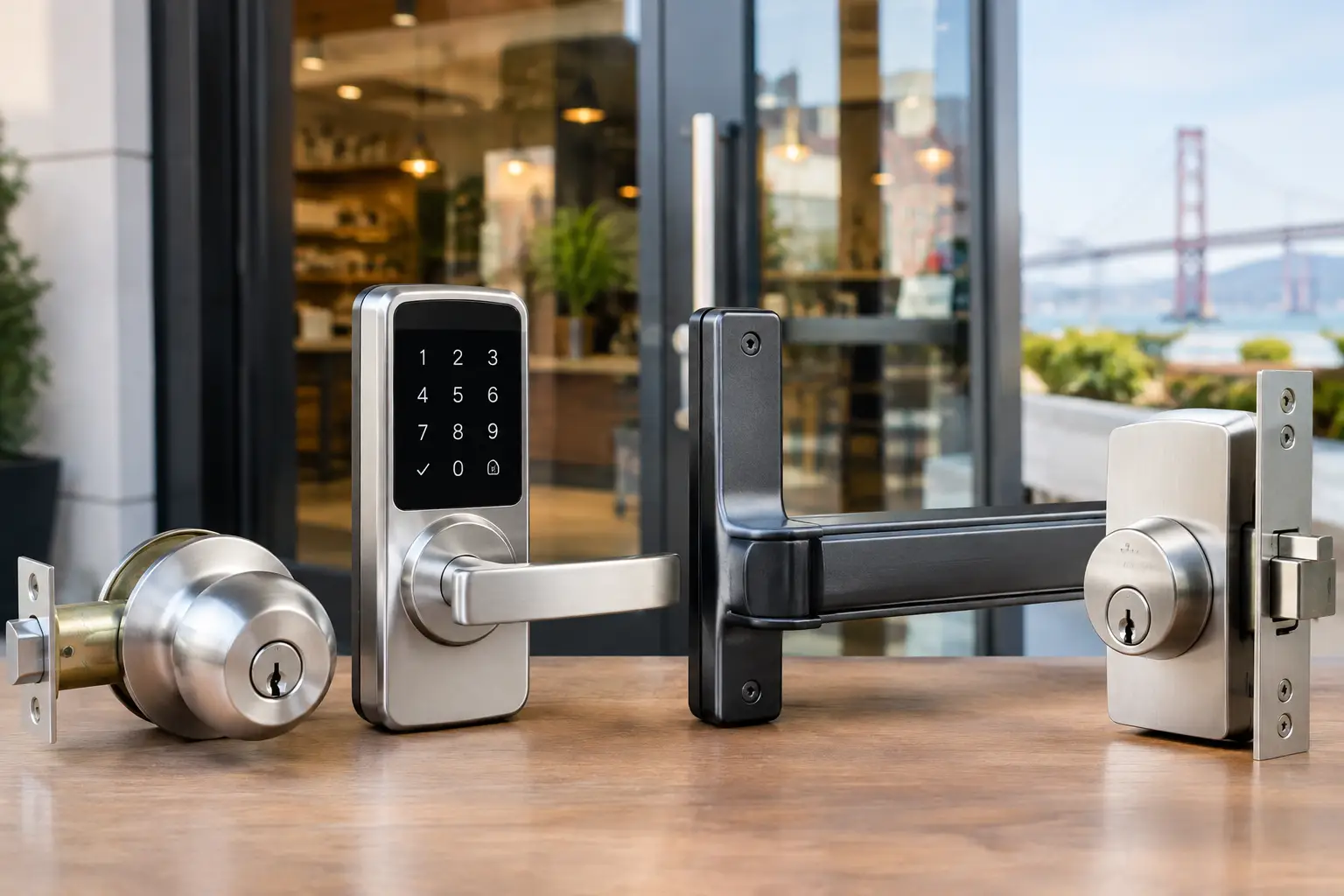
A commercial-grade deadbolt is a dependable choice for many exterior doors, especially offices, small retail spaces, storage rooms, and rear employee entrances. Unlike a spring latch, a deadbolt extends a solid bolt into the door frame, helping resist forced entry when it is installed correctly.
Single-cylinder deadbolts use a key outside and a thumb turn inside. They work well on doors without nearby glass. If a door has glass within reach of the interior thumb turn, a double-cylinder configuration may be considered, but local fire and building codes must come first. Occupants need to be able to exit safely during an emergency.
Deadbolts are straightforward, durable, and familiar to employees. Their limitation is access management. When keys are copied, lost, or not returned, the business may need rekeying or a full lock change to regain control.
Grade 1 cylindrical lever locks for high-traffic doors
Cylindrical lever locks are common on office suite doors, interior commercial doors, employee entrances, and light-to-medium traffic locations. The lever handle is easier to operate than a knob, which is helpful when employees are carrying supplies or need accessible hardware.
For commercial use, look for ANSI Grade 1 hardware where the door sees frequent traffic or needs stronger resistance to wear and forced entry. Grade 2 can be appropriate for lighter-duty applications, but installing residential-grade hardware on a busy business door often leads to loose levers, latch failures, and premature replacement.
A lever lock is often paired with a deadbolt on exterior doors. The lever handles everyday latching, while the deadbolt provides an additional layer of security after closing. This combination is practical for many Bay Area offices and storefronts.
Mortise locks for heavy-duty commercial entrances
Mortise locks are built into a pocket cut into the edge of the door. They are common on older commercial buildings, glass-and-aluminum storefront systems, hotels, institutional properties, and doors that receive heavy daily use.
Because a mortise lock body can combine the latch, deadbolt, trim, and cylinder in one assembly, it provides strong, durable operation. It can also support more advanced functions, such as controlled entry from one side and free exit from the other.
The trade-off is installation and repair complexity. Mortise hardware must fit the door preparation precisely. Replacing it with an incompatible lock can leave gaps, weaken the door, or create latch alignment problems. When a mortise lock begins sticking or the key turns inconsistently, address it early rather than forcing the mechanism until it fails during a lockout.
Panic bars and exit devices for safe emergency exit
Panic bars, also called exit devices, are designed for doors where occupants need a quick, simple way to exit. A person pushes the horizontal bar, and the door unlatches. These are often required for retail spaces, assembly areas, schools, warehouses, and other commercial occupancies based on local code and occupant load.
Exit devices are primarily life-safety hardware, not just security hardware. They must allow free egress while preventing unauthorized outside entry. Depending on the door and use, exterior access may be controlled by a key cylinder, lever trim, keypad, or electronic credential.
Do not disable, tape over, or improvise a repair on a panic bar. A door that cannot open properly in an emergency creates serious risk for employees and customers. A locksmith can assess whether the issue is in the device, strike, door closer, hinges, or frame alignment.
Keypad locks for controlled staff access
Keypad locks replace or supplement physical keys with a PIN code. They are useful for employee-only doors, stockrooms, small offices, rental common areas, and service entrances where several authorized people need access.
The main benefit is control. When an employee leaves, their code can be removed without collecting every key or immediately rekeying the door. Many models also allow temporary codes for contractors, cleaners, or delivery teams.
However, keypad locks need disciplined management. Shared codes spread quickly, especially in high-turnover workplaces. Choose a system that allows individual user codes, change codes promptly when staffing changes, and keep a mechanical key override or approved backup access plan. Battery-powered models also need scheduled battery replacement, not a last-minute response after the lock goes dead.
Smart locks and electronic access control
Electronic locks can use keycards, fobs, mobile credentials, PINs, or a combination of methods. These systems are a strong option for businesses that need an audit trail, multiple access schedules, or rapid changes to employee permissions.
For example, a property manager may want maintenance staff to access several buildings without carrying a large ring of keys. A business owner may want to see when the back door was opened or restrict access after business hours. Electronic access systems can make those tasks easier when they are properly selected and maintained.
Still, electronics are not automatically better for every door. They require reliable power or batteries, correct door alignment, appropriate weather rating, and a plan for outages or failed components. A basic mechanical lock may be the more dependable choice for a low-traffic storage room with only one or two keyholders.
What Matters Beyond the Lock Itself
A strong lock cannot compensate for a weak strike plate, loose frame, warped door, damaged hinges, or misaligned closer. Commercial door security is a system. The bolt or latch must enter the strike correctly, the frame must support it, and the door must close fully every time.
Pay close attention to exterior doors that require lifting, pulling, or slamming before they lock. That is not normal wear to ignore. Misalignment puts stress on lock components and can leave the door partially secured. It also increases the chance of a lockout when the key no longer turns smoothly.
Key control matters just as much. Keep a written record of who has keys, limit unauthorized duplication, and rekey promptly after employee turnover, tenant changes, lost keys, or a break-in. Rekeying changes the pins inside the existing lock so old keys no longer work. If the hardware is in good condition, it is often a cost-effective way to restore security.
How to Choose the Right Commercial Lock
Before selecting hardware, consider the door material and construction. A hollow metal door, solid wood door, aluminum storefront door, and glass door each require compatible hardware. Next, consider traffic. A door used hundreds of times a day needs a different solution than a manager-only office door.
Also think about access control before an emergency happens. If your business has frequent staffing changes, individual codes or credentialed access may reduce the risk and cost of repeated rekeying. If reliability and simplicity are the priority, a high-quality mechanical lock with controlled keys may be the better fit.
Life-safety requirements should always guide decisions on exit doors. A locked door that protects inventory but prevents safe egress is not an acceptable solution. Commercial hardware must balance controlled entry with safe, code-compliant exit.
For a new installation, damaged lock, employee access change, or urgent commercial lockout, YES Locksmith can evaluate the door on-site and recommend hardware that fits the property instead of forcing a one-size-fits-all fix. The right commercial lock should let your business open on time, close securely, and stay protected when you are not there.