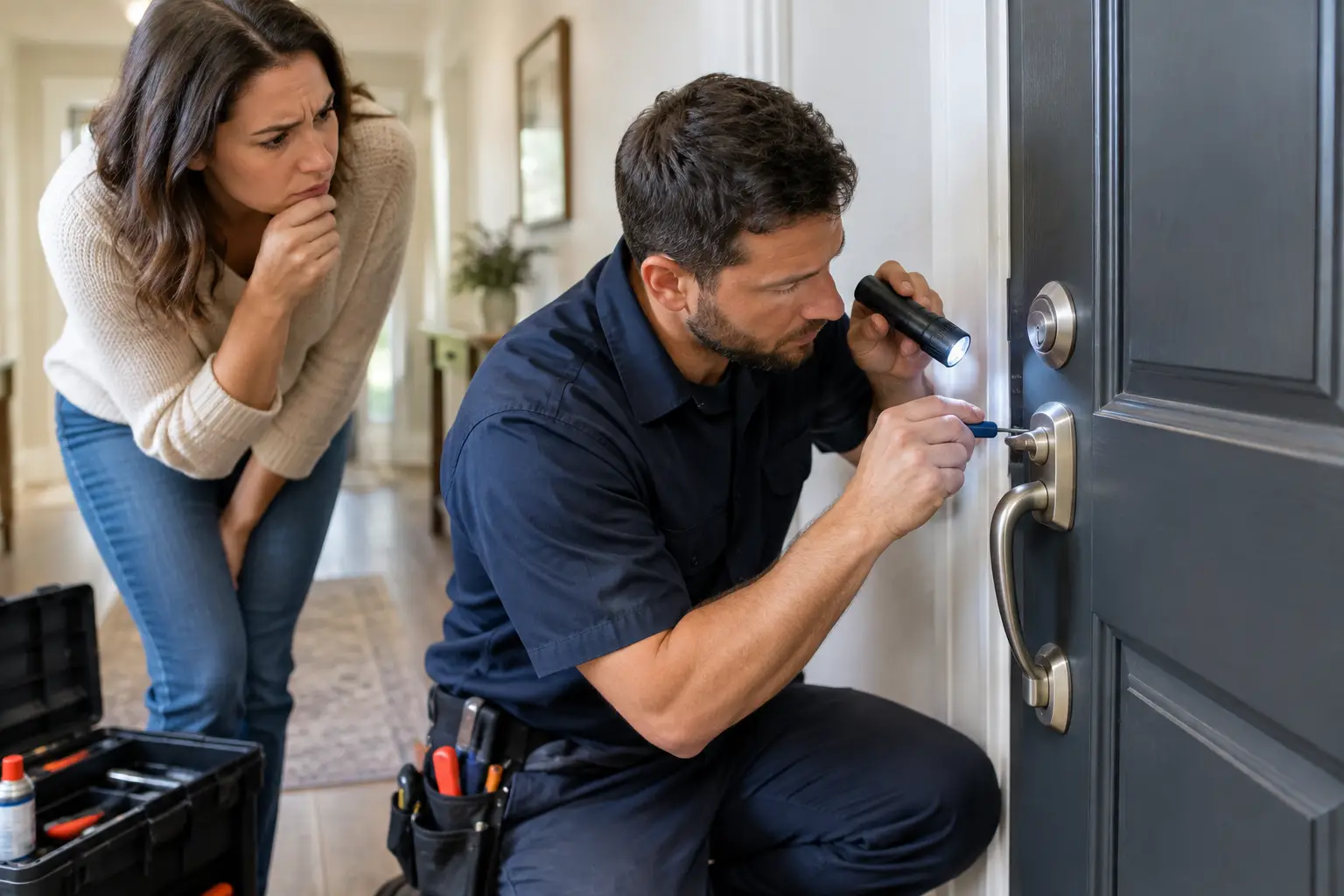
A deadbolt that sticks can turn a normal trip outside into a lockout risk. Before you force the key, twist the thumbturn harder, or slam the door, take a moment to identify the cause. Knowing how to fix sticky deadbolt problems starts with one simple question: does it stick when the door is open, when it is closed, or both?
That answer helps separate a minor maintenance issue from a door alignment or lock failure that needs professional attention. Forcing a deadbolt can bend internal parts, snap a key, damage the strike plate, or leave your home or business less secure than it should be.
Start by Testing the Deadbolt With the Door Open
Open the door and extend and retract the bolt several times using both the key and the interior thumbturn. Do this slowly. Pay attention to whether the movement feels rough, stiff, loose, or inconsistent.
If the deadbolt works smoothly with the door open but becomes difficult once the door is shut, the lock cylinder is usually not the main problem. The bolt is likely rubbing against the strike plate or failing to line up with the hole in the door frame.
If it sticks even with the door open, the issue may be dirt inside the keyway, dry moving parts, a worn key, loose mounting hardware, or a failing internal mechanism. This distinction matters because spraying lubricant into an alignment problem will not solve it.
Clean and Lubricate the Lock Correctly
Dust, metal wear, and moisture can make a deadbolt feel rough over time. This is common in exterior doors exposed to Bay Area fog, rain, temperature changes, and everyday use.
Use a lock-specific dry lubricant, such as graphite or a PTFE lock lubricant. Apply a small amount to the keyway according to the product directions, then insert and remove the key several times. Turn the key gently to distribute the lubricant through the cylinder.
Avoid soaking the lock with household oil, grease, or general-purpose penetrating sprays. These products may make the lock feel better for a short time, but they can collect dirt and leave a sticky residue inside the cylinder. Too much lubricant of any kind can also create problems.
For the bolt itself, extend it with the door open and wipe away visible dirt using a clean, dry cloth. If the bolt has corrosion, pitting, or deep scoring, cleaning alone may not be enough. A damaged bolt can catch inside the strike plate and may need repair or replacement.
Check the Key Before Blaming the Lock
A worn, bent, or copied key can make a healthy deadbolt seem defective. Compare the key you normally use with a spare key that is known to work. If the spare turns smoothly, stop using the worn key and have a new key made from the better original.
Do not try to straighten a bent key and continue using it. Bent keys are more likely to break inside the lock, turning a manageable repair into an urgent lockout call.
How to Fix a Sticky Deadbolt Caused by Door Misalignment
A deadbolt that works when the door is open but jams when closed is usually an alignment issue. Doors can shift for many reasons: seasonal expansion, loose hinges, settling, worn weatherstripping, or a frame that has moved slightly over time.
Look at the bolt and strike plate while the door is closed. If possible, apply a little washable chalk or lipstick to the end of the bolt, then operate it gently. The mark left around the strike opening can show whether the bolt is hitting too high, too low, or to one side.
First, inspect the door hinges. Tighten any loose hinge screws, especially the screws on the top hinge. A sagging door often causes the bolt to hit low or miss the strike opening entirely. If a screw spins without tightening, the wood behind it may be stripped, which requires a more reliable repair than simply tightening it again.
Next, check the strike plate screws and make sure the plate is secure. A loose strike plate can shift just enough to interfere with the bolt. Minor adjustments may be possible, but do not aggressively enlarge the strike opening or chisel the frame without confirming the source of the problem. Removing too much material can weaken the frame and reduce the deadbolt’s resistance against forced entry.
If you need to lift, push, or pull the door every time you lock it, the problem is not normal. Repeatedly forcing the bolt into place can wear down the lock and eventually prevent it from locking at all.
Tighten the Deadbolt Hardware Carefully
A deadbolt has screws holding the interior and exterior sections together. If those screws loosen, the cylinder, thumbturn, and bolt can become misaligned. With the door open, remove the interior cover if needed and check the mounting screws.
Tighten them until snug, but do not overtighten. Excess pressure can bind the mechanism and make the deadbolt harder to turn. Once tightened, test the lock several times with the door open and closed.
Also check that the bolt extends fully. A deadbolt should move cleanly into the frame, not stop halfway or require repeated turns. A bolt that only partly extends may leave your property vulnerable, even if the thumbturn appears to be in the locked position.
When a Sticky Deadbolt Means the Lock Is Failing
Some deadbolts are not candidates for a simple adjustment. Internal springs, pins, tailpieces, and cylinders wear out. After years of use, the lock may become unpredictable: the key turns only sometimes, the thumbturn slips, the bolt does not retract completely, or the lock binds without an obvious cause.
Call a locksmith rather than forcing the hardware if you notice any of the following:
- The key is difficult to remove, turns only partway, or feels as if it may break.
- The deadbolt will not lock or unlock consistently from one side of the door.
- The bolt is visibly bent, corroded, cracked, or fails to fully extend.
- You must use body weight, excessive force, or door movement to operate the lock.
- The lock was damaged during a break-in attempt, a move-out, or an attempted repair.
These are security issues, not just inconveniences. A deadbolt that will not engage reliably can leave a residence, rental unit, office, or storefront exposed. A qualified locksmith can determine whether the problem is in the cylinder, the latch assembly, the door, or the frame, then make the repair without unnecessary damage.
Do Not Force a Key or Disassemble a Locked Door
It is tempting to grab pliers, force the thumbturn, or remove screws while the door is closed and the lock is stuck. That can create a much larger problem. Once a key breaks or an interior component falls out of position, the door may become impossible to secure until it is professionally repaired.
If you are locked out, the lock is stuck in the locked position, or you cannot secure the property after testing it, get help promptly. YES Locksmith provides mobile lock repair for homes and businesses in Daly City, San Francisco, and nearby Bay Area communities. A trained technician can assess the issue on-site and recommend repair, rekeying, or replacement based on the condition of the existing hardware.
A deadbolt should turn with controlled, predictable pressure. If yours requires force, treat that resistance as an early warning. Address it before a rushed morning, a late-night return home, or a security emergency turns a small repair into a serious access problem.