
A storefront lock has to do more than keep a door closed after business hours. It has to stand up to daily employee traffic, customer use, weather, attempted forced entry, and the occasional lost key at closing time. The best storefront door lock options depend on your door construction, business hours, exit requirements, and how many people need access – not simply on which lock has the highest price tag.
For a retail shop, restaurant, office, salon, or service business in San Francisco or Daly City, the wrong hardware can create a security gap or a frustrating access problem. A professional locksmith can identify what is already installed, confirm what your door can support, and recommend a practical upgrade without unnecessary damage to the frame, glass, or existing hardware.
Start With the Storefront Door You Have
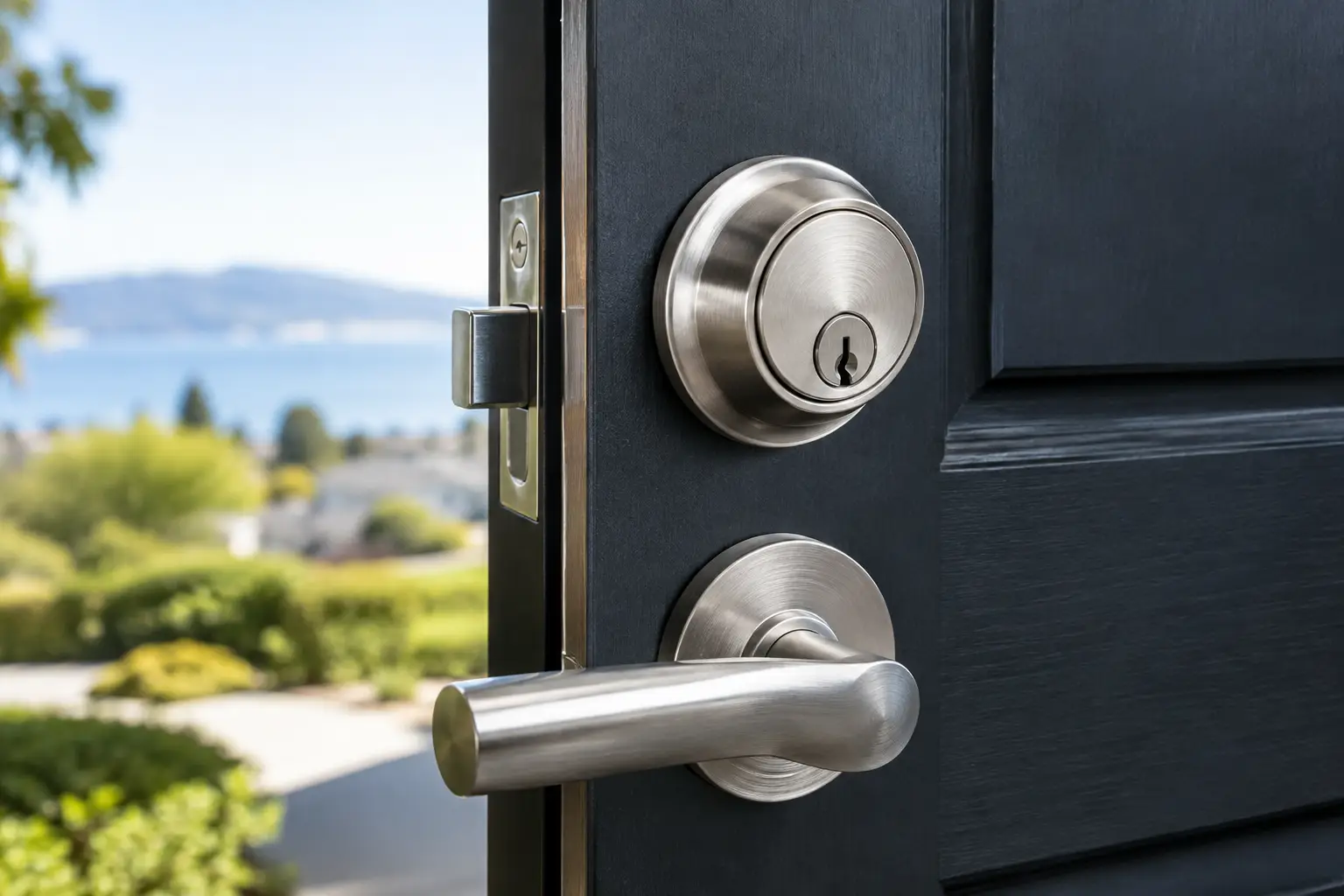
Most commercial storefronts use narrow aluminum-framed glass doors. These doors require hardware designed for a narrow stile, meaning the vertical aluminum section around the glass. A standard residential deadbolt generally will not fit properly, and forcing one into the door can weaken the frame or create costly repair work.
Some businesses have solid wood, steel, hollow metal, or insulated glass doors instead. These may accept commercial cylindrical locks, mortise locks, deadbolts, or panic hardware. Before choosing a lock, look at whether the door swings in or out, whether it has a closers, and whether customers use it as a required exit. The best lock is one that works with the complete door system.
A front entrance also needs a different level of protection than a back delivery door, storage room, or office door. A single lock type rarely makes sense for every opening in a commercial property.
Best Storefront Door Lock Options by Security Need
Commercial Mortise Lock and High-Security Cylinder
A mortise lock is installed inside a pocket cut into the edge of the door. It is a common choice for commercial doors because it is durable, serviceable, and available with several functions. On aluminum storefront doors, a mortise cylinder often works with existing deadlatch or hookbolt hardware.
Upgrading the cylinder can make a significant difference. A restricted or high-security key system helps control unauthorized duplication, which matters when keys have been issued to managers, former employees, contractors, or cleaning crews. Standard keys can be copied easily at many hardware stores. With a controlled keyway, copies are managed through an authorized locksmith.
This option is a strong fit for businesses that want reliable mechanical security without batteries, software, or employee phone credentials. The trade-off is that keys still need to be collected when staffing changes, and a lost key may require rekeying the lock.
Deadlatch for Narrow Aluminum Storefront Doors
A commercial deadlatch is one of the most common locks on glass-and-aluminum storefront doors. It is made for frequent use and typically operates with a mortise cylinder from the outside and a thumbturn or paddle from the inside.
For higher-risk locations, the deadlatch can be paired with a reinforced strike, guard plate, or compatible cylinder guard. These supporting parts matter. A quality lock is only as secure as the strike, door frame, and installation behind it.
Deadlatches are dependable for many small businesses, especially when the door is in good condition and closes correctly. If the door drags, does not latch fully, or has loose framing, replacing the cylinder alone will not solve the problem. The door and lock should be adjusted together.
Hookbolt Lock for Sliding or Double Glass Doors
A hookbolt uses a locking bolt that hooks into the strike rather than extending straight into it. This design is often used on narrow-stile aluminum doors, paired glass doors, and some sliding storefront systems. It can provide better resistance against certain prying attempts than a basic latch configuration.
Hookbolt hardware must match the door preparation and strike location precisely. It is not a universal swap for every storefront lock. An experienced commercial locksmith can determine whether your existing door accepts a hookbolt or whether a different upgrade offers better value.
Panic Bar or Exit Device for Customer-Facing Exits
If employees or customers must be able to exit quickly, a panic bar or exit device may be required by building and fire codes. Pressing the bar releases the door from the inside, allowing fast exit without finding a key or turning a knob.
Panic hardware is especially common in restaurants, larger retail spaces, offices with public traffic, and doors that serve as designated exits. It can also be fitted with exterior trim, a key cylinder, or electronic access controls depending on the door and occupancy requirements.
Do not add a double-cylinder deadbolt or any lock that requires a key for interior exit on a door that may be used as an emergency exit. That decision can create a serious life-safety hazard. When in doubt, have the opening inspected by a qualified locksmith and confirm local code requirements with the appropriate authority.
Commercial Keypad or Smart Access Lock
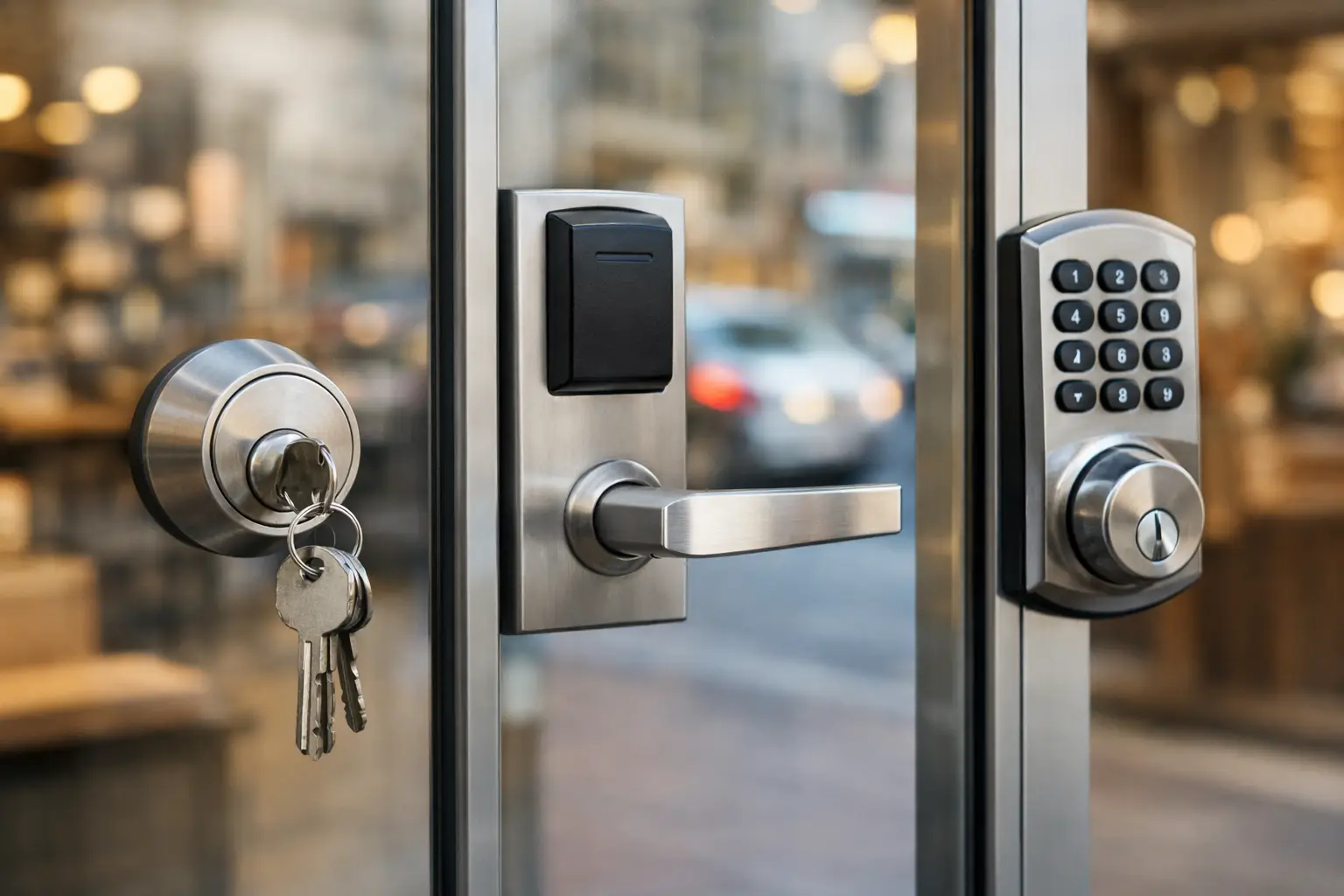
Electronic access can eliminate many of the problems that come with physical keys. A keypad, fob, card reader, or phone-based credential lets a business owner remove access when an employee leaves, set schedules, and avoid rekeying after every staffing change.
This is useful for businesses with shift workers, multiple managers, shared office spaces, or delivery access needs. Some systems create an audit trail showing when a credential was used, which can help with accountability.
Electronic locks are not automatically better for every storefront. They need a dependable power plan, proper installation, and a clear backup method for outages or system failures. For a busy public entrance, commercial-grade access control installed with compatible door hardware is far more dependable than a consumer smart lock adapted to a storefront door.
What Makes a Storefront Lock Harder to Defeat?
Security is not just about choosing a stronger cylinder. Forced entry often targets weak strike plates, loose frames, exposed glass, poorly aligned doors, or hardware that can be pried apart. A complete storefront security assessment should consider the lock, the door closer, pivots or hinges, strike, frame, glass condition, and how the door locks when the business is closed.
For many Bay Area businesses, a sensible upgrade includes a commercial deadlatch or hookbolt, a restricted key system, and reinforcement at the strike or frame. A rear door may benefit from a separate high-security deadbolt or exit device, depending on how it is used. The right combination is based on the property, not a one-size-fits-all package.
Also consider key control. If you cannot say exactly who has keys to your business, your lock system is already harder to manage than it should be. Rekeying after a tenant turnover, employee departure, break-in, or lost master key is often faster and less expensive than waiting for a security incident.
When to Repair, Rekey, or Replace the Lock
Rekeying is the right move when the lock body is functioning correctly but keys are missing, access needs to change, or you want one key to operate several doors. It changes the internal key pins so old keys no longer work.
Repair may be enough when a lock sticks, the key turns roughly, the latch will not retract, or the door fails to catch because of alignment. In many cases, the problem is a worn cylinder, damaged tailpiece, incorrect strike alignment, or a failing door closer rather than the entire lock.
Replacement is usually the better choice when hardware has been forced, corroded, repeatedly repaired, or no longer provides the security level your business needs. If a lock is obsolete, poorly fitted, or easy to bypass, putting more money into temporary repairs can cost more over time.
Choose Hardware That Supports Your Business
The best storefront door lock options protect your property without slowing down the people who need legitimate access. A small shop with two keyholders may be well served by a high-quality deadlatch and controlled keys. A restaurant with multiple shifts may need panic hardware and managed electronic access. A property manager may need a master-key plan that keeps individual suites separate while allowing authorized maintenance entry.
Do not wait until a broken key, employee dispute, or after-hours lockout forces a rushed decision. A licensed, bonded, and insured commercial locksmith can inspect your doors on-site, explain the practical options, and install hardware correctly without treating your storefront like a residential door. YES Locksmith helps Bay Area business owners secure commercial doors with dependable service and damage-conscious workmanship.
A storefront should close firmly, lock reliably, and give you confidence when you turn off the lights at night. If yours does not, it is time to have the hardware checked before a small problem becomes an emergency.