
A key that sticks, will not turn, or comes out with the engine still running can turn a normal drive into a serious problem. Knowing how to replace ignition cylinder can help you understand what is happening with your vehicle, but it is not always a simple swap. Modern ignition systems may involve steering-column components, security chips, and vehicle programming that must be handled correctly to prevent a larger repair.
For many drivers, the safest answer is an experienced automotive locksmith who can diagnose the issue at the vehicle and replace the correct part without unnecessary damage. If you are assessing the job yourself, start with the symptoms and your vehicle’s security system before removing anything.
Confirm the Ignition Cylinder Is the Problem
The ignition cylinder is the mechanical part where you insert and turn the key. It works with the ignition switch behind it, which sends power to the vehicle’s electrical and starting systems. These are connected, but they are not the same part.
A worn ignition cylinder often causes a key to bind, require jiggling, turn inconsistently, or fail to return properly after starting. You may also notice that the key works only when inserted a certain way. In older vehicles, worn key cuts can create nearly identical symptoms. Trying a spare key is a sensible first check. If the spare turns smoothly, the cylinder may be fine and the everyday key may be worn.
If the dashboard lights behave erratically, accessories lose power, or the vehicle will not crank even though the key turns normally, the electrical ignition switch, battery, starter, or another component may be at fault. Replacing the cylinder in that situation will not solve the underlying issue.
A steering wheel that is locked can also make a working ignition feel broken. Apply light pressure to the key while gently moving the steering wheel side to side. Do not force the key. Excess force can snap the key, damage internal cylinder pins, or crack trim around the steering column.
Before You Replace an Ignition Cylinder
Vehicle make, model, and year matter. On some older vehicles, a replacement cylinder can be installed and keyed to work with an existing mechanical key. On many newer vehicles, the key contains a transponder chip or smart-key electronics tied to the immobilizer system. The vehicle may recognize the new mechanical key but still refuse to start until the chip or system is programmed.
Before ordering a part or taking apart the steering column, verify whether your vehicle has:
- A transponder key, key fob, push-button start, or immobilizer warning light
- An airbag in the steering wheel or steering-column area
- A cylinder that must be turned to the accessory or run position for removal
- A security bolt, retaining pin, or manufacturer-specific release procedure
These details determine whether this is a manageable repair or a job best left to a trained locksmith or automotive technician. A low-cost aftermarket cylinder can also create problems if its fit, keyway, or electrical compatibility is poor. The right part is not simply one that looks similar from the outside.
How to Replace Ignition Cylinder Safely
The exact procedure varies by vehicle, so use the factory repair information for your specific model whenever possible. The general process below explains the usual workflow without encouraging force or shortcuts that can damage the column.
1. Protect the vehicle and disconnect power
Park on level ground, set the parking brake, and place the transmission in park or neutral as appropriate. Straighten the front wheels before starting. Disconnect the negative battery cable before working near the steering column, especially if airbag components or electrical connectors are involved.
After disconnecting the battery, wait before touching airbag-related components. Some vehicles retain electrical energy briefly. Never probe, test, or casually disconnect yellow airbag connectors without knowing the manufacturer procedure.
2. Remove column covers carefully
Most ignition cylinders sit behind plastic steering-column shrouds held by screws from below. Remove the lower and upper covers gently. These pieces can be brittle, especially in older cars exposed to years of heat and sun.
Keep screws organized as you work. Do not pry aggressively around switches, wiring, or trim. If a cover will not release, look for a hidden screw or clip instead of forcing it.
3. Put the existing key in the required position
Many vehicles require the working key to be turned to accessory or run before the cylinder release pin can be accessed. This requirement is one reason a failed cylinder can be difficult to remove. If the key will not turn, drilling, prying, or striking the cylinder can damage the steering-column housing and create a much more expensive repair.
At this point, a locksmith is often the practical choice. A trained automotive locksmith can determine whether the cylinder can be serviced, decoded, removed, or replaced without destroying surrounding components.
4. Release and remove the cylinder
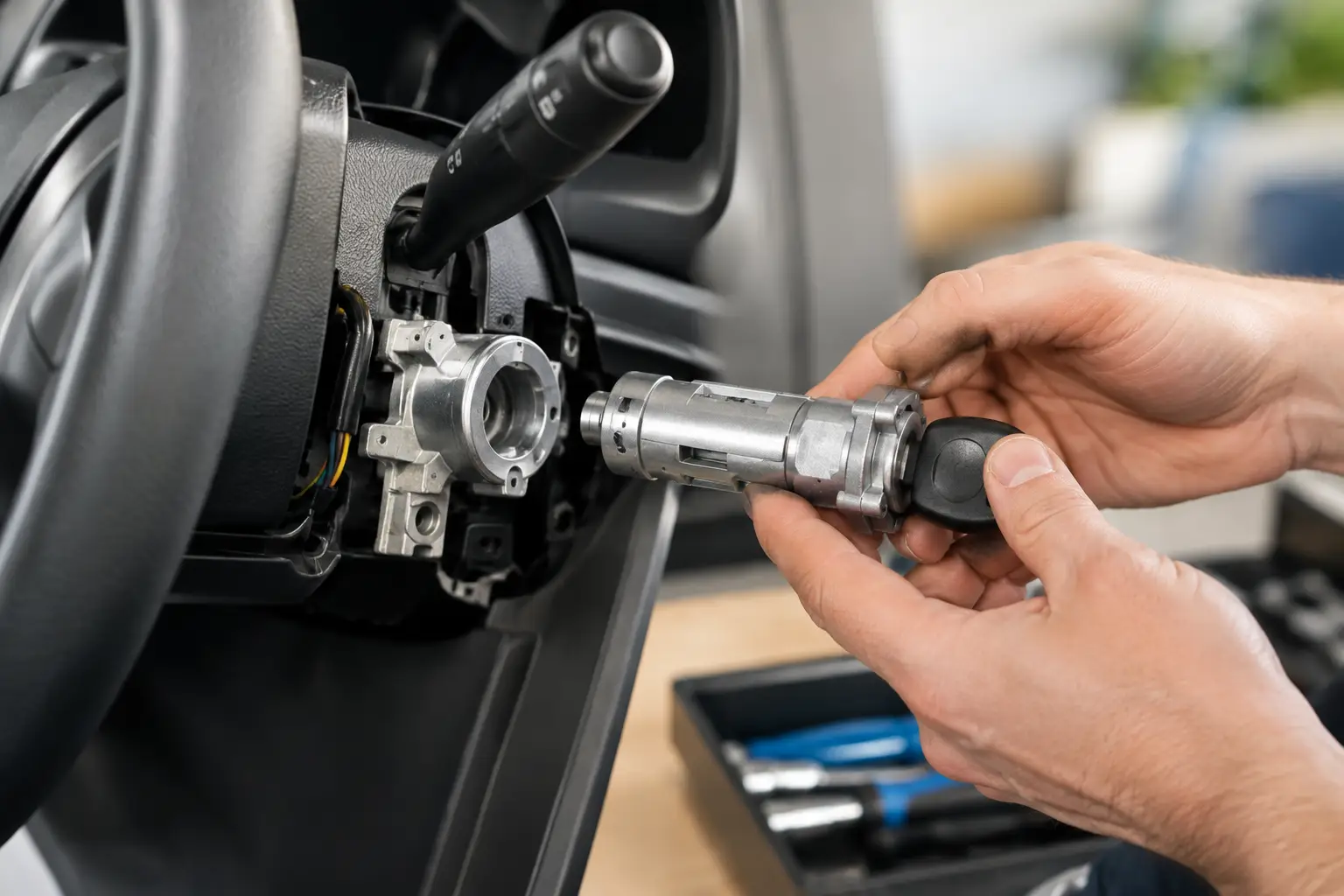
When the key is in the correct position, the release pin is typically accessed through a small opening in the cylinder housing. Depress the release with the proper tool and slide the cylinder out in a controlled motion. The key usually stays in the cylinder during removal.
Pay attention to the cylinder’s orientation and any linked components. Some designs use a separate ignition switch or actuator rod behind the cylinder. Pulling the assembly at the wrong angle can disturb these parts or cause the replacement to sit incorrectly.
5. Install the correct replacement
Match the replacement cylinder to the original part before installation. With the new cylinder set to the required position, slide it into the housing until it seats and locks. Test its movement through lock, accessory, run, and start positions before reinstalling the column covers.
Do not reconnect the battery and immediately assume the repair is complete. Confirm that the steering lock engages and releases normally, the key inserts and removes as it should, and the cylinder returns properly from the start position. A key that feels tight after installation should be investigated, not forced.
6. Address key and immobilizer programming
A new cylinder may come with new keys. If those keys contain transponder chips, they may need programming before the engine will start. Some vehicles allow a limited owner programming procedure when working programmed keys are available. Others require professional diagnostic equipment and security credentials.
If the security light remains on or the engine starts and immediately shuts off, the immobilizer system may not recognize the key. Repeatedly trying to start the vehicle will not usually fix that issue. Professional programming or diagnosis is the appropriate next step.
Why Rekeying Can Be Better Than Replacing
Replacement is not always the best outcome. If the cylinder is in serviceable condition but you lost a key, bought a used vehicle with mismatched keys, or want your door and ignition keys to match, rekeying may be the cleaner solution. A locksmith can often configure a compatible cylinder to your existing key code when the vehicle and parts allow it.
Rekeying can reduce the number of keys you carry and avoid the inconvenience of a separate ignition key. It depends on the condition of the existing cylinder, the availability of correct wafers or parts, and the vehicle’s anti-theft system. A professional inspection prevents you from paying for a replacement when repair or rekeying would provide a better result.
When to Call a Mobile Automotive Locksmith
Call for professional help if the key is broken in the ignition, the cylinder is seized, the vehicle has an immobilizer, or the steering column must be opened near airbag components. You should also stop if you cannot identify the correct part or if a replacement cylinder does not operate smoothly during testing.
A mobile locksmith can come to the vehicle, diagnose the key and cylinder together, cut or program keys when needed, and help avoid towing when the repair can be completed on-site. That matters when your car is blocking a driveway, sitting at work, or stranded away from home. YES Locksmith provides mobile automotive locksmith service for drivers in Daly City, San Francisco, and nearby Bay Area communities.
A failing ignition cylinder rarely gets better with force. Protect the steering column, protect the vehicle’s security system, and get qualified help early when the key will not cooperate. The right repair should leave you with a key that turns smoothly and a vehicle you can depend on when you need to leave.