
A storage unit can have a strong door and a well-run facility, but the wrong lock still leaves your belongings exposed. The best locks for storage units are difficult to cut, pry, or pick, fit the unit’s latch correctly, and meet the facility’s rules. That usually means choosing a quality disc lock or a hardened shrouded padlock, not relying on the inexpensive lock sitting near the front desk.
The right choice depends on your unit door, the value of what you are storing, and how long the unit will sit unattended. A lock that works well for seasonal boxes may not be enough for tools, business inventory, electronics, or irreplaceable family property.
Start With the Storage Unit Door
Before buying any lock, look at the latch or hasp on your specific unit. Most self-storage doors use a metal latch with a circular opening. Some facilities allow only disc locks because their shape covers more of the latch and reduces access to the shackle. Others may require a cylinder lock that fits into a built-in locking mechanism.
Do not assume a larger lock is always better. A bulky padlock may not fit through the latch, while a small lock can leave too much of its shackle exposed. If a bolt cutter can get a clean grip around the shackle, the lock is easier to attack.
Ask the facility manager whether there are lock restrictions before you purchase one. This quick check can prevent a return trip, a lock that does not fit, or a security issue caused by using hardware the facility does not permit.
Best Locks for Storage Units: The Top Types
Disc locks offer strong everyday protection
A disc lock, sometimes called a discus lock, is the standard choice for many storage units. Its rounded stainless steel body covers most of the shackle, leaving very little room for bolt cutters. The protected shape is the main advantage. A thief may still target the door or latch, but the lock itself is much harder to grip and cut than a traditional padlock.
Look for a disc lock with a hardened steel shackle and a solid metal body. Stainless steel is especially useful in damp or coastal conditions, where low-quality locks can corrode and become difficult to open. For many renters, a quality disc lock provides the best balance of security, fit, and price.
The trade-off is convenience. Some cheaper disc locks use basic keyways and lighter internal components. They may look secure from a distance but offer less resistance to picking or forced entry. Avoid ultra-low-cost models with thin metal bodies or loose shackles.
Shrouded padlocks work well with compatible latches
A shrouded padlock has a protective metal cover around the shackle. Like a disc lock, it limits the space available for cutting tools. High-security versions often use hardened boron steel shackles, which are far tougher than standard steel against cutting attempts.
This type is a strong choice when the storage latch has enough room for the lock body and when you need a higher security rating. It is often a smart option for contractors storing equipment, property managers holding supplies, or small businesses using a unit for inventory.
Check the shackle diameter and clearance carefully. A thick shackle is useful only if it fits the latch. Forcing an oversized lock through the hardware can damage the latch or leave the lock sitting at an awkward angle.
Solid-body padlocks are reliable when shackle exposure is limited
A solid-body padlock can be a good choice for certain unit doors, especially when the latch design naturally shields the shackle. Choose a model with a hardened shackle, a weather-resistant body, and a closed or guarded shackle design whenever possible.
Standard laminated padlocks are usually the weaker option. They are common, inexpensive, and easy to replace, but their exposed shackles and layered construction can make them more vulnerable to cutting and prying. They are better suited to low-risk indoor use than long-term storage security.
Cylinder locks are required on some newer facilities
Some modern storage units use a recessed cylinder lock rather than an external padlock. These locks fit directly into the door’s locking system and may be supplied or sold by the facility. If your unit has this setup, do not try to improvise with a padlock.
A properly fitted cylinder can offer excellent protection because it is recessed inside the door hardware. If the key becomes lost, the cylinder is damaged, or the lock will not turn, have it handled carefully. Drilling or forcing a storage lock can damage the door and create unnecessary charges from the facility.
What Makes a Storage Lock Harder to Defeat?
The lock’s shape matters, but materials and construction matter just as much. Focus on hardened steel, minimal shackle exposure, and a keyway that does not feel loose or poorly made. A lock should close firmly and operate smoothly without excessive play.
For valuable contents, consider locks with higher security ratings from recognized testing organizations. Ratings do not guarantee that a lock is impossible to defeat, but they give you a better basis for comparing products than price alone.
Weather resistance also deserves attention in the Bay Area. Moisture, fog, and temperature changes can cause cheaper locks to rust internally. A seized lock is not just inconvenient when you need access – it can turn into a stressful lockout. Stainless steel or weather-protected lock bodies and keyways are worth the modest additional cost for outdoor-access units.
Avoid These Common Storage Lock Mistakes
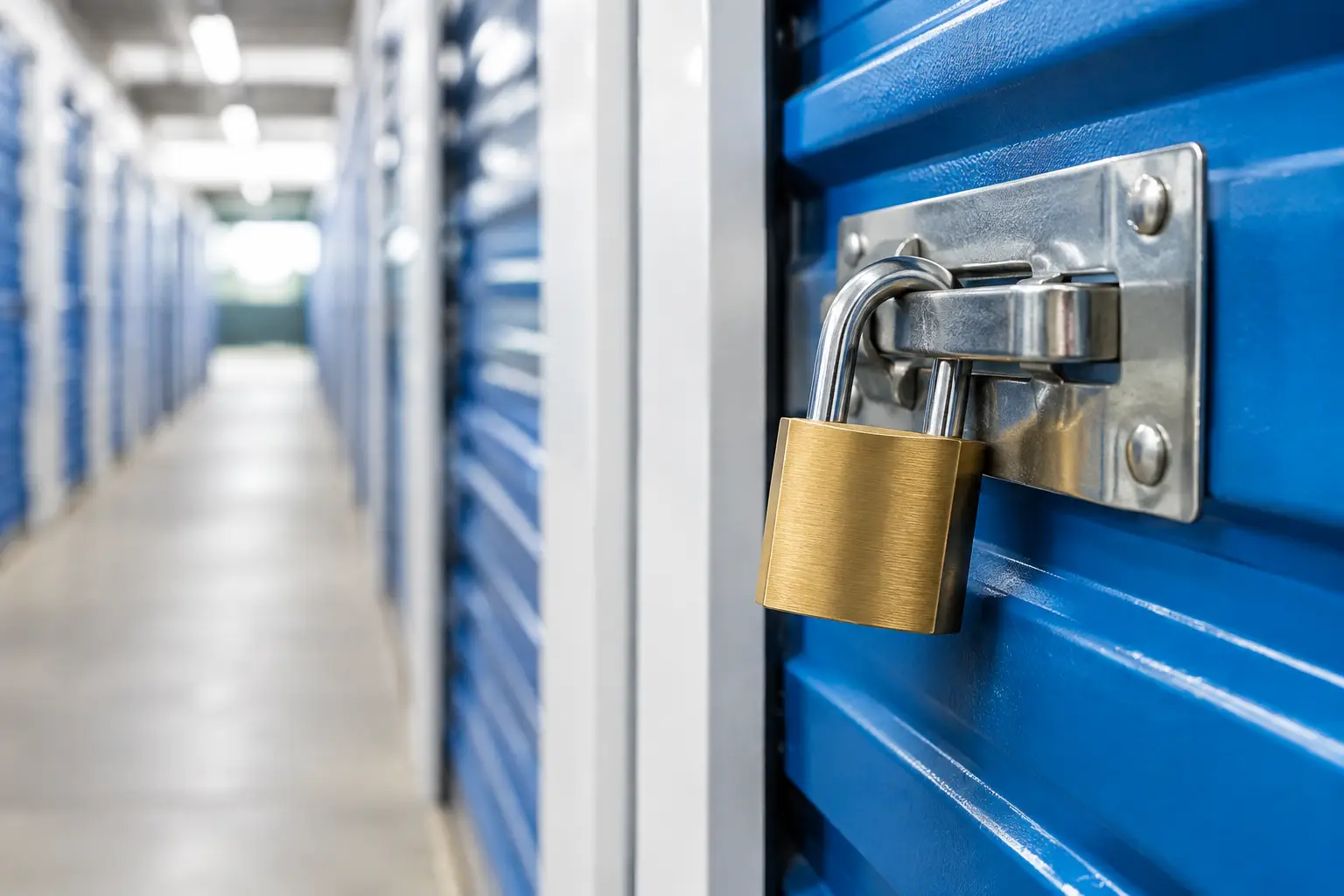
The most common mistake is using a small brass padlock with a long exposed shackle. It may be acceptable for a gym locker, but it gives cutting tools too much room around a storage latch. Another mistake is buying the cheapest disc lock available without checking its material, shackle strength, or key quality.
Do not use combination locks for a storage unit unless the facility specifically approves a high-quality model and the unit holds low-value items. Mechanical combination locks can be convenient because there is no key to lose, but many are easier to manipulate or cut than a quality keyed lock. They can also be a problem if you forget the code or a family member needs access while you are unavailable.
Finally, do not share keys casually. If multiple people need access, decide who is authorized and keep track of every copy. When an employee, roommate, tenant, or contractor no longer needs access, replace the lock instead of hoping a returned key was not copied.
Match the Lock to What You Store
For ordinary household items, a quality stainless steel disc lock is usually the practical answer. It is difficult to cut, widely compatible, and priced reasonably enough to replace when access changes.
For tools, commercial inventory, equipment, records, or valuables, step up to a high-security shrouded padlock or the strongest approved cylinder lock for the facility. The lock should be only one layer of protection. Choose a reputable storage facility with lighting, controlled gate access, cameras, and a well-maintained perimeter. Keep a written inventory and avoid storing cash, original documents, firearms, or irreplaceable items when another secure option is available.
If the unit door, latch, or lock has been damaged after a break-in attempt, report it to the facility immediately. Do not continue using bent hardware or a lock that no longer closes correctly. A damaged latch can weaken even the best lock.
When You Need Help With a Stuck or Damaged Lock
A storage lock can fail because of corrosion, a broken key, a jammed cylinder, or attempted theft. Avoid striking the lock, cutting it yourself, or prying the latch. Those actions can damage the unit door and complicate your access with the storage facility.
Confirm ownership requirements with the facility first, then use a qualified locksmith who can assess the lock and hardware without causing unnecessary damage. YES Locksmith provides mobile lock service for customers in Daly City, San Francisco, and nearby Bay Area communities when secure access and careful workmanship matter.
A storage lock is a small purchase with a big job. Choose one that fits correctly, protects the shackle, and matches the real value of what sits behind the door – then check it every time you leave.