
Your front door lock has one job – stop the wrong person from getting in. When that lock is weak, outdated, poorly installed, or just not built for real daily use, the rest of your home security is already compromised. Choosing the best locks for front doors is not about buying the most expensive hardware on the shelf. It is about matching the right lock to the door, the frame, the neighborhood, and the way you actually use your home.
In the Bay Area, that matters more than most homeowners realize. A beautiful front door with builder-grade hardware can still be the easiest point of entry. On the other hand, a properly chosen deadbolt, reinforced strike plate, and quality installation can make forced entry much harder and give your household real peace of mind.
What makes the best locks for front doors?
The best front door lock is usually not a single piece of hardware. It is a combination of lock quality, door strength, frame reinforcement, and correct installation. A strong deadbolt on a weak jamb is not enough. A smart lock with great features but poor build quality is not enough either.
For most homes, the best locks for front doors share a few traits. They have a solid deadbolt, a durable metal housing, a properly aligned strike, and resistance to common attack methods like kicking, prying, and tampering. Good locks also work reliably every day. Security means very little if the key sticks, the latch drags, or the mechanism fails when you need it most.
That is why lock choice should be practical first. Homeowners often focus on looks or app features, but the first question should always be simple: how well does this lock protect the door under real pressure?
The lock types that make the most sense
Single-cylinder deadbolts
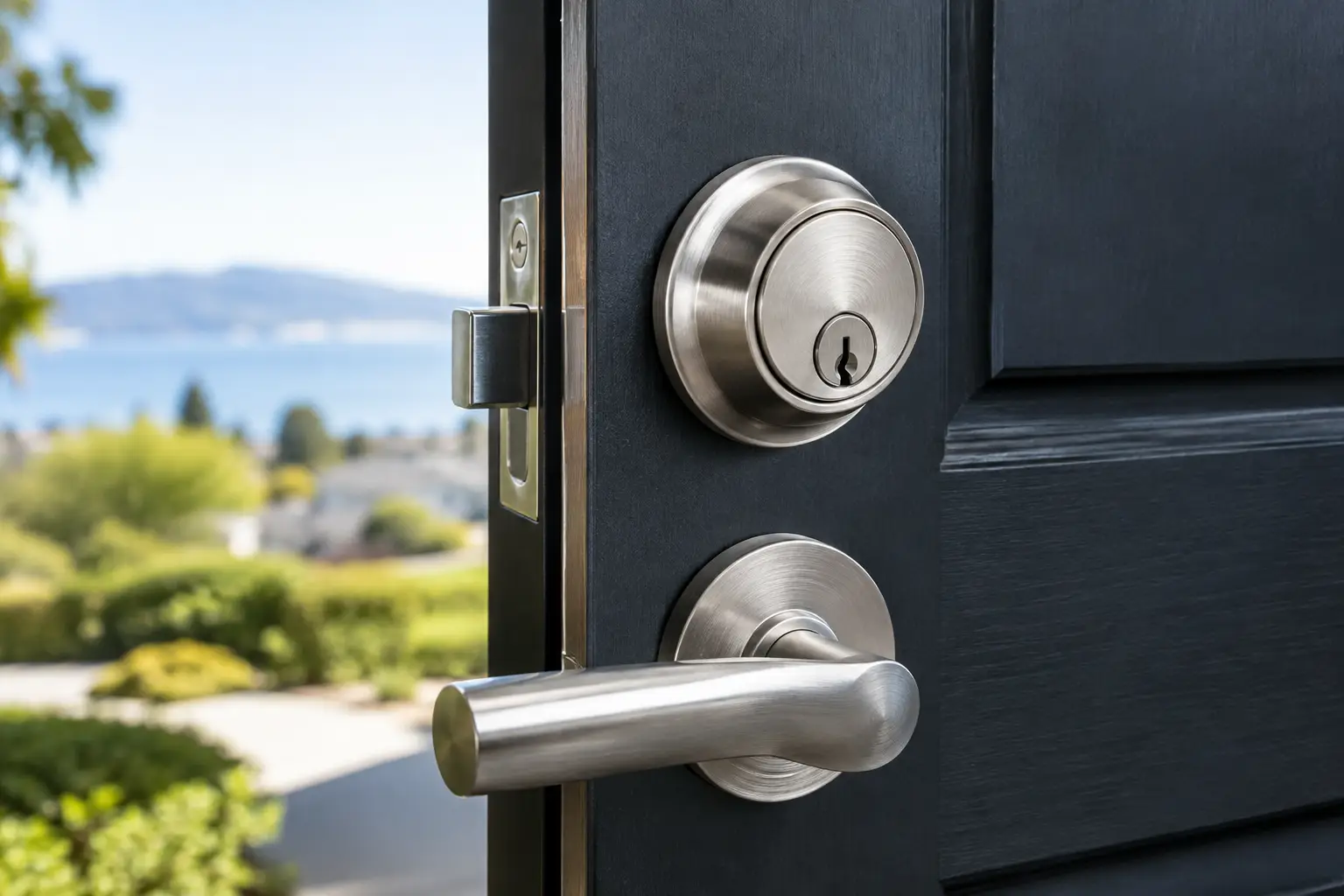
For most residential front doors, a single-cylinder deadbolt is still the standard recommendation. It locks and unlocks with a key from the outside and a thumb turn on the inside. That setup is familiar, dependable, and fast to operate during everyday use.
A quality single-cylinder deadbolt from a trusted manufacturer is often the best choice for homeowners who want strong physical security without adding complexity. It is especially effective when paired with a reinforced strike plate and long mounting screws anchored into the framing, not just the trim.
The trade-off is that not all deadbolts are made equally. A low-cost deadbolt may look substantial but can have weak internal components. The difference between budget hardware and professional-grade hardware shows up fast under force or after a few years of wear.
Double-cylinder deadbolts
A double-cylinder deadbolt requires a key on both sides. These locks can make sense if your front door has nearby glass and you are concerned about someone breaking the glass and reaching inside to turn the thumb latch.
That added security comes with a serious consideration: emergency exit. If there is a fire or another urgent situation, everyone inside needs immediate access to the key. In some homes, this lock type may also create code or safety concerns. It can be the right answer in specific situations, but it is not the default answer for every front door.
Keyless deadbolts and smart locks
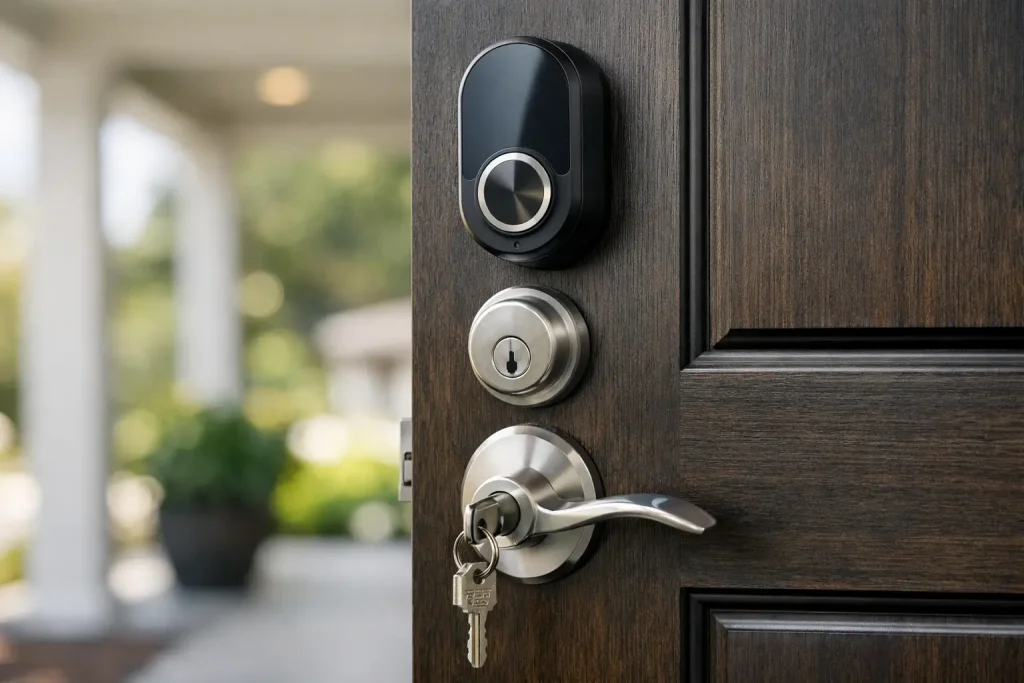
Keyless deadbolts and smart locks are now common, and for many households they are a good fit. If you are tired of lost keys, need to manage access for family members, or want temporary codes for guests or service providers, a well-made smart lock can be very useful.
Convenience, however, should not be confused with better security by itself. Some smart locks are excellent. Others prioritize features over mechanical strength. The best smart options still need a strong deadbolt core, dependable battery life, and proper fit on the door. Homeowners should also think about what happens if the batteries die, the keypad fails, or connectivity drops.
For rental properties and busy households, keypad deadbolts often offer the best balance. They reduce key management problems without relying too heavily on remote app control.
Mortise locks
Mortise locks are common on some older homes, upscale entry systems, and certain commercial-style doors. They are installed inside a pocket cut into the door and can be very strong when the door is built to support them.
This is not usually the first upgrade for a typical single-family front door unless the home already has a mortise setup. Replacing or converting mortise hardware requires more planning, and installation needs to be exact. But in the right application, a quality mortise lock offers excellent durability and security.
Security grades matter more than brand hype
Many homeowners shop by brand name alone, but security grading is often a better place to start. A lock that has been tested for durability and force resistance gives you more useful information than a package full of marketing claims.
For front doors, higher-grade deadbolts are generally the safer investment. They are built for more cycles, more abuse, and more consistent performance over time. This matters if your front door gets frequent use, if you have kids going in and out constantly, or if the property is a rental with repeated turnover.
A good locksmith can help you compare lock options based on actual construction, not just shelf labels. That is especially useful when two locks look similar but perform very differently once installed.
Your door and frame matter as much as the lock
A strong lock on a weak door is a false sense of security. This is one of the biggest problems seen in residential service calls. Homeowners replace the cylinder but leave a split frame, short strike screws, loose hinges, or a door that does not fully latch.
If you want the best result, look at the whole entry point. Solid-core or metal-clad doors usually provide better support than hollow doors. The strike plate should be heavy-duty and secured into framing with longer screws. The deadbolt should extend fully into the strike without rubbing or binding. Hinges should be tight and the door should close squarely.
This is where professional installation earns its value. Even a high-quality lock can underperform if the bore is off, the bolt is misaligned, or the strike is installed shallow. Security hardware has to work under pressure, not just look centered from five feet away.
When smart locks are worth it
Smart locks are worth considering when access control is part of your real-life problem. If teenagers lose keys, if you manage a rental, if you want to grant and remove codes quickly, or if you often forget whether you locked the door, smart hardware can make life easier.
They are less compelling if the door itself is weak, the Wi-Fi is unreliable, or you mainly want stronger break-in resistance. In those cases, a heavy-duty mechanical deadbolt may be the better investment.
The strongest setup for many homes is a quality deadbolt with smart features added carefully, not a flashy device chosen only for convenience. Good security starts with mechanical strength. Technology should support that, not replace it.
Signs it is time to replace your front door lock
If the key is hard to turn, the latch sticks, the deadbolt does not throw smoothly, or the hardware feels loose, do not wait for a full failure. Front door locks usually give warning signs before they stop working entirely.
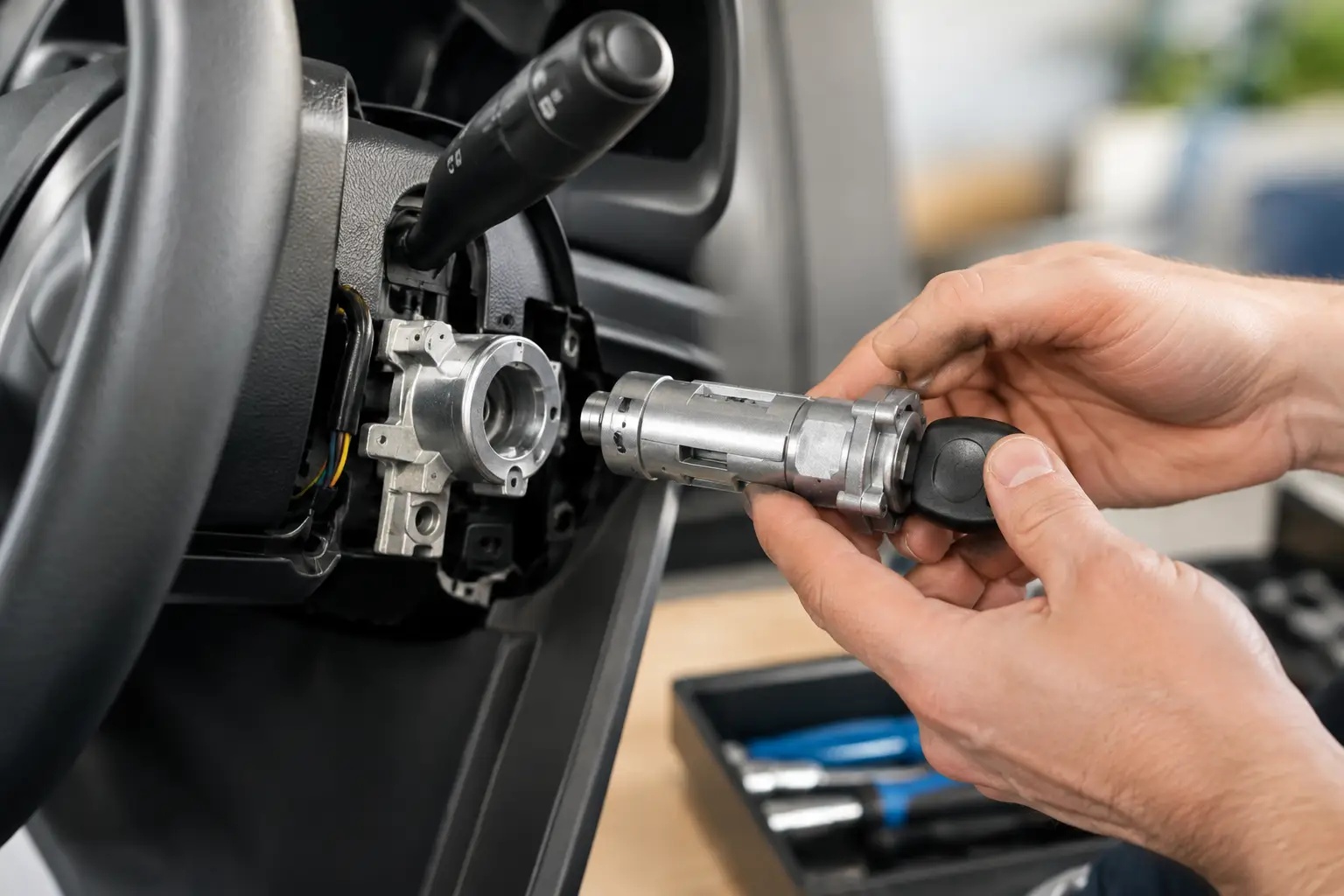
Replacement is also a smart move after a break-in attempt, lost keys, tenant turnover, a recent move, or visible rust and wear. In some cases, re-keying is enough. In others, the better answer is a full hardware upgrade. It depends on the condition of the lock, the level of security you want, and whether the existing setup is even worth keeping.
The best lock is the one installed correctly
There is no single front door lock that is best for every property. A condo, single-family home, multi-unit building, and rental house may all need different solutions. But the pattern is consistent: quality deadbolt, strong strike reinforcement, proper fit, and hardware that matches how the property is used.
For most homeowners, the safest path is to avoid cheap decorative locksets and focus on proven deadbolt security first. If you want smart access, add it without sacrificing strength. If you have glass near the entry, think carefully about lock type and safety. If the frame is weak, fix that before assuming a new lock alone will solve the problem.
When security is on the line, guessing is expensive. A skilled locksmith can tell you quickly whether your current lock is worth keeping, whether re-keying makes sense, or whether your front door needs a full upgrade. Companies like YES Locksmith handle that work on-site, which is often the fastest way to turn an uncertain front entry into one you can trust again.
A front door should not be the weak point of your home. If your lock feels questionable now, it is better to deal with it before someone else tests it for you.