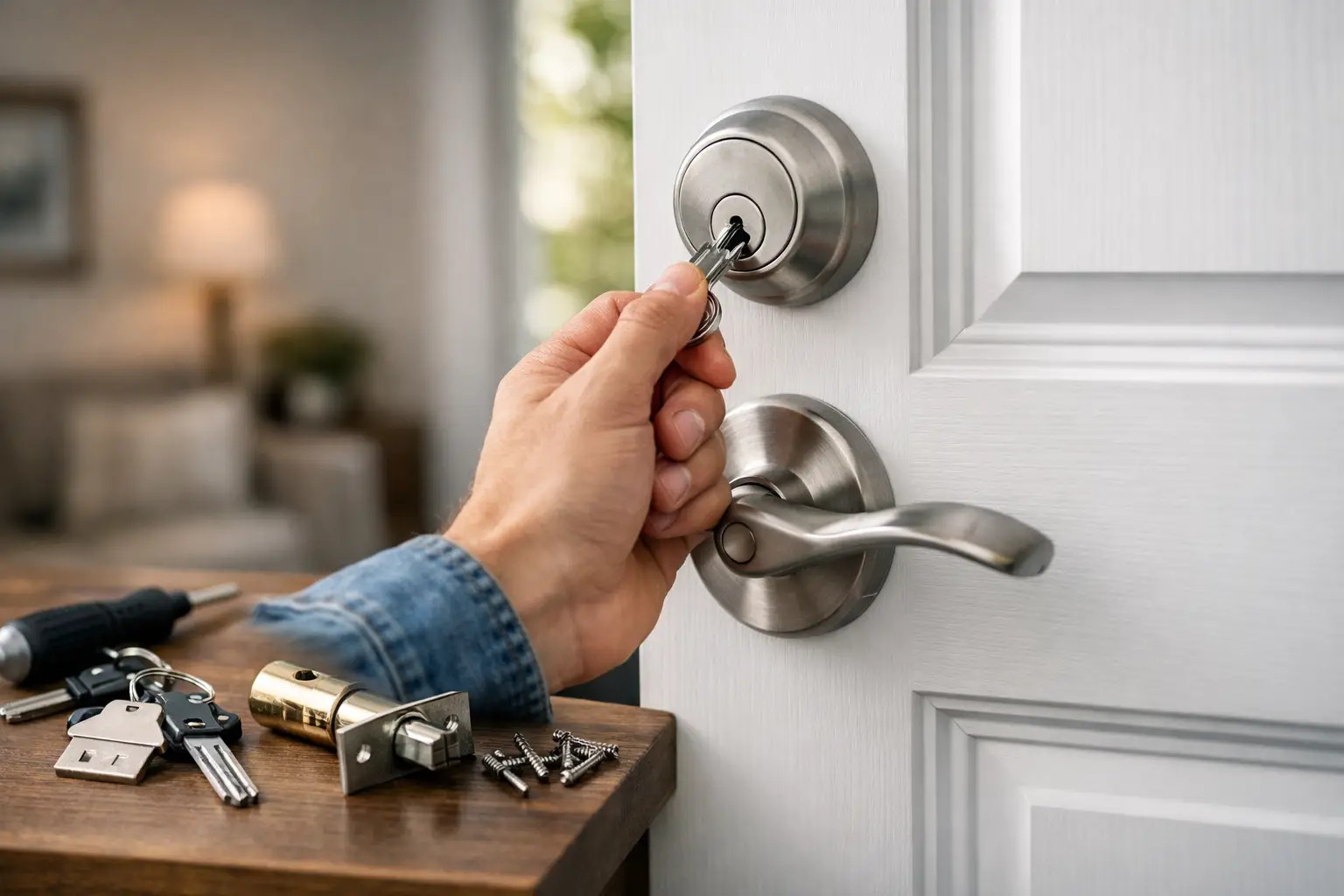

A missing key is not always an emergency. But when you cannot say who has a copy, which former employee still has access, or whether a tenant returned every key, it becomes a security decision. Effective key control gives you a clear answer: the right people can get in, and everyone else cannot.
For Bay Area homes, rental properties, offices, and storefronts, that clarity prevents stressful surprises. It also makes lockouts, staff changes, move-outs, and lost keys much easier to handle without putting your property at risk.
What Key Control Actually Means
Key control is the process of knowing where your keys are, who is authorized to use them, and what happens when access needs to change. It is more than keeping a spare key in a drawer. A working system covers the keys themselves, the locks they operate, and the people trusted with access.
At home, key control may be as simple as limiting spare keys, avoiding unmarked hide-a-keys, and rekeying after a move. For a business or multi-unit property, it can include a key log, restricted keyways, master key planning, and a firm process for collecting keys when employees or tenants leave.
The right level of control depends on the property. A single-family home does not need the same system as an office with 30 employees. But every property benefits from knowing who has access right now, not who might have access because an old key is still out there.
Why Lost Key Control Creates Real Risk
Keys are easy to copy, easy to loan, and easy to forget about. A former roommate may have given one to a friend. A departing employee may have made a duplicate before turning in the original. A contractor may still have a key from work completed months ago.
That does not mean someone intends harm. It does mean you have no reliable way to control entry. If a break-in, theft, or unauthorized entry happens, uncertainty about keys can complicate the situation and leave you wondering whether your locks were compromised.
For business owners, poor key control can also affect daily operations. Staff may spend time searching for keys, opening and closing duties can become unclear, and valuable rooms may be accessible to more people than necessary. For property managers, a missing unit key can delay a turnover and create an avoidable concern for the next tenant.
A key system should support your operations, not create more questions when something goes wrong.
Start With a Simple Key Inventory
You cannot manage keys you have not identified. Begin by gathering every key you control, including keys held by employees, maintenance workers, family members, vendors, and property managers. Note what each key opens and whether you know who has a copy.
For a home, this can be a short written record kept somewhere private. Include exterior doors, garage doors, gates, sheds, mailboxes, and any storage areas. Check whether a previous owner, housekeeper, dog walker, or neighbor may still have a key.
For a commercial building, create a more formal inventory. Record the key number or identifier, the door or area it opens, the person assigned to it, the issue date, and the return date if applicable. Do not label a key with the business name, address, or room name. A lost key ring should never tell a stranger exactly where it belongs.
The goal is accountability, not inconvenience. If a key disappears, you should know which lock may be affected and who needs to be contacted right away.
Assign Access by Role, Not Habit
A common problem is handing out keys because it feels easier in the moment. Over time, the same key may circulate among people who no longer need it. Instead, assign access based on what each person must do to perform their role.
A manager may need access to the front door, office, and alarm panel. A cleaner may only need access during scheduled hours to specific areas. A vendor may be better served by being let in rather than receiving a permanent key. This approach limits exposure while still allowing the work to get done.
For businesses with several doors, a properly designed master key system can help. It allows authorized managers to open multiple areas while giving staff keys that only open the doors relevant to their duties. The trade-off is that master key systems need careful planning. A poorly designed system can give too many people too much access, so professional setup matters.
Know When Rekeying Is the Right Move
Rekeying changes the internal pins of an existing lock so old keys no longer work. It is often the practical answer when you are unsure who has copies but the lock hardware is still in good condition. You receive new keys without necessarily replacing every lock on the property.
Rekeying is a smart choice after buying a home, moving into a new rental, losing a key ring, ending a roommate arrangement, or changing staff with key access. It is also useful after a contractor finishes a project if they were given a key that could have been copied.
Lock replacement may be the better choice if the lock is damaged, worn, outdated, or not providing the level of protection you need. A qualified locksmith can inspect the hardware and explain whether rekeying will solve the problem or whether replacement is the safer investment. There is no benefit in rekeying a lock that is already failing or easy to defeat.
If you manage several doors, consider rekeying them to work with one convenient key where appropriate. This can reduce a crowded key ring and make authorized access easier. Just be selective. High-security rooms, tenant spaces, or areas with sensitive records may need separate access rather than one key that opens everything.
Restrict Copies When the Stakes Are Higher
Standard keys can often be duplicated quickly at many locations. That convenience is useful for some households, but it may not fit a business, rental portfolio, or property with sensitive areas.
Restricted key systems provide more control over duplication. Depending on the system, copies may only be made by an authorized locksmith or with approval from the registered owner. This does not eliminate every security concern, but it creates an extra layer of accountability and makes unauthorized copying more difficult.
Restricted keys are worth considering for offices, medical and professional spaces, retail back rooms, apartment common areas, storage facilities, and properties with frequent personnel changes. They are also useful when multiple managers need oversight of who can request additional keys.
The trade-off is planning. Restricted systems can cost more upfront and may require authorization for new copies. For many property owners, that small amount of control is preferable to finding out later that several untracked duplicates exist.
Build Key Return Into Every Change
Key control often breaks down during transitions. An employee resigns on a busy day. A tenant moves out after hours. A contractor completes work and leaves before anyone confirms the key was returned. Make key return a standard part of the process, not an afterthought.
For employees, collect keys, access cards, garage remotes, and alarm codes before the final shift ends whenever possible. For tenants, document which keys were issued at move-in and compare them at move-out. For vendors, decide in advance whether the key must be returned daily, stored in a controlled lockbox, or kept by a designated manager.
When a key cannot be accounted for, act based on the risk. A missing key to an interior supply closet may call for a simple lock change. A missing master key, exterior key, or key tied to a property address should be treated with more urgency. Rekeying promptly is usually less expensive than dealing with the consequences of unauthorized entry.
Do Not Forget Physical Lock Condition
A key control plan only works if the locks themselves work properly. Loose deadbolts, sticking latches, broken keyways, and doors that do not align with the frame can defeat otherwise good security practices. Staff may start leaving doors unlocked because a key is difficult to turn, or a tenant may force a worn lock until it fails.
Schedule repairs when you notice problems instead of waiting for a lockout or a complete failure. Mobile locksmith service is especially useful when the issue affects an exterior door, a business opening schedule, or a property turnover. A trained technician can repair, rekey, or replace hardware on-site while helping you avoid unnecessary damage to the door and frame.
YES Locksmith helps local homeowners, drivers, property managers, and businesses address lost keys, rekeying needs, damaged locks, and access changes with professional mobile service. When security is on the line, clear answers and correct workmanship matter.
The best time to improve key control is before a key goes missing or a former keyholder becomes a concern. Take inventory, limit access, collect keys during every transition, and rekey when you no longer have confidence in who holds a copy. That small amount of preparation keeps your property safer and gives you one less problem to solve under pressure.