
A front door lock problem rarely arrives at a convenient time. You may be standing outside after a long day, dealing with a key that snapped in the cylinder, or realizing that a former tenant may still have access to your property. This residential locksmith service guide explains what to do first, when to call a professional, and how to make sound security decisions without causing costly damage to your door or hardware.
For homeowners, renters, landlords, and property managers in San Francisco, Daly City, and nearby Bay Area communities, the goal is not simply getting a door open. It is restoring safe, controlled access as quickly as possible.
When to Call a Residential Locksmith
A residential locksmith handles more than emergency lockouts. Professional service is the right call whenever your access, safety, or door hardware is in question. Common situations include being locked out, losing house keys, moving into a new home, dealing with a damaged deadbolt, needing duplicate keys, or upgrading old locks.
A lockout is the most obvious emergency. Before trying to force a window, pry a door, or drill a lock, call a mobile locksmith. Improvised entry attempts often damage frames, weather stripping, glass, and locks. What began as a straightforward service call can quickly turn into a larger repair bill.
You should also call if your key turns but the lock will not open, the deadbolt sticks, the latch does not line up with the strike plate, or a key has broken off inside the lock. These are signs of worn, misaligned, or failing components. Waiting can leave you locked out at the worst possible time.
What to Do During a Home Lockout
First, take a breath and check every safe, authorized entry point. Confirm whether a family member, roommate, or property manager has a spare key. If you live in an apartment or managed community, review your building’s access process before requesting outside service.
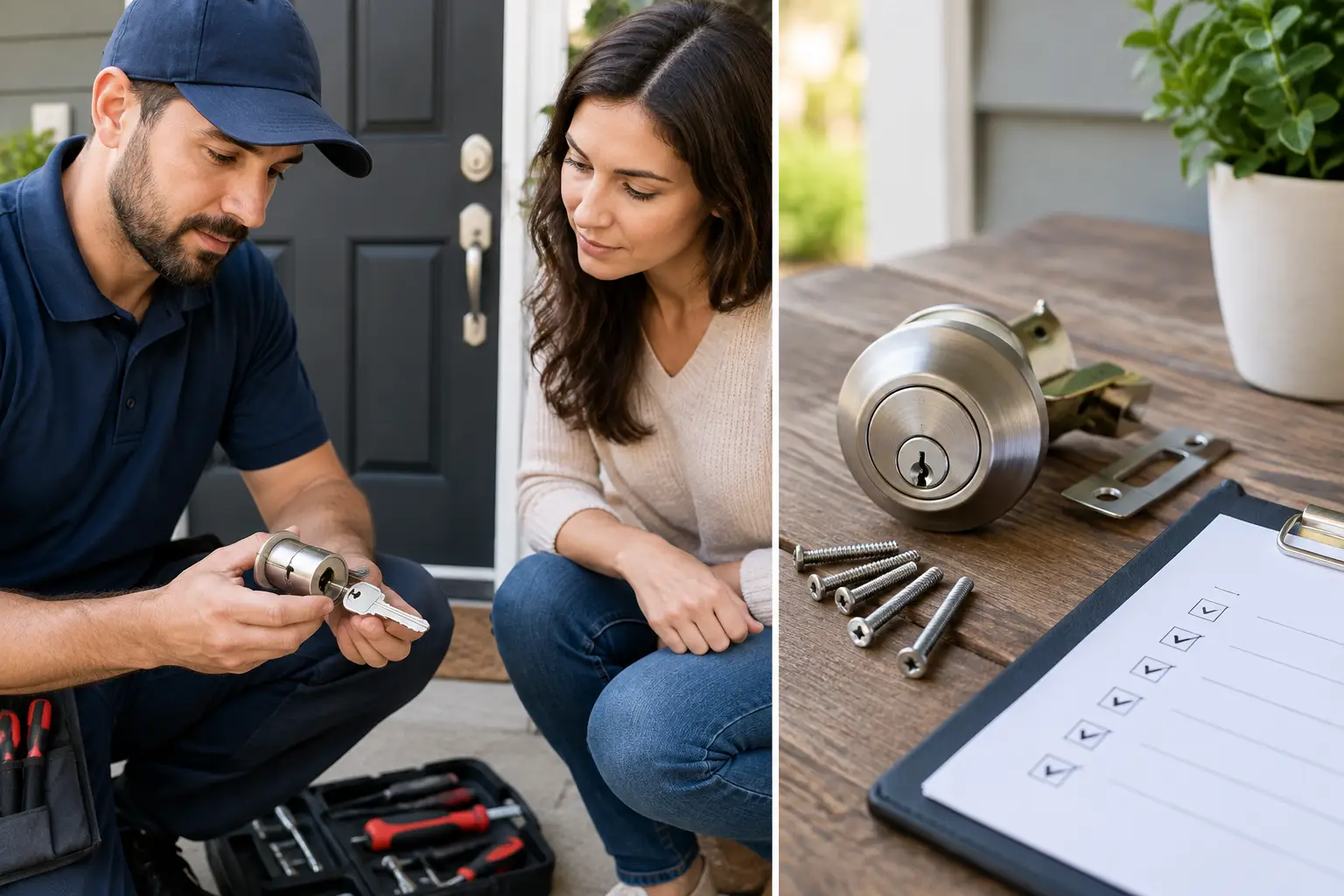
If you still cannot get in, stay in a well-lit area and keep your phone charged. Be prepared to show identification or proof that you live at the property. A responsible locksmith should verify authorization before opening a residence. That protects you, your neighbors, and the property itself.
Avoid damaging the lock unless there is an immediate safety emergency inside the home, such as a child, vulnerable adult, or pet at risk. In most cases, a trained technician can use professional entry methods that minimize or avoid damage to the existing door and lock.
Residential Locksmith Service Guide: Repair, Rekey, or Replace?
Not every lock problem requires a full replacement. The correct solution depends on the age and condition of the hardware, the reason for the service call, and the level of security you need.
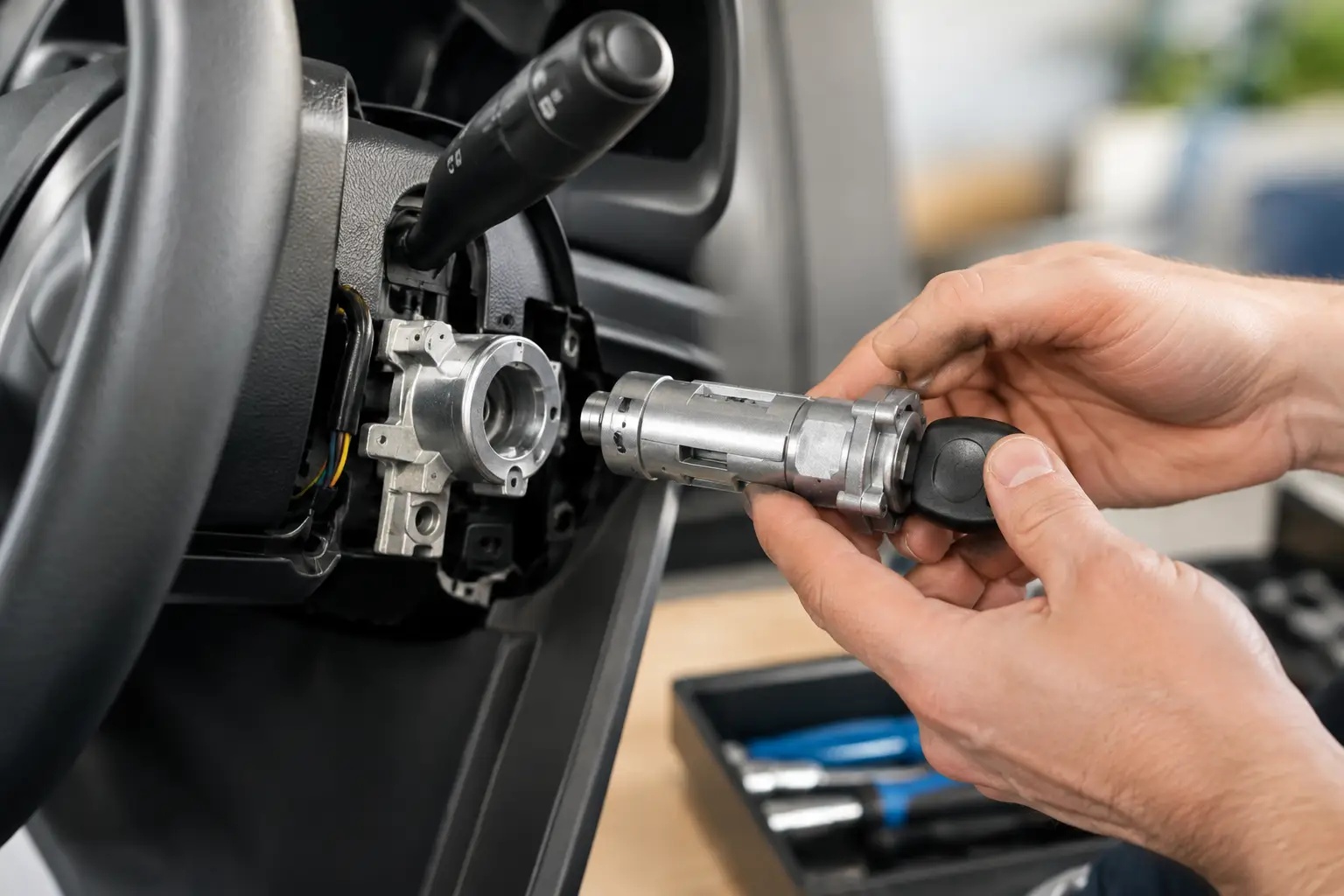
Rekeying changes the internal pin configuration of a lock so old keys no longer work. It is often the smart option after moving into a home, losing a key, ending a roommate arrangement, or changing tenants in a rental property. The exterior hardware stays in place, which can make rekeying more cost-effective than replacing every lock.
Lock repair makes sense when the hardware is still in good condition but has a specific issue, such as a loose cylinder, worn keyway, sticking latch, or alignment problem. A technician can determine whether adjustment or replacement parts will restore reliable operation.
Replacement is usually the better choice when a lock is severely worn, corroded, damaged during a break-in attempt, or no longer provides the level of security your home requires. It may also be necessary when the existing hardware cannot be rekeyed or when you want to move to a different lock type.
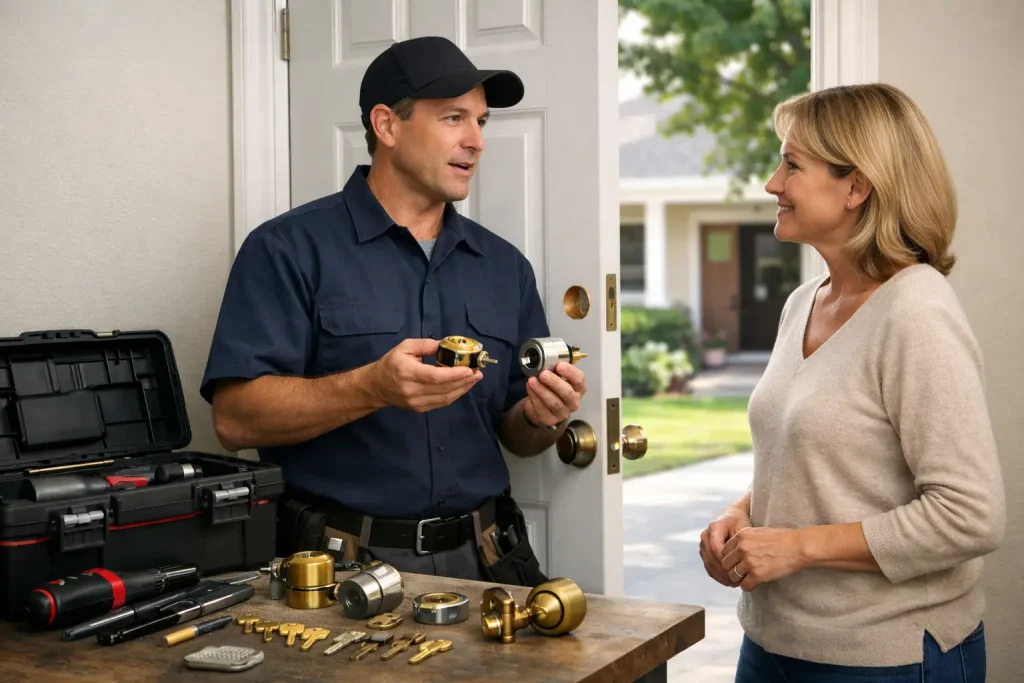
The trade-off is simple: rekeying is often faster and less expensive when the lock is sound, while replacement offers a fresh start when security or reliability is compromised. An experienced locksmith should explain both options clearly instead of pushing the most expensive one.
Choosing the Right Locks for Your Home
Your front door deserves more attention than an interior privacy lock. Exterior doors should have dependable deadbolts, properly installed strike plates, and hardware that fits the door’s thickness and handing. A strong lock is only as effective as its installation.
For many homes, a quality mechanical deadbolt remains a practical and reliable choice. It does not rely on batteries or wireless connectivity, and it works well for homeowners who want straightforward security. Smart locks can be useful for families, rental owners, and people who need to manage access codes remotely. However, they require regular battery checks, careful setup, and a plan for backup entry if the electronics fail.
Keypad locks reduce the need to distribute physical keys, but access codes should be changed when household members, cleaners, contractors, or tenants no longer need entry. If you choose a smart or keypad lock, select a model that still allows dependable manual access with a physical key when appropriate.
Garage-to-house doors, side doors, and rear entrances also matter. Burglars often look for the least protected entry point, not necessarily the front door. A residential locksmith can assess these doors and recommend improvements based on your actual layout rather than a one-size-fits-all package.
Do Not Forget Door and Frame Condition
A new deadbolt will not solve a weak door frame. If the strike plate is loose, short screws are pulling out, or the jamb is cracked, forced-entry resistance can be limited. Reinforcement may be needed along with lock service.
Likewise, a door that sags or drags may cause a lock to bind. In that case, the issue may be partly related to hinges, alignment, or the frame. A careful locksmith will identify the source of the problem rather than replacing a lock that was not actually at fault.
How to Choose a Locksmith You Can Trust
When you are locked out, it is easy to call the first number you see. Take a moment to protect yourself from poor workmanship, surprise pricing, and unnecessary damage.
Ask whether the locksmith is licensed, bonded, and insured where required. Confirm that the company provides mobile service in your area and can give a clear estimate based on the situation. Emergency work can vary in price depending on the time, lock type, travel distance, and whether parts are needed, but the technician should explain expected charges before work begins.
Look for a company that asks for proof of occupancy and treats your home with care. The right locksmith uses appropriate tools, communicates clearly, and does not automatically recommend drilling or replacing a lock when a non-destructive option is available.
Local experience also matters. Bay Area homes include older doors, modern condominium hardware, apartment buildings, and rental properties with different access rules. A technician who works in the area regularly is better prepared to handle those conditions efficiently.
YES Locksmith provides mobile residential locksmith service for homeowners and property managers who need prompt, damage-conscious help with lockouts, rekeying, repairs, replacement, and security upgrades.
Prepare Before the Next Lock Problem
The best time to plan for a lockout is before one happens. Keep a spare key with a trusted person who lives nearby, not hidden under a doormat or planter. If you use a lockbox, choose a secure location and limit who knows the code.
After buying a home, rekey or replace exterior locks as soon as possible. You cannot know how many copies of the previous keys are still in circulation. The same principle applies after a lost key, a breakup, a staff change at a home-based business, or a tenant turnover.
Make a habit of testing your locks every few months. Notice whether keys insert smoothly, deadbolts throw fully, and doors latch without force. Small problems are usually easier to repair before they become an after-hours emergency.
If you manage rental properties, keep accurate records of key control, rekeying dates, and authorized access. This protects residents while making maintenance calls more organized.
A dependable lock should feel ordinary – the key works, the door closes, and you do not have to think twice about who can enter. If your lock no longer gives you that confidence, address it before it becomes an urgent problem.