
A panic bar that sticks, rattles, or fails to release is not a minor door problem. It can put employees, customers, tenants, and visitors at risk when they need to exit quickly. A professional panic bar repair service restores dependable operation without creating unnecessary damage to the door, frame, or existing hardware.
For San Francisco, Daly City, and nearby Bay Area property owners, this is often an urgent call. A storefront may not secure after closing. An office exit may become difficult to open. A property manager may receive a complaint from a tenant or fail an inspection. The right response is fast, on-site service from a locksmith who understands commercial exit hardware and treats the safety of the building seriously.
What a Panic Bar Is Supposed to Do
A panic bar, also called crash bar or exit device, allows people to open an exit door by pushing the horizontal bar. The design is simple for a reason: in an emergency, people should be able to leave without turning a knob, finding a key, or figuring out a complicated latch.
When the bar is working correctly, it releases the latch with a firm, natural push and allows the door to swing open freely. Depending on the door and hardware, it may also work with an exterior lever, trim, cylinder, alarm, or electronic access control system.
That combination means a problem may not always be in the bar itself. The latch, strike plate, hinges, closer, lock cylinder, door alignment, or access-control components can affect how the exit device performs. An experienced technician checks the full operation of the opening instead of forcing a quick adjustment that only hides the real issue.
Signs You Need Panic Bar Repair Service
Do not wait for a complete failure if the door is already showing warning signs. Exit hardware usually gives notice before it stops working altogether.
A bar that requires excessive force, does not retract the latch fully, or only works when pushed in one spot needs attention. So does a door that will not latch after closing, a latch that catches on the frame, or a bar that feels loose, bent, or unusually noisy.
Other common concerns include a door that opens from the inside but will not secure from the outside, an exterior lever that spins or binds, and an alarmed exit device that activates unexpectedly. If employees have started propping the door open because it is hard to use, address the problem immediately. A propped exit door creates both a security exposure and a safety concern.
On double doors, the issue can be more involved. One leaf may close out of alignment, the astragal may interfere with the latch, or the active and inactive doors may not sequence properly. These problems need careful diagnosis because forcing the hardware can damage components and make the door less reliable.
Why Exit Hardware Fails
Commercial doors handle constant use, especially at retail locations, restaurants, schools, medical offices, apartment buildings, warehouses, and shared office spaces. Over time, repeated opening and closing can loosen mounting hardware, wear internal parts, and shift the door out of alignment.
A slammed door can bend a latch or move a strike plate. A failing door closer can cause the door to close too fast, too slowly, or with too little force to latch securely. Hinges can sag, weather conditions can affect door movement, and building settlement can change the relationship between the door and frame.
Improper previous repairs are another frequent cause. Adding the wrong screws, adjusting the strike without correcting door alignment, or using incompatible replacement parts may get the door moving for a short time while creating a larger failure later. Exit devices are life-safety hardware. They deserve a repair approach that matches the hardware and the door condition.
What Professional Panic Bar Repair Includes
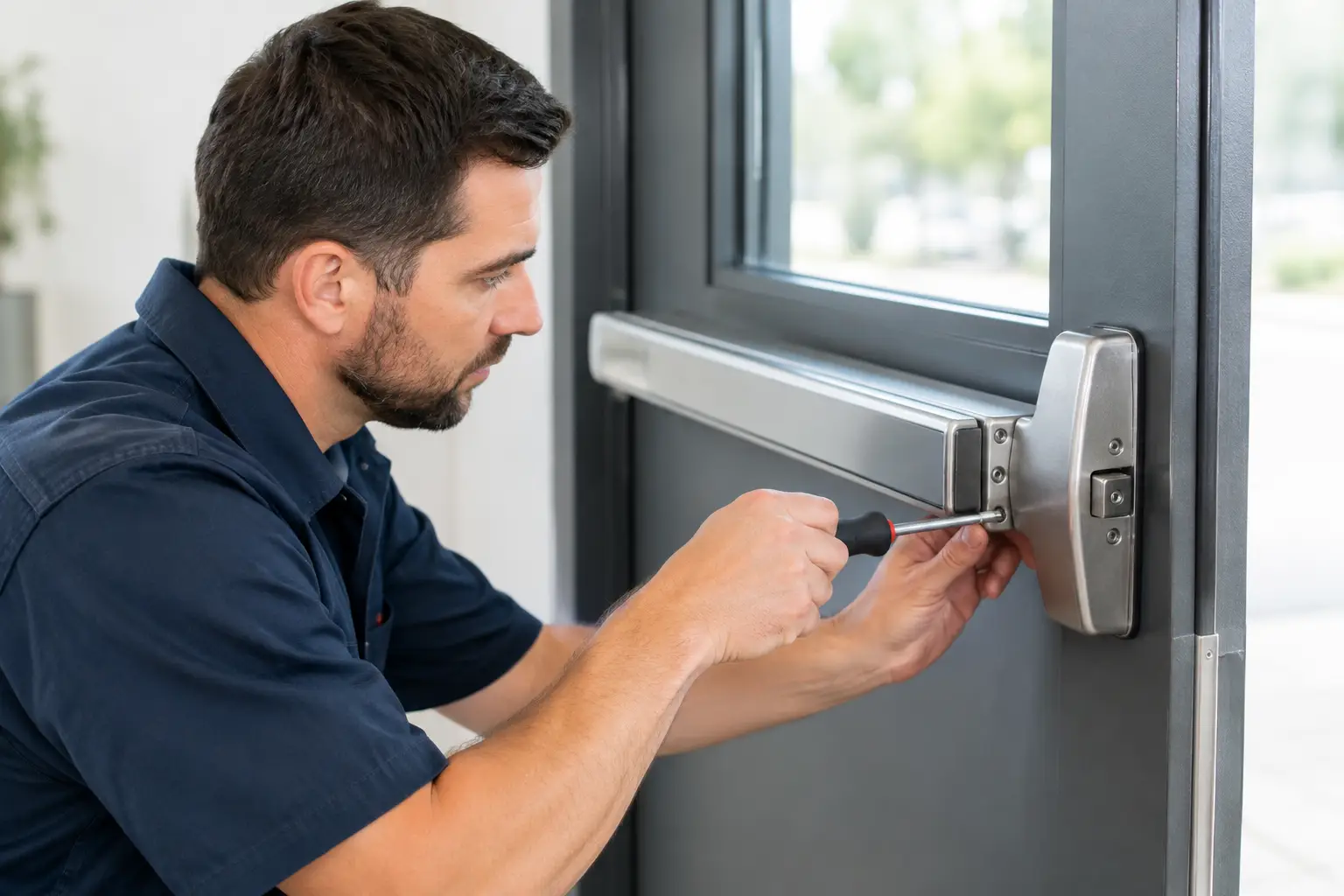
A proper repair starts with testing the door as a complete system. The technician checks the push bar, latch, strike, door swing, frame alignment, hinges, closer, exterior trim, and locking function. If the opening uses a key cylinder, keypad, electric strike, or access system, those components should also be considered.
Some repairs are straightforward. A loose bar may need to be secured, a strike may require adjustment, or a door closer may need proper tuning. In other cases, worn internal parts, damaged latches, bent components, or failed exterior trim need replacement.
The best solution depends on the condition of the device. Repairing a quality exit device is often practical when the body of the hardware is sound and replacement parts are available. Replacement may make more sense when the bar is heavily damaged, obsolete, repeatedly failing, or no longer appropriate for the door’s use.
A skilled locksmith should explain that difference clearly. You should know whether a repair is expected to provide lasting service or whether it is a temporary measure while a replacement is scheduled.
Avoid DIY fixes on emergency exits
It may be tempting to tighten a few screws or spray lubricant into the mechanism. Basic cleaning around the door is fine, but improvised repairs can create serious problems. Incorrect adjustments can prevent full latching, stop the latch from releasing consistently, or damage internal components.
Avoid taping the latch, disabling an alarm, wedging the door open, or modifying the bar to make it easier to use. Those shortcuts can leave the building unsecured and may interfere with the door’s intended emergency function. If a panic bar is difficult to operate, treat it as a service call, not a workaround.
Fast Help for Businesses and Property Managers
A malfunctioning exit door can disrupt an entire business day. Staff may be unable to secure the building. Customers may encounter an unsafe entrance or exit. Property managers may need a reliable technician before a tenant move-in, inspection, or after-hours incident.
Mobile locksmith service is especially useful in these situations because the technician comes to the property with the tools needed to inspect and repair the issue on-site. That reduces downtime and avoids the uncertainty of removing door hardware and waiting for an off-site repair.
YES Locksmith provides mobile commercial locksmith support for panic bars, door hardware, locks, rekeying, and urgent access problems throughout Daly City, San Francisco, and surrounding communities. With more than 20 years of experience, licensed, bonded, and insured technicians focus on restoring safe access and dependable security while protecting your existing door and hardware whenever possible.
For a commercial property, it also helps to keep a record of recurring door issues. Note which door is affected, when it sticks, whether weather changes the problem, and whether the door is used heavily at certain times. That information can help a technician identify patterns and recommend a repair that fits the building’s actual use.
When Repair Should Become Replacement
Not every panic bar should be repaired indefinitely. If the device has recurring internal failures, visible structural damage, missing parts, or no available replacement components, replacement may be the safer investment. The same is true when a building’s occupancy, use, or access needs have changed and the existing hardware no longer fits the opening.
Replacement decisions should account for more than the bar itself. Door material, fire-rated labeling, exterior access needs, key control, alarm requirements, and compatibility with existing hardware can all matter. A qualified locksmith can inspect the opening and recommend an appropriate path without guessing.
Protect the Door Before the Next Emergency
Do not wait until a busy shift, a tenant complaint, or a locked-up storefront turns a worn panic bar into an emergency. Schedule service when the first signs appear, and make sure staff know to report a sticking exit door right away.
A door that opens easily from the inside and secures properly after use gives people one less thing to worry about when time matters most.