
A car lockout can turn serious fast when you are parked on a busy San Francisco street, standing in bad weather, or have a child or pet inside. Knowing how to unlock car door safely starts with one rule: do not turn a frustrating moment into vehicle damage, a personal safety risk, or an expensive repair.
Modern vehicles are not built for improvised entry. Door frames, weather stripping, side airbags, electronic locks, and anti-theft systems can all be damaged by forcing a door open. The safest response is usually slower than panic, but much faster than repairing a broken window or a damaged lock.
Start by Checking for Immediate Danger
Before dealing with the lockout itself, look at the situation around you. If a child, pet, vulnerable passenger, or anyone needing medical attention is trapped inside, call 911 immediately. Tell the dispatcher the vehicle make, model, location, and whether the engine is running or the cabin may be heating or cooling rapidly.
Do not spend valuable minutes searching for a trick online when someone inside could be in danger. Emergency responders can assess the circumstances and get help moving quickly.
If no one is inside, move yourself to a safe, visible location. Avoid standing near traffic, especially on narrow streets, freeway shoulders, or poorly lit parking areas. If the car is in an unsafe position, contact roadside assistance, law enforcement when appropriate, or a qualified mobile locksmith rather than attempting entry beside moving vehicles.
Check the Simple, Authorized Options First
Stress makes people overlook easy solutions. Take a minute to check every exterior door and the trunk or liftgate if your vehicle design allows access from there. A second key may be with a spouse, family member, roommate, employer, or trusted friend nearby.
Many newer vehicles also offer a manufacturer app, remote-access subscription, or connected-car service that can open the vehicle after you verify ownership through your account. This option depends on the vehicle, its subscription status, cell service, and whether the system is functioning. It can be useful, but it is not reliable enough to count on during every emergency.
Your insurance policy, auto club membership, dealership program, or credit card benefits may include roadside lockout assistance. Check the terms before assuming the service is covered. Some programs send a general roadside provider, while others reimburse a locksmith after the service. Coverage limits, wait times, and service quality can vary.
What Not to Do During a Car Lockout
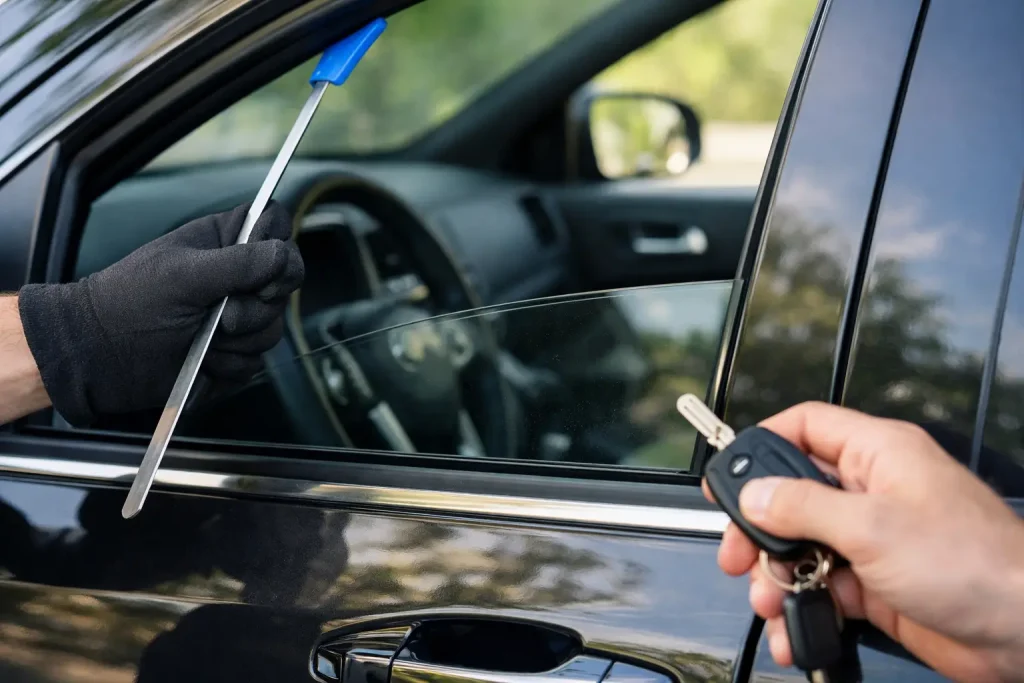
The internet is full of supposed fast fixes. Most are outdated, incomplete, or likely to cause damage on modern vehicles. Avoid trying to force the door with coat hangers, wire, screwdrivers, wedges, slim tools, or improvised inflatable devices.
These methods can bend the door frame, tear weather seals, scratch paint, damage window tracks, interfere with wiring, or trigger problems with the locking system. On vehicles with side curtain airbags and advanced electronic components, inserting tools into the wrong area can create risks that are not obvious from outside the car.
Breaking a window is rarely a sensible answer when there is no immediate threat to life. Replacing automotive glass costs money, leaves sharp debris behind, exposes the interior to weather and theft, and can take longer to resolve than calling a trained professional. It may also create a security issue until the glass is replaced.
Avoid repeatedly pulling handles, pressing the remote, or forcing the key if the lock seems frozen or unresponsive. The problem may be a dead key fob battery, a damaged key, a failing actuator, or a vehicle battery issue. Excess force can turn a repairable problem into a more costly one.
How to Unlock a Car Door Safely: Call a Qualified Locksmith
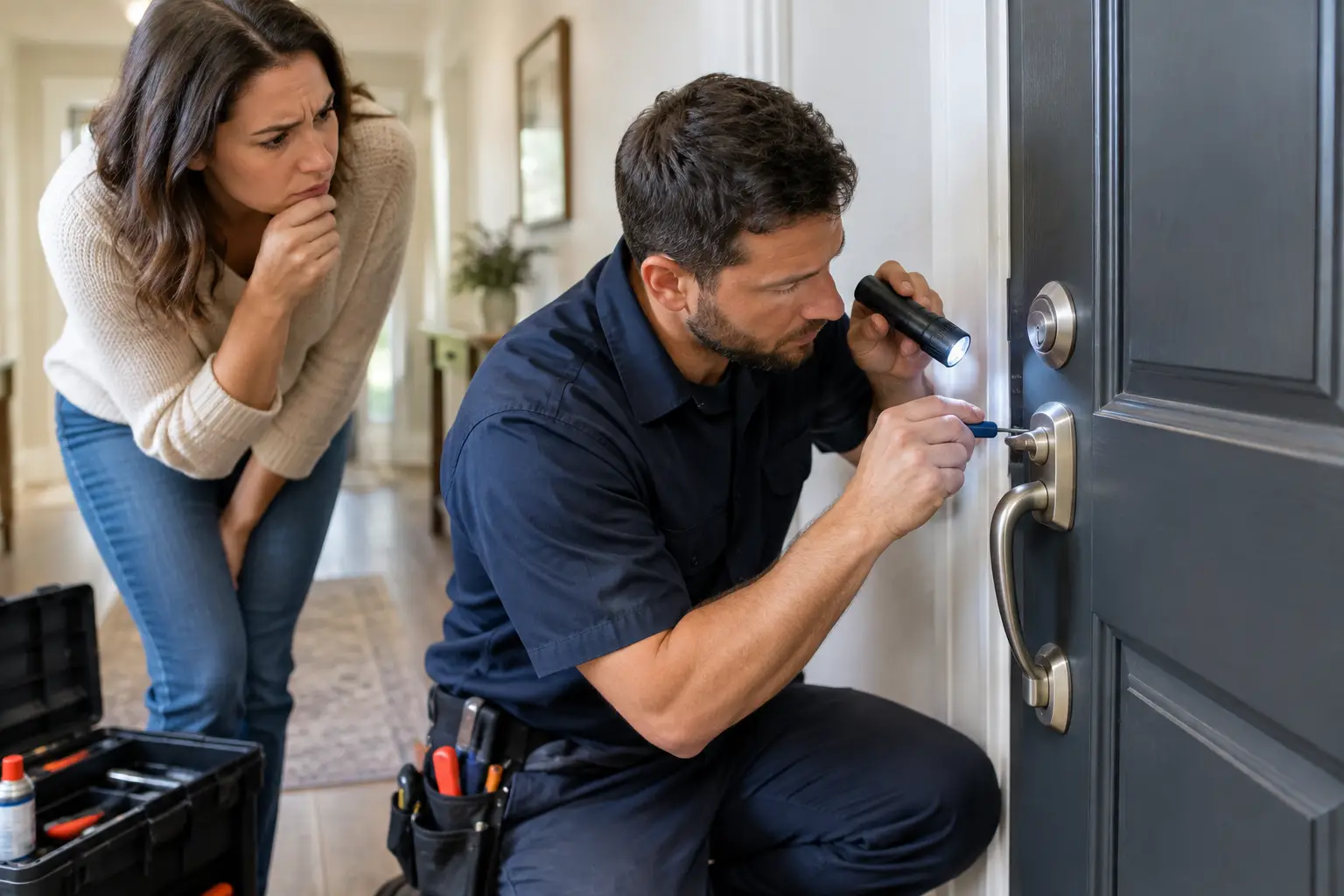
For most drivers, a licensed, insured automotive locksmith is the safest choice when an authorized spare key or remote service is not available. A trained technician uses vehicle-appropriate tools and methods designed to protect the door, glass, lock, and weather stripping. They also verify that the person requesting access is authorized to enter the vehicle.
That verification matters. A professional should ask for identification, registration, proof of insurance, or another reasonable form of ownership confirmation. If your documents are locked inside, explain that before the technician arrives. In many cases, the technician can confirm identifying details and allow you to retrieve documentation once access is restored.
A qualified locksmith can also identify the real cause of the lockout. You may have left keys inside, but the underlying issue could be a failing remote, broken key blade, worn ignition component, dead vehicle battery, or a damaged door lock. Finding that problem early can prevent the next lockout from happening in a less convenient place.
YES Locksmith provides mobile automotive lockout service for drivers in Daly City, San Francisco, and nearby Bay Area communities. The goal is straightforward: restore access on-site while protecting the vehicle from unnecessary damage.
Ask the Right Questions Before Service Begins
When you call for help, provide the vehicle year, make, model, location, and a clear description of what happened. Mention whether the keys are visible inside, the key is lost, the fob is not working, or the lock is damaged. Accurate information helps the technician arrive prepared.
It is also reasonable to ask whether the locksmith is licensed, bonded, and insured, whether they handle your vehicle type, and what pricing factors may apply. Emergency service can vary based on location, time, vehicle security features, and whether a replacement key or programming is needed. Clear expectations before work begins help prevent surprises.
Special Situations That Need Extra Care
A locked vehicle with the engine running needs prompt attention, particularly in a garage, enclosed space, extreme heat, or extreme cold. Move away from exhaust fumes and call for emergency help if anyone is at risk.
If your keys were stolen, gaining entry is only the first step. A thief with your keys may be able to return to the vehicle, especially if registration information reveals where you live. Ask a locksmith about replacing keys, removing lost keys from the vehicle’s memory when possible, and addressing any related home or business security concerns.
If the key fob battery has died, follow the vehicle owner’s manual for the manufacturer-approved emergency key and starting procedure. Every model differs. Do not guess at the process or use force on a concealed key slot, steering column, or push-button ignition system.
For rental cars, company vehicles, or fleet vehicles, contact the rental company, fleet manager, or authorized representative. They may have specific access procedures and may require their own roadside provider. Trying to enter without authorization can create liability even when you are the assigned driver.
Prevent the Next Lockout Without Creating New Risks
A little preparation makes a major difference. Keep your key fob battery fresh, test your spare key occasionally, and make sure a trusted person can reach it if needed. If your vehicle supports digital access, confirm the app is installed, signed in, and connected before an emergency happens.
Do not hide a key in an obvious place on or near the car. Thieves know the usual locations. A professionally planned spare-key arrangement is safer than leaving easy access for anyone who walks by.
Pay attention to warning signs: inconsistent remote operation, a key that sticks, an exterior lock that feels loose, or a door that does not respond consistently. These are often repair issues, not inconveniences to ignore. Addressing them early protects your access and reduces the chance of being stranded.
The right response to a lockout is not the fastest-looking trick. It is the option that keeps you safe, protects your vehicle, and gets you back on the road without adding a repair bill to an already stressful day.