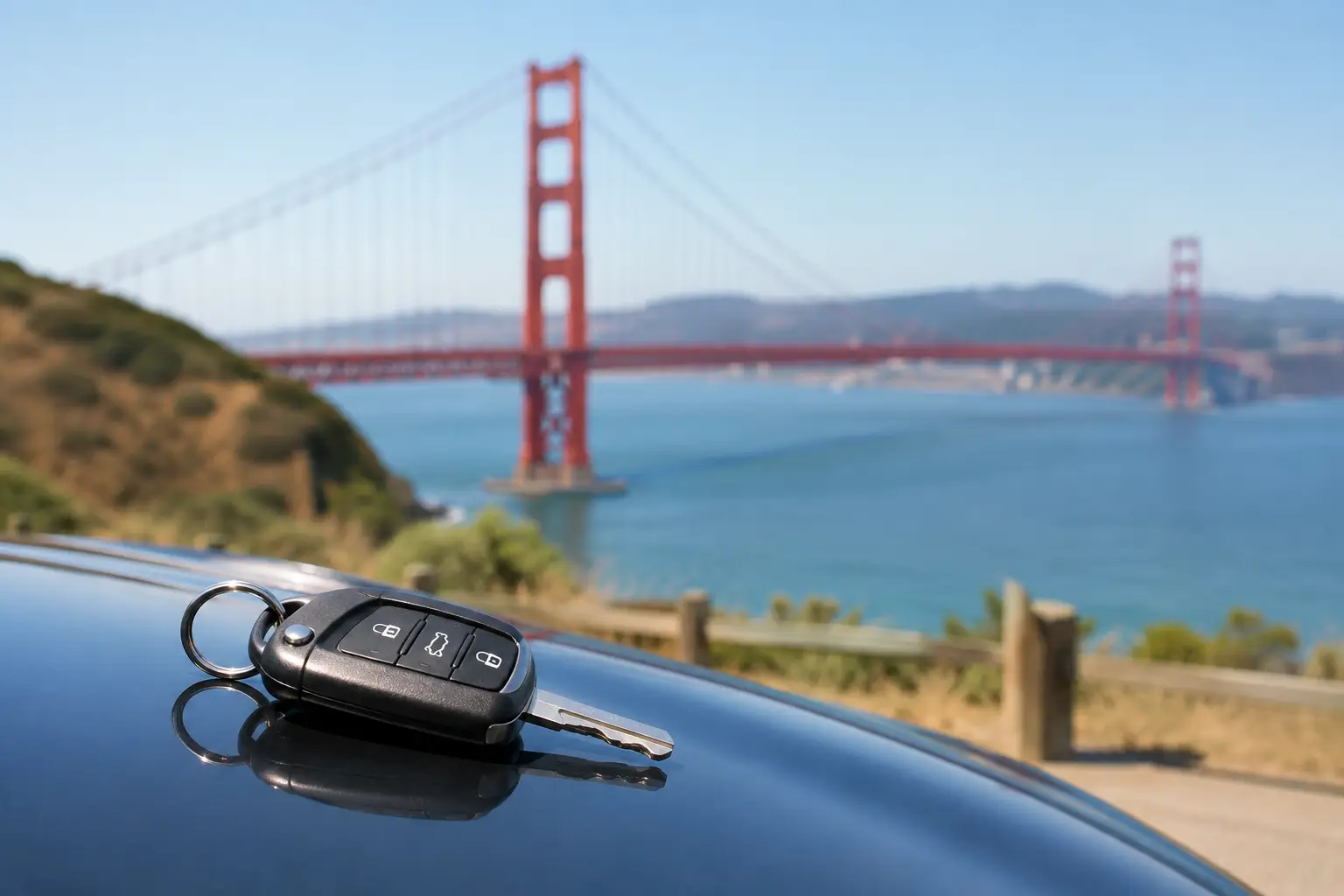

You are parked outside your Daly City apartment, late for work, and your only car key is gone. A lost car key replacement example makes the next steps clearer: a trained mobile locksmith comes to your location, confirms you are authorized to access the vehicle, identifies the key system, and creates and programs a working key on-site whenever the vehicle allows it.
This is not the same as copying a spare house key. Modern vehicle keys can include a transponder chip, remote buttons, proximity functions, and security data tied to the vehicle. The right solution depends on the car, the key type, and whether every existing key has truly been lost.
A Lost Car Key Replacement Example, Step by Step
Consider a driver in San Francisco who loses the only key to a 2018 Honda Civic while visiting a friend. The car is locked, the windows are up, and there is no spare key available. The driver needs to get home without risking damage to the vehicle or leaving it stranded overnight.
First, the locksmith gathers the information needed to prepare for the job. That typically includes the year, make, model, vehicle identification number when available, and the customer’s location. A photo of the vehicle and any remaining key, even a broken one, can also help. This information allows the technician to bring the proper key blank, programming equipment, and tools.
When the mobile technician arrives, the customer is asked to provide identification and proof that they own or are authorized to use the vehicle. This protection matters. A professional locksmith should not create a key for a vehicle without verifying authorization.
Next, the locksmith gains entry using vehicle-specific methods designed to avoid damage. For most jobs, there is no need to break a window, force a door, or damage the lock. Once access is established, the technician determines the vehicle’s key code or reads the lock so a new mechanical key can be cut accurately.
For this Civic, the key has a transponder chip. The new key must be cut to operate the door and ignition, then programmed so the vehicle recognizes its security chip. After programming, the locksmith tests the key for door operation, ignition function, and any remote features included with the replacement. The driver leaves with a working key and a vehicle that starts normally.
That is the basic path. The details can change significantly between a traditional metal key, a chip key, a remote head key, a key fob, and a push-button-start smart key.
What Changes the Replacement Process
A simple mechanical key is generally the most straightforward replacement. Older vehicles may only require cutting a key that matches the lock and ignition. Even then, proper cutting matters. A poorly cut key can stick, wear out quickly, or damage the lock cylinder over time.
Transponder keys add another layer. The key blade may turn in the ignition, but the vehicle will not start unless the chip is programmed correctly. This is a common reason a cheap, unprogrammed key purchased elsewhere does not solve the problem. The key may physically fit, yet the car’s immobilizer system still blocks the engine from starting.
Smart keys and proximity fobs require more specialized equipment and experience. With these systems, the vehicle detects the fob nearby rather than using a conventional ignition key. Availability, model year, and programming procedures can affect how quickly a replacement can be completed. Some vehicles can be handled fully on-site, while others may have manufacturer-specific limitations.
The number of keys lost also matters. If one key remains, creating a spare is usually simpler and gives the locksmith a working reference. If all keys are gone, the technician may need to generate a key from the vehicle’s locks or retrieve authorized key information before programming can begin.
Why Proof of Ownership Is Part of Safe Service
Losing a key is stressful, especially when you are far from home, parked in a garage, or managing a work vehicle on a tight schedule. Still, legitimate vehicle access must be protected. A locksmith’s job is to restore access to the right person, not bypass vehicle security for anyone who asks.
Have your driver’s license, registration, insurance card, rental agreement, or other ownership documentation ready if possible. The vehicle identification number can often be found on the dashboard near the windshield, on the driver’s door frame, or in your insurance paperwork. If your documents are locked inside the vehicle, explain that when you call. A professional technician can guide you through the verification process.
This step protects you from theft and helps the service move faster once the locksmith arrives.
Time and Cost Depend on the Key, Not Just the Car
Drivers often ask for a price before describing the vehicle or key type. That is understandable, but an accurate quote requires more than “I lost my keys.” A 2005 sedan with a standard transponder key is a different job from a late-model luxury SUV with a proximity fob and advanced anti-theft system.
The main factors are the vehicle’s year, make, and model; the type of key or fob; whether all keys are lost; the availability of the correct replacement; the programming required; and the location and timing of the service call. A vehicle parked in an accessible driveway is different from one blocked inside a downtown parking structure.
Be cautious of vague, unusually low quotes that do not account for these details. The lowest number on a phone call can change once a provider arrives and identifies the actual key system. A dependable locksmith should explain what is included before work begins and communicate clearly if the vehicle requires a more involved procedure.
What to Do Right After You Lose Your Car Keys
Start by checking the places where the key could realistically be. Look in jacket pockets, bags, between car seats, near checkout counters, and along the route you walked. If the key was lost in a public place, contact the business or location quickly. A key found before service begins may save you a replacement call.
If the key is not found, move to security. Do not leave the vehicle unlocked, especially if your registration or personal documents are inside. If you think the key was stolen rather than misplaced, tell the locksmith. Depending on the vehicle, it may be possible to remove the missing key from the vehicle’s recognized-key memory and program new keys. That is an important distinction: a replacement key gets you moving, while deleting a missing key can reduce the chance that someone else can later start your car.
Avoid improvised entry attempts. Coat hangers, wedges, screwdrivers, and forced door handles can damage weather stripping, window mechanisms, paint, airbags, locks, and electronic wiring. A quick shortcut can become an expensive repair.
Prevent the Next Lost-Key Emergency
Once you have a working replacement, consider making a second key immediately. A spare stored at home with someone you trust can turn a future lockout into a minor inconvenience. For key fobs, keep the emergency mechanical key with the fob and replace weak batteries before they fail at the worst time.
Drivers who use their vehicles for deliveries, property management, contracting, or daily commuting should be especially careful about backups. Lost-key emergencies cost more than the replacement itself when they interrupt a shift, delay an appointment, or leave a vehicle inaccessible after business hours.
YES Locksmith provides mobile automotive locksmith service for drivers in Daly City, San Francisco, and nearby Bay Area communities. With more than 20 years of experience, licensed, bonded, and insured technicians focus on accurate, damage-free service at your location.
A missing car key can stop your day without warning, but it does not have to turn into a damaged vehicle or a long wait at a dealership. Keep your vehicle details and proof of ownership available, choose a qualified mobile locksmith, and arrange a spare once you are back on the road.