
A sliding glass door should bring light into your home or business, not create an easy entry point. Older doors, worn latches, loose frames, and exposed tracks can all make a property easier to target. Knowing how to secure sliding doors starts with understanding that the factory latch is rarely enough on its own.
For homes, apartments, storefronts, and offices around San Francisco and Daly City, sliding-door security is especially worth reviewing after a move, a break-in attempt, lost keys, tenant turnover, or visible damage. The right upgrade depends on the door’s condition, the type of frame, and whether you need everyday convenience, stronger forced-entry resistance, or both.
Start With the Door, Lock, and Track
Before adding hardware, check whether the sliding door is properly aligned. A door that lifts easily out of its track, rattles in the frame, or does not close squarely may remain vulnerable even with a new lock. Look at the rollers, bottom track, strike area, latch, fixed panel, and frame screws.
Test the existing latch from both sides. Many standard sliding-door latches are designed primarily to keep the door shut, not to resist hard pulling, prying, or lifting. If the latch feels loose, fails to engage consistently, or can be manipulated from outside, it should be repaired or replaced.
Also inspect the track for dirt, corrosion, dents, or worn rollers. A dragging door can tempt people to leave it partially open or avoid locking it. More importantly, poor alignment can prevent a secondary lock from working as intended. Security hardware is only effective when the door closes firmly and stays seated in its frame.
How to Secure Sliding Doors With Secondary Locks
The most effective approach is layered protection. Instead of relying on one latch, combine a working primary lock with a second device that prevents the panel from sliding or lifting.
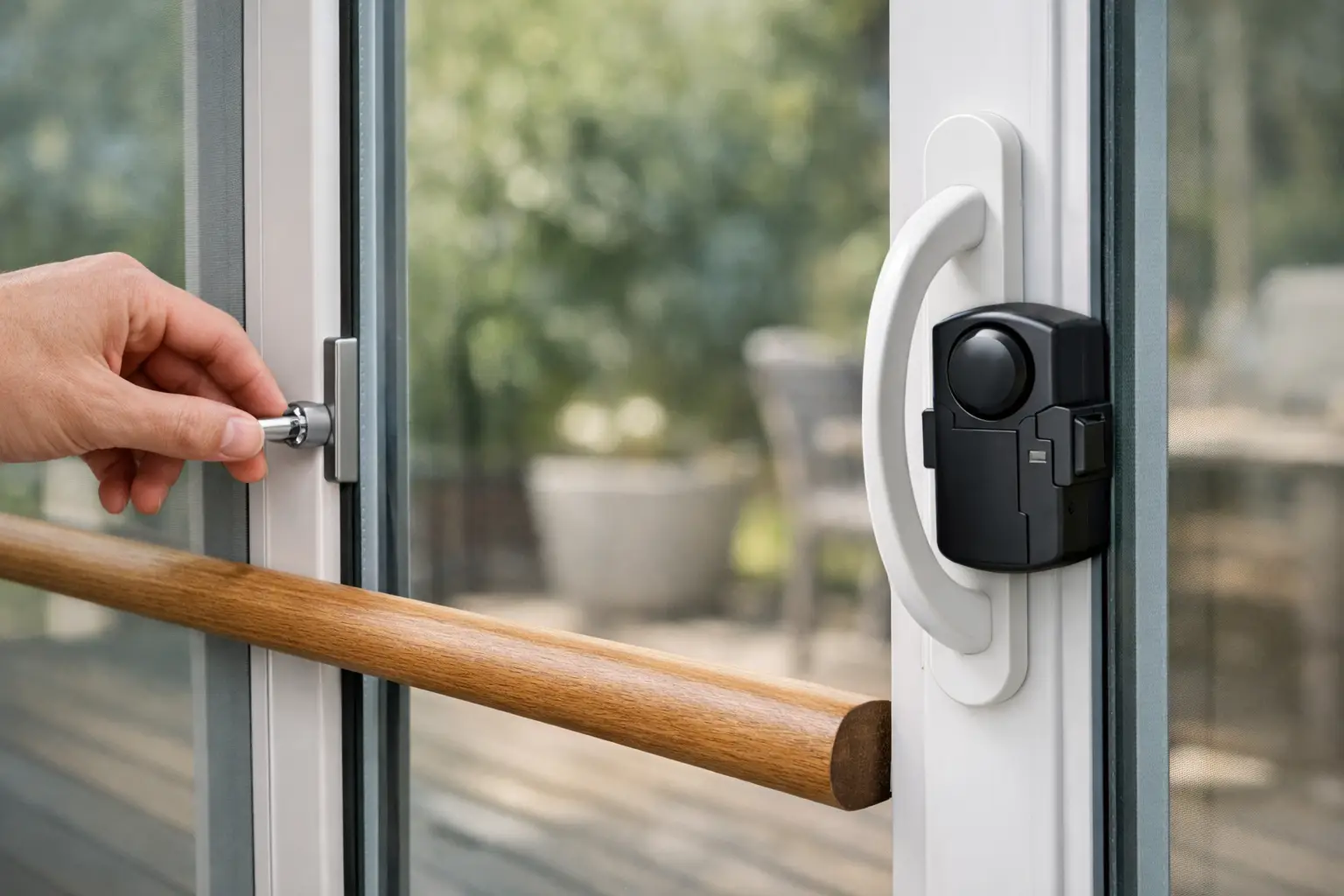
A security bar is one of the simplest options. It sits in the lower track or between the sliding panel and frame, blocking the door from opening even if the latch is defeated. A properly sized metal bar is stronger and more dependable than a loose piece of wood. Wood dowels can work temporarily, but they can split, shift, or be removed if they are not fitted correctly.
Pin locks offer another strong option. These devices secure the moving panel to the frame or track with a metal pin, stopping the door from sliding. They are useful when you want a cleaner appearance than a bar and are willing to make a precise installation. Placement matters: an incorrectly drilled pin lock can affect the frame, glass clearance, or door operation.
Foot-operated locks can be practical for frequently used patio doors. They lock the door at the bottom and can provide added resistance without placing hardware at eye level. Some models allow the door to remain slightly open for ventilation while limiting how far it can slide. That feature can be helpful, but it is not a substitute for fully closing and locking the door when no one is present.
For a rental unit or commercial property, choose hardware carefully. Drilling into a frame without approval can violate a lease or damage a costly door system. A locksmith can recommend an option that improves security without creating unnecessary repair issues.
Prevent the Door From Being Lifted Out
Some sliding panels can be lifted upward and pulled out of the bottom track. This is a common weakness in older doors and doors with worn rollers or poorly adjusted frames.
Anti-lift devices address that problem. Depending on the door, this may involve installing a piece of hardware in the upper track, adjusting the rollers, or adding properly placed screws that limit vertical movement. The goal is to leave enough clearance for smooth operation while preventing the panel from being raised high enough to come out of the track.
This is not a place for guesswork. Screws that are too long can interfere with the panel or damage the door, while screws that are too short may accomplish nothing. If the door can be lifted, rocks in its track, or appears loose at the top, have the condition assessed before relying on a bar alone.
Upgrade Weak or Damaged Sliding Door Locks
A broken latch should never be treated as a minor inconvenience. It leaves the door dependent on a temporary blocker and may signal a larger alignment or frame issue. Replacing worn sliding-door lock hardware can restore a secure closure, but the replacement must match the door’s handle spacing, mortise opening, latch style, and frame configuration.
Keyed sliding-door locks can add access control, especially for ground-floor doors, rental properties, offices, and doors with exterior access. However, a keyed lock is not automatically stronger than every standard latch. The quality of the lock body, the strike engagement, the frame condition, and the addition of secondary security all matter.
If you have recently moved into a property, changed tenants, dismissed an employee, or lost keys, consider rekeying or replacing any keyed sliding-door hardware. Controlling who has a working key is part of securing the opening, not just preventing forced entry.
Do Not Ignore the Glass and Surrounding Frame
The lock is only one part of the opening. Sliding doors often have large glass panels and narrow frames, so the surrounding condition matters. Cracked glass, loose glazing, weakened wood, corroded aluminum, or damaged vinyl can reduce the door’s overall resistance and should be repaired promptly.
Security film may help hold broken glass together after impact, but it does not make ordinary glass impossible to breach. It is best viewed as one layer in a broader plan. For higher-risk locations, property owners may also consider laminated safety glass, impact-resistant options, window sensors, motion lighting, or an alarm system.
Curtains, blinds, and exterior lighting deserve attention as well. Keep valuables out of direct view, particularly near patio doors facing yards, alleys, or parking areas. At a business, avoid leaving cash drawers, electronics, or inventory immediately visible through a rear sliding door after closing.
Choose Security That Still Works in an Emergency
A sliding door may be an emergency exit, so security upgrades must not trap occupants inside. Every adult in the home or responsible employee at the business should know how to release the door quickly from the interior. Avoid improvised solutions that require tools, excessive force, or complicated steps to remove.
This balance is especially important for doors used as a regular exit, doors in bedrooms, and commercial spaces with occupancy requirements. The strongest setup is one that resists outside entry while allowing a fast, intuitive exit from inside.
When to Call a Locksmith for a Sliding Door
Call for professional help when the latch is broken, the key will not turn, the door will not align, the frame has been damaged, or you are unsure which security hardware fits your door. A mobile locksmith can inspect the problem on-site, repair or replace compatible lock hardware, and help identify weaknesses that a quick visual check may miss.
YES Locksmith provides mobile residential and commercial locksmith service throughout Daly City, San Francisco, and nearby Bay Area communities. Licensed, bonded, and insured technicians can address damaged locks, rekeying needs, lock replacement, and security concerns without treating your door like a disposable part.
A secured sliding door should close smoothly, lock reliably, resist lifting and forced opening, and still let your family, tenants, or staff exit safely. If yours does not meet that standard, addressing it now is far easier than dealing with the damage and stress after an attempted entry.