
A missing car key can stop your day in a parking lot, outside your home, or miles from where you need to be. This automotive key replacement guide explains what to do next, what type of key you may need, and why calling a qualified mobile locksmith is often faster and safer than waiting on a dealership appointment.
For drivers in Daly City, San Francisco, and nearby Bay Area communities, the priority is simple: regain access, get a working key, and avoid damage to your vehicle. A professional automotive locksmith can come to your location with the equipment needed to cut, program, and test many replacement keys on-site.
Start by Identifying the Key Problem
Not every key emergency requires the same solution. A key that is locked inside the vehicle is different from a key that has been lost, snapped in the ignition, or stopped communicating with the car. The make, model, year, and key type all affect the replacement process and cost.
If your keys are locked in the car, do not force the door, pry the frame, or use coat hangers and online tricks. Modern vehicles have sensitive weather stripping, electronic locks, side-impact hardware, and airbags inside the door area. A damaged door seal or lock mechanism can cost far more than a professional lockout service.
If the key is lost or stolen, replacement is only part of the job. The vehicle may need to be reprogrammed so the missing key can no longer start it. This is especially important for smart keys, key fobs, and transponder keys. When security is on the line, you want the old key removed from the vehicle’s memory whenever the system allows it.
Common Types of Automotive Replacement Keys
Vehicle keys have changed significantly over the last two decades. A basic metal key may be straightforward to duplicate, but most newer vehicles use electronic security features that require specialized tools and programming knowledge.
A traditional metal key has no electronic chip. It operates the door and ignition mechanically and is common on older vehicles. A locksmith can usually cut a replacement quickly if the correct key blank and key code information are available.
A transponder key looks similar to a standard key but contains a small chip. The vehicle reads that chip before allowing the engine to start. Cutting the blade alone is not enough. The chip must also be programmed to work with your specific vehicle.
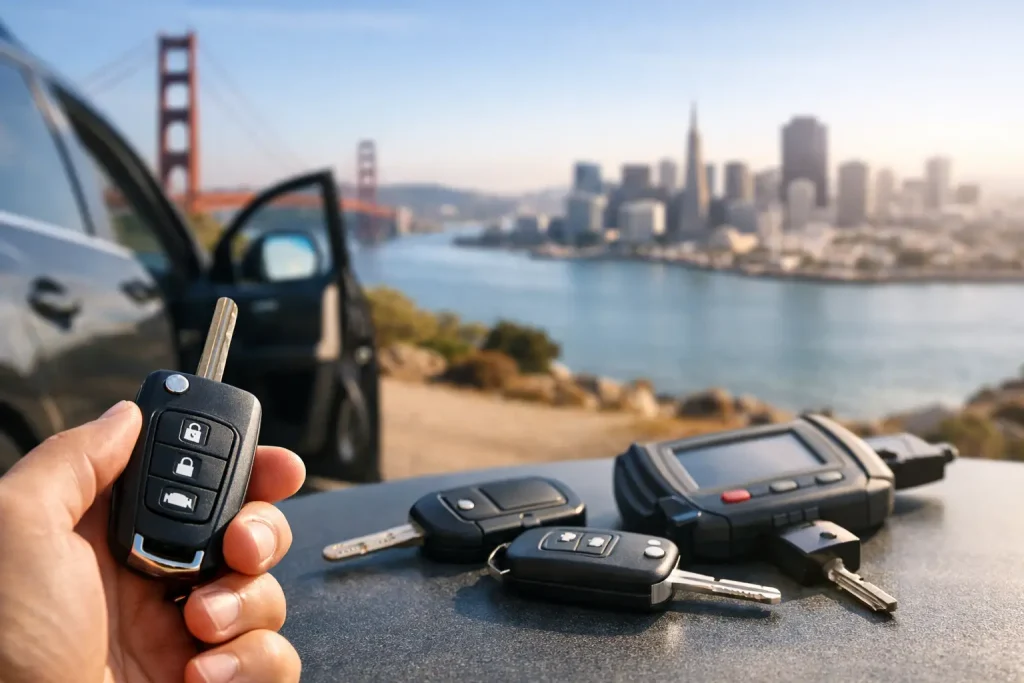
A remote head key combines a metal key blade with lock, unlock, trunk, or panic buttons. It requires accurate cutting and may require remote programming. A smart key or proximity fob does not always use a traditional ignition key slot. The driver keeps the fob nearby, and the vehicle recognizes it for push-button start and keyless entry.
There are also laser-cut or sidewinder keys, which have a distinctive milled pattern rather than standard edge cuts. These keys require dedicated cutting equipment. Some luxury, European, and late-model vehicles have more complex systems, so the right solution depends on the exact vehicle and available programming capability.
What Information a Locksmith Will Need
A legitimate locksmith will verify that you own or are authorized to access the vehicle. This protects you, other vehicle owners, and the technician. Be prepared to provide a photo ID, vehicle registration, title, insurance documentation, or other proof of ownership when possible.
The most useful vehicle details are the year, make, model, trim level, and vehicle identification number. Let the locksmith know whether you have any working keys left, whether the key is lost or broken, and whether the car has a push-button start. A clear description helps the technician arrive with the correct key blanks, programming tools, and diagnostic equipment.
If you are in an unsafe location, such as on a busy road, a poorly lit area, or an isolated parking structure, say so when you call. Your safety comes before the key replacement. Move to a secure location if you can do so safely, and wait where you are visible.
Mobile Locksmith or Dealership: Which Is Better?
A dealership can replace many vehicle keys, but it is not always the quickest choice. You may need to arrange a tow, wait for a service appointment, and pay for transportation before the replacement process even begins. Dealership service can make sense for certain highly specialized keys, warranty situations, or vehicle systems with restricted programming requirements.
A mobile automotive locksmith is often the more practical option for a lost key, lockout, broken key, or urgent replacement. Instead of bringing your vehicle to a shop, the technician comes to your home, workplace, roadside location, or parking lot. That can eliminate towing and reduce the time your vehicle is out of service.
The right provider should explain what they can do before beginning work. Ask whether the replacement includes cutting, programming, and testing. If you lost all keys, ask whether they can erase missing keys from the vehicle’s memory. Clear answers and transparent pricing matter, especially when you are already dealing with an unexpected problem.
Automotive Key Replacement Guide: What Happens On-Site
A professional replacement service usually begins with ownership verification and a review of the vehicle’s key system. The technician may decode the lock, use the vehicle identification number to obtain key-cut information when authorized, or create a working key using appropriate locksmith methods. The goal is to make a correctly cut key without harming the locks, ignition, or vehicle electronics.
For electronic keys, the technician connects approved programming equipment to the vehicle or follows the manufacturer’s required programming procedure. The replacement key is then tested for starting, locking, unlocking, trunk access, remote functions, and proximity operation when applicable.
If a key broke in the door or ignition, extraction must be handled carefully. Pushing the broken piece farther inside can damage the cylinder and turn a key replacement into an ignition repair. Do not use glue, pliers, or sharp tools unless a trained technician has advised you to do so.
A capable locksmith will also tell you if a deeper issue is present. Sometimes the problem is not the key at all. A worn ignition cylinder, failing key fob battery, damaged door lock, weak vehicle battery, or immobilizer fault can create symptoms that look like key failure. Correct diagnosis prevents you from paying for a new key that does not solve the real problem.
How to Avoid the Next Key Emergency
Once you have a working replacement, make a spare before the emergency is forgotten. A spare key kept at home with a trusted family member is usually safer than hiding one on the vehicle. For key fobs, replace weak batteries before they fail completely and keep the emergency mechanical key accessible if your fob includes one.
Drivers with one remaining key should not wait until it is lost. Replacing a spare while you still have a working key is generally simpler than creating a key when all keys are gone. It also gives the technician a functioning key to reference and may reduce programming time.
If a key has been stolen, do not treat it like an ordinary lost-key situation. Have the vehicle’s security system evaluated and ask about deleting the stolen key’s authorization. Someone holding a stolen key may know exactly which vehicle it belongs to.
When to Call for Immediate Help
Call a professional locksmith promptly if you are locked out in an unsafe area, your only key is missing, the key is broken in the ignition, or the vehicle will not recognize a key that previously worked. Avoid repeated start attempts with a damaged key or fob. Repeated attempts can drain the battery or complicate diagnosis.
YES Locksmith provides mobile automotive locksmith service for drivers who need dependable help at their location. With experienced, licensed, bonded, and insured technicians, the focus is on restoring access and replacing keys without unnecessary damage to your vehicle.
Your car key is a security device, not just a piece of metal or plastic. When it fails or disappears, choose a qualified local professional who can verify the problem, protect your vehicle, and get you moving again with confidence.