
A car lockout rarely happens when you have extra time to spare. It happens outside a grocery store with bags in your hands, at a trailhead with poor cell service, or late at night after a long shift. These top car lockout prevention tips help Bay Area drivers reduce that risk without relying on luck or complicated routines.
The goal is simple: keep at least one dependable way to access your vehicle when the primary key is lost, locked inside, damaged, or has a dead battery. A few small habits can prevent a stressful roadside problem and the expense that can follow.
Build a Key Routine You Can Repeat
Most lockouts start with a break in routine. You set your keys on the seat while loading the car, toss them into a jacket pocket, or leave the fob in a cup holder while helping a child into the back seat. A vehicle that automatically locks can turn that short distraction into an immediate problem.
Before closing any door, make a quick key check part of the motion. Feel for the key or fob in your hand, pocket, bag, or designated clip. This may sound basic, but a consistent five-second check is more reliable than trying to remember where you placed your keys during a busy day.
Choose one primary location for your keys when you are not driving. A hook near the door, a small tray, or a specific compartment in your work bag can help. Avoid moving keys between several coats, purses, backpacks, and drawers. Lost keys at home can delay you just as effectively as keys locked inside the vehicle.
Keep a Spare Key, but Store It Safely
A properly planned spare is one of the most practical car lockout prevention measures available. It gives you an option before a minor mistake becomes an emergency. The right choice depends on your vehicle, your daily routine, and whether you share the car with another driver.
For many drivers, the best option is to leave a programmed spare key or fob with a trusted family member nearby. That person should be someone who can answer the phone and reasonably reach you if needed. If you commute from Daly City to San Francisco or travel frequently around the Bay Area, a spare kept at home may still be useful, but it may not solve a lockout across town.
Some drivers use a magnetic key holder hidden on the exterior of the vehicle. This can work for an older car with a traditional metal key, but it is not the best choice for every vehicle. A poorly placed holder can fall off, collect road grime, or be found by someone looking for it. Never place a spare in an obvious location, such as the glove compartment, wheel well, or directly behind a license plate.
Modern smart keys create another trade-off. A spare fob can be expensive, and it must be programmed correctly to work. Still, replacing a spare before you need it is usually easier than dealing with a lost-only key during an emergency. Ask a qualified automotive locksmith about the right key type and programming needs for your make and model.
Take Care of Your Fob and Key Battery
A fob that works only sometimes is a warning sign, not a minor annoyance. If you have to stand unusually close to the vehicle, press the button repeatedly, or see a low-key-battery notice, replace the battery promptly. Keep the correct battery type on hand if your vehicle uses a common coin-cell battery.
Do not wait for complete failure. A weak fob battery can leave you unable to lock, start, or access the vehicle as expected, especially with push-button start systems. Most fobs have a mechanical emergency key inside, but drivers often do not know how to remove it or where the physical key slot is located until they are already stranded.
Take a few minutes in daylight to read your owner’s manual and test the emergency access method. Learn how to remove the mechanical key, locate the concealed door lock cylinder, and use the backup starting procedure if your vehicle has one. This knowledge is useful only if you can do it calmly when the pressure is on.
Do Not Trust the Car to Make the Decision for You
Automatic locking features are convenient, but they can create false confidence. Some vehicles will refuse to lock with a fob inside. Others may lock after a timed delay, lock when a door closes, or behave differently if the fob battery is weak. Vehicle settings also vary by year, model, and aftermarket alarm system.
Treat every vehicle as if it can lock with the key inside. Keep the fob on your person whenever you step out, even if you are only pumping gas, scraping a windshield, or dropping off a delivery. Avoid placing keys on the driver seat, center console, trunk floor, or roof. Those are the exact places where keys are forgotten.
If you have children or pets in the car, the habit matters even more. Never leave the key inside while loading passengers or supplies. Put the fob in a secure pocket first, then manage everything else. In an emergency involving a child or pet trapped in a vehicle, call 911 immediately.
Plan for Work, Travel, and Shared Vehicles
Drivers who use a vehicle for work face extra lockout risks. Contractors, delivery drivers, real estate professionals, and property managers may get in and out of the vehicle dozens of times each day. Repetition can make anyone careless.
Use a lanyard, belt clip, zippered pocket, or secure key organizer that stays with you during stops. The best setup is one you will actually use while carrying tools, paperwork, groceries, or equipment. A bulky solution that stays in the console will not prevent a lockout.
Shared vehicles need clear rules. If two family members or employees use the same car, decide where the primary and spare keys belong, who holds the spare, and what to do when a key is damaged or missing. For a business vehicle, document key handoffs instead of assuming the last driver returned the fob. A missing key is both an access problem and a security concern.
Know When a DIY Attempt Can Make Things Worse
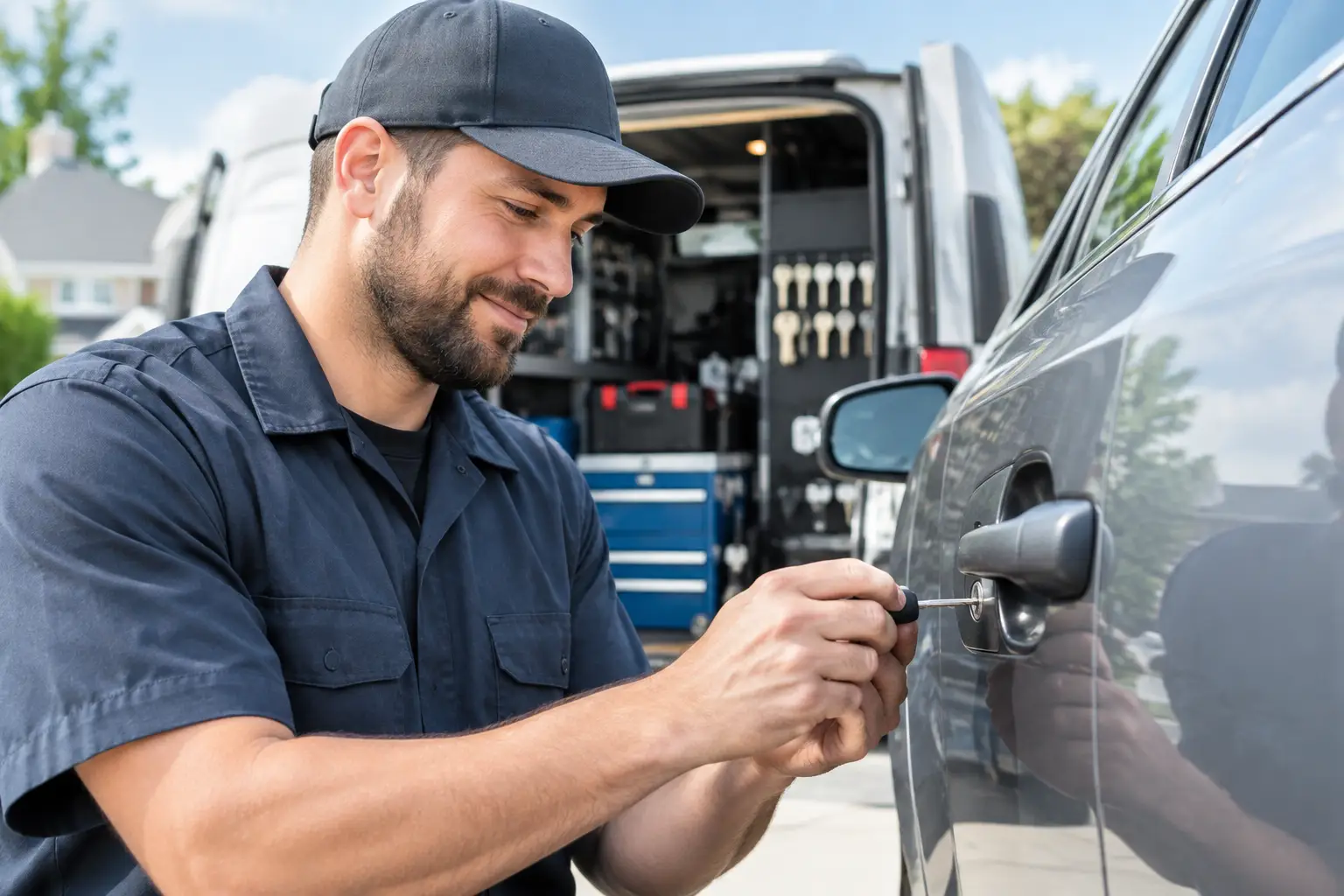
When keys are visible inside a locked vehicle, it is tempting to force the door, use a coat hanger, or pry open a window frame. That can damage weather stripping, airbags, electronic components, door panels, and paint. It can also turn a straightforward lockout into a repair bill.
Modern vehicles are especially difficult to open without the right tools and training. Side-impact airbags, delicate window mechanisms, and electronic locks leave little room for trial and error. If your key is locked inside, your fob has failed, or the key has been lost, a trained automotive locksmith can assess the vehicle and use methods designed to protect it.
Keep the contact information for a licensed, bonded, and insured local locksmith in your phone before you need help. A mobile technician can come to your location, whether you are at home, at work, or stranded in a parking lot. YES Locksmith provides on-site automotive lockout help for drivers in Daly City, San Francisco, and nearby Bay Area communities.
A Simple Checklist Before You Close the Door
The strongest prevention plan is short enough to use every day. Before you shut the door, check that the key or fob is with you. Keep a tested spare in a safe, intentional location. Replace weak fob batteries early, and learn your vehicle’s mechanical backup method before an emergency.
These habits do not take much time, but they give you control when schedules are tight and conditions are stressful. If a lockout still happens, protect your vehicle, avoid forced entry, and get qualified help rather than risking additional damage.