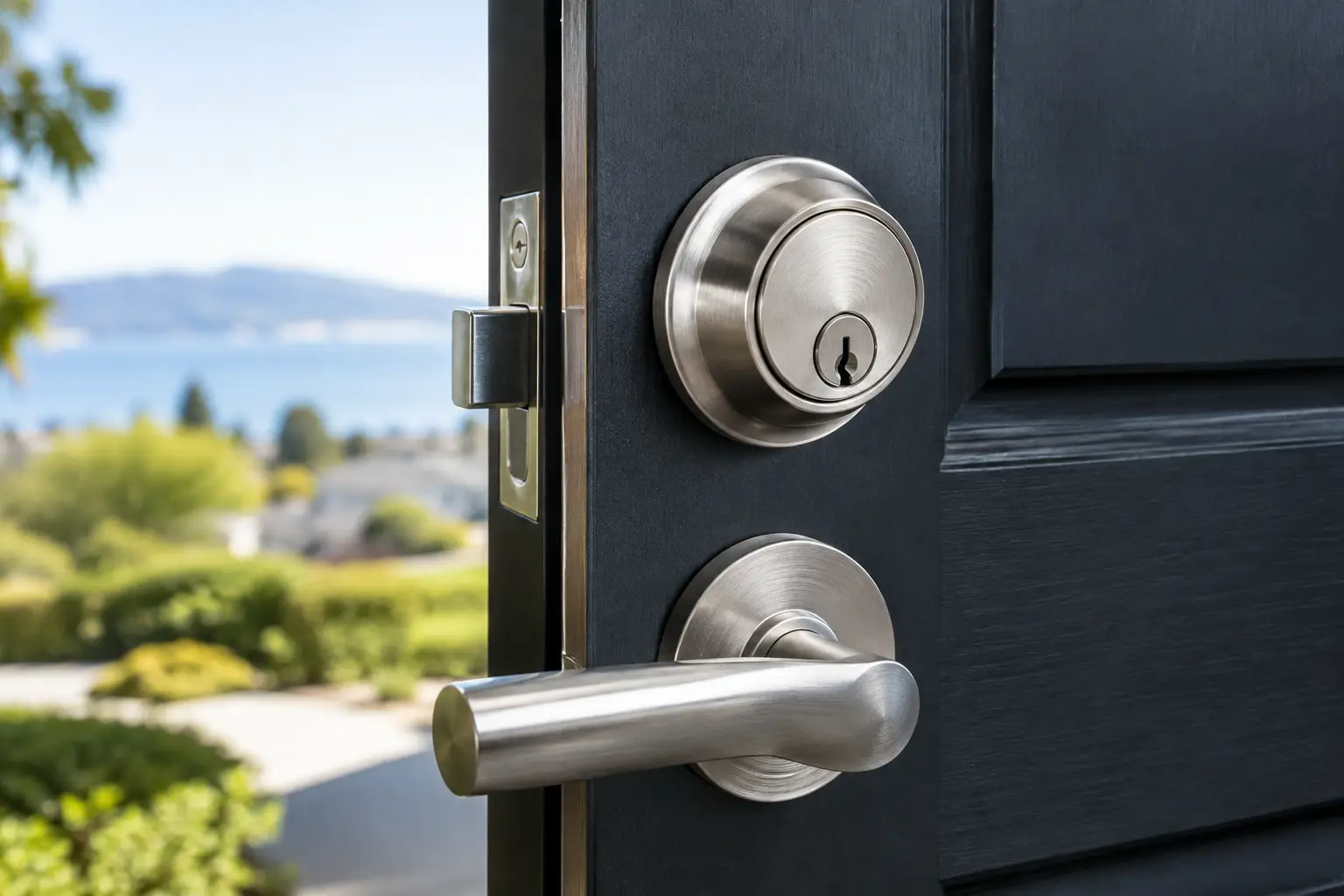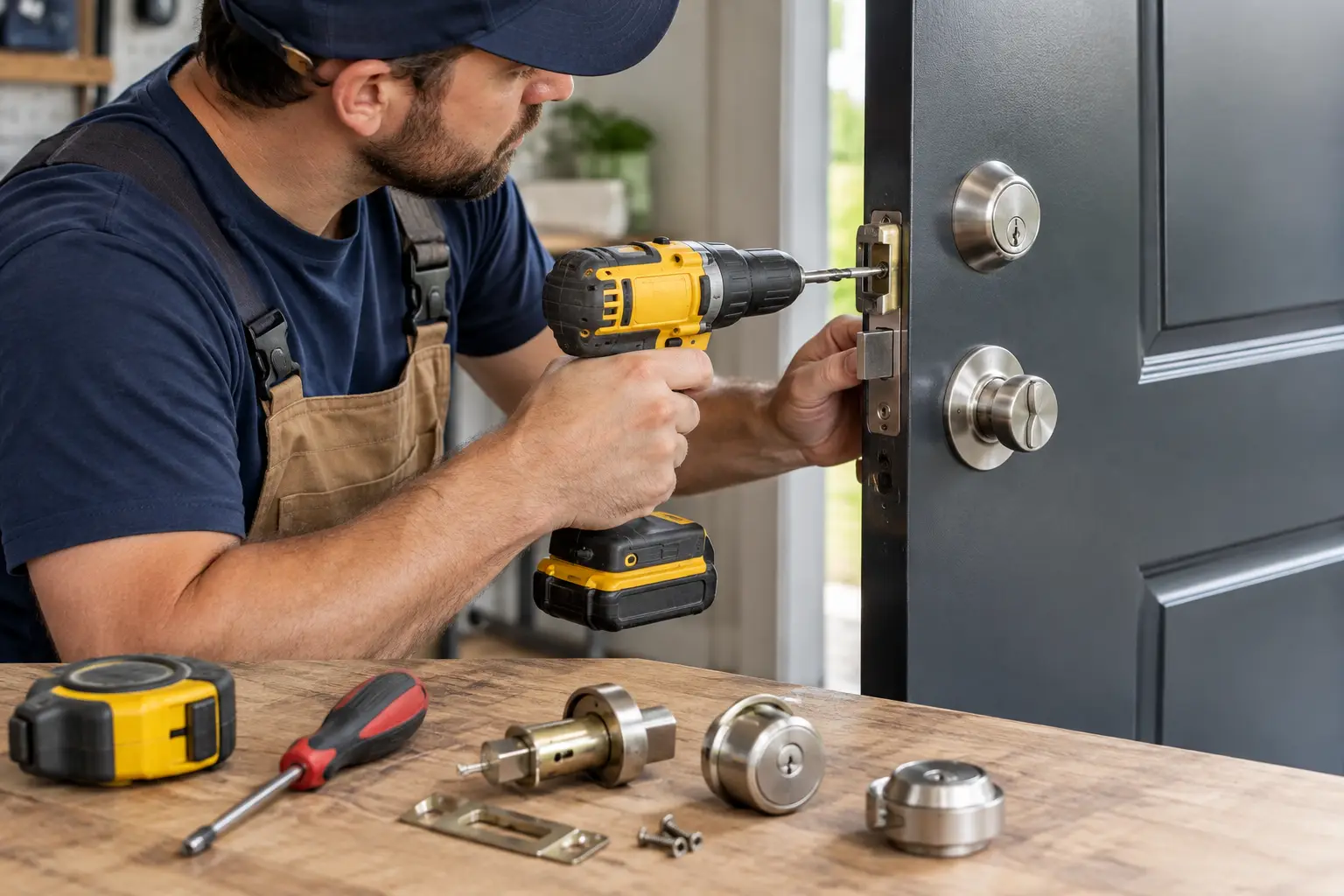

A deadbolt only protects the door if it is installed with the right alignment, hardware, and reinforcement. When you install a deadbolt on a metal door, the drilling itself is only one part of the job. A misaligned bolt can bind, a weak strike plate can fail under force, and the wrong preparation can leave a steel door with permanent damage.
For a residential side entry or a light-duty commercial door, a careful installation may be practical. But if the door is fire-rated, part of a multi-unit building, has a glass panel, uses panic hardware, or already shows signs of damage, stop before cutting. A qualified locksmith can assess the door, protect its rating and warranty where applicable, and install the lock without creating a larger repair.
Check the Metal Door Before You Start
Not every metal door is built the same way. Some residential metal doors have a foam or wood core beneath a thin steel skin. Others are hollow metal commercial doors with reinforced areas for lock hardware. The method, drill bits, and reinforcement required depend on what is behind the face of the door.
Start by confirming that the door is thick enough for the deadbolt. Most standard deadbolts fit doors from 1-3/8 to 1-3/4 inches thick, but specialty doors may require an extension kit or commercial-grade hardware. Measure the backset as well: it is the distance from the door edge to the center of the lock bore, commonly 2-3/8 or 2-3/4 inches.
Check both sides of the door for obstructions. Decorative glass, existing lock hardware, internal rods, insulation, electrical wiring, and closers can affect placement. Make sure the planned deadbolt location allows enough clearance above the lever or knob to operate comfortably.
A properly installed deadbolt should sit level, throw fully into the frame, and not require you to push, pull, lift, or twist the door to lock it. If the door is sagging or rubbing the frame now, correct that problem first. A new lock cannot compensate for a door that is out of alignment.
Choose the Right Deadbolt for the Job
For most homes, a single-cylinder deadbolt is the practical choice. It has a key cylinder on the outside and a thumb turn inside. A double-cylinder deadbolt requires a key on both sides, which can create an emergency exit concern. Local fire and building requirements, lease rules, and the door’s intended use all matter before choosing one.
Look for a quality deadbolt with a solid bolt, a reinforced strike plate, and long mounting screws. The lock should be appropriate for exterior use and compatible with your door thickness. A smart deadbolt can add convenience, but it still depends on precise mechanical alignment. If the bolt drags, batteries and apps will not solve the problem.
For storefronts, offices, common-entry doors, and rental properties, the right answer may not be a standard residential deadbolt. Commercial doors often need hardware selected for higher traffic, key-control needs, fire-door requirements, or master-key systems. In those situations, professional installation is the safer investment.
Tools Needed to Install a Deadbolt on a Metal Door
You will typically need a tape measure, pencil or marker, center punch, drill, variable-speed drill, hole saw rated for metal, smaller high-speed steel drill bits, a file or deburring tool, screwdriver, safety glasses, and cutting oil. The lock kit usually includes a paper template, latch, strike plate, screws, and installation instructions.
Do not use a dull wood-only hole saw on a steel door. It can overheat, skid across the surface, damage the finish, and leave an uneven opening. A bi-metal hole saw is generally the better choice for light-gauge metal. For heavier commercial steel, reinforced door preparations may require specialized tools and experience.
Wear eye protection. Metal chips are sharp, hot, and unpredictable. Gloves can help while handling burrs, but keep loose clothing and gloves clear of rotating drill bits.
Mark and Drill With Control
Use the template supplied with the deadbolt and verify its measurements against the actual lock before drilling. Tape the template flat to the door, check that it is level, and confirm that the bore location will not interfere with the existing lock or door hardware.
Make a small center-punch mark at each drilling point. This gives the pilot bit a starting point and helps prevent it from walking across the metal surface. Begin with a small pilot hole at a slow, controlled speed. Apply light pressure and use cutting oil to reduce heat and extend the life of the bit.
For the main cross-bore hole, drill slowly with the bi-metal hole saw. Do not force it. Excess pressure can deform thin metal, strip the hole saw teeth, or cause the drill to catch suddenly. Drill partway through from one side, then finish from the other side using the pilot hole as your guide. This approach helps keep the opening cleaner and reduces finish damage around the edge.
Next, drill the edge bore for the latch. Keep the drill square to the door edge. If the latch hole is angled, the bolt may not travel straight and the lock can bind. Remove sharp edges with a file or deburring tool before fitting the latch.
Install the Latch and Exterior Cylinder
Insert the latch with its beveled side facing the direction the door closes. Secure it with the supplied screws, but avoid overtightening. On some metal doors, standard screws may not grip securely without proper internal reinforcement. If the hardware feels loose, do not try to solve it with oversized screws or random fasteners. That can weaken the door preparation and make future service harder.
Feed the exterior keyed cylinder through the cross-bore, keeping the tailpiece in the correct position through the latch. Install the interior thumb turn assembly and tighten the mounting screws evenly. The interior and exterior pieces should sit flush against the door without pinching, rocking, or bending the metal skin.
Before installing the strike plate, test the deadbolt several times with the door open. The bolt should extend and retract smoothly. If it sticks at this stage, stop and inspect the latch orientation, bore alignment, and tailpiece placement.
Reinforce the Strike Side, Not Just the Lock
The strike plate is where many deadbolt installations fall short. A strong lock mounted to a weak frame does not provide the protection most property owners expect. The bolt should enter a properly sized opening in the frame, with a reinforced strike plate secured by long screws that reach solid framing when the construction allows it.
Close the door and mark where the bolt contacts the frame. Install the strike plate so the bolt enters without scraping its edges. Test it several times from both sides. You should be able to lock and unlock the door without lifting the door, leaning into it, or forcing the thumb turn.
On hollow metal commercial frames, the strike installation may require thread repair, reinforcement, or a different fastening method. This is not a place to guess. Poorly installed frame hardware can loosen over time and compromise both security and door operation.
When to Call a Professional Locksmith
DIY installation makes sense only when the door is standard, the hardware is compatible, and you have the tools to drill accurately. Call a professional if the door is fire-rated, has a mortise lock, has electronic access hardware, is part of a condominium or apartment building, or needs a commercial-grade solution.
It is also time to call for help when the new deadbolt does not line up, the door will not close properly, the frame is cracked, or an old lock hole needs to be repaired and covered. Trying to force a deadbolt into a damaged door can turn a straightforward security upgrade into a door replacement.
YES Locksmith provides mobile lock installation and repair for homes, businesses, and property managers throughout Daly City, San Francisco, and nearby Bay Area communities. A trained technician can install the right deadbolt, reinforce the strike side, and make sure the door locks cleanly without unnecessary damage.
A deadbolt should give you confidence every time you leave or come home, not a key that catches and a door you have to fight. If anything feels off during installation, protect the door and have the alignment checked before relying on the lock.