
A fire door can look secure and still fail when it matters most. A new deadbolt, an access-control upgrade, a key change after employee turnover, or a quick repair can accidentally interfere with emergency egress or compromise the door’s fire rating. This fire door lock compliance guide helps Bay Area property owners, managers, and contractors recognize the warning signs before an inspection, emergency, or costly correction puts the building at risk.
Fire-door compliance is not about making every door harder to open. It is about making sure a properly rated door can close, latch, resist fire and smoke for its rated period, and still allow people to exit safely. The lock, latch, closer, hinges, frame, strike, and access-control equipment all work together. Changing one part without checking the full assembly can create a serious problem.
Why fire door lock compliance matters
Fire doors are installed to compartmentalize a building during a fire. When a door closes and latches correctly, it can help slow the spread of flames, smoke, and toxic gases long enough for occupants to evacuate and first responders to work more safely.
A lock that prevents the door from latching, a closer that cannot overcome added hardware, or a keyed lock that blocks someone’s exit can defeat that protection. These issues are common in apartment buildings, offices, retail spaces, medical facilities, schools, warehouses, and mixed-use properties. They often begin with a well-intended security fix.
Compliance requirements depend on the building occupancy, door location, applicable code edition, the door’s fire rating, and the authority having jurisdiction. In California, that can involve state and local building and fire requirements, along with standards such as NFPA 80 and NFPA 101 where applicable. The local fire marshal, building official, or inspector has the final say for a specific site.
What a compliant fire door lock must do
A fire-rated opening is an assembly, not just a door slab with a lock installed. The hardware must be compatible with the labeled door and frame, installed correctly, and maintained in working order.
It must allow safe egress
People on the egress side of a fire door generally need to be able to open it without a key, special knowledge, or complicated action. The exact hardware requirements vary by occupancy and location. A rear exit door in a business, for example, may require panic hardware, while another door may use a lever lockset with free egress.
The key point is simple: security cannot trap occupants inside. Adding a double-cylinder deadbolt to an exit door because it seems more secure can create a dangerous condition if a key is needed to get out. For many egress doors, that is not acceptable.
It must positively latch
Most swinging fire doors are required to self-close and positively latch when released. The latch keeps the door seated against the frame during fire conditions. A door that swings shut but does not catch is not doing the full job.
Problems often appear after a lock change. A misaligned strike, worn latch bolt, sagging door, incorrect backset, or incompatible electric strike may keep the latch from engaging. Even a small gap or weak latch can become a major inspection issue.
It must use listed, compatible hardware
Fire-rated doors and hardware carry labels or listings that identify their intended use. Hardware on a fire door must be suitable for that opening and must not invalidate the door’s rating. This is especially relevant when installing electrified locks, magnetic locks, access-control readers, door operators, alarmed exits, or delayed-egress systems.
A standard lock that works perfectly on a non-rated office door may not belong on a labeled fire door. Drilling new holes, enlarging an existing cutout, installing an unapproved deadbolt, or modifying the frame can also create compliance concerns. Do not assume that a hardware upgrade is safe simply because it fits the door.
It must close without obstruction
A compliant lock cannot compensate for a door that has been propped open, blocked by furniture, or held open with a wedge. Fire doors need to close fully under their own power unless they are connected to an approved hold-open system that releases during an alarm or power event.
Door closers deserve attention here. If the closer slams the door, occupants may prop it open. If it closes too slowly or lacks enough force to overcome the latch, weatherstripping, or lock hardware, the door may not latch. Proper adjustment protects both safety and daily usability.
Common fire door lock compliance failures
Property managers often discover fire-door issues during annual inspections, tenant improvements, insurance reviews, or after a failed fire inspection. The following conditions deserve prompt attention:
- A deadbolt or lock requires a key to exit from the egress side.
- The door does not fully close and latch when released from an open position.
- Panic hardware is loose, damaged, painted over, or replaced with ordinary locking hardware.
- An electric lock, magnetic lock, or access-control system does not release as required during an emergency or power-loss condition.
- The latch bolt misses the strike because the door, frame, hinges, or strike is out of alignment.
- Hardware has been added through a labeled door or frame without confirming that the modification is permitted.
These are not cosmetic details. A failed latch or blocked exit can endanger occupants, expose the owner to correction notices, and delay occupancy approval for a project.
Access control creates special compliance questions
Electronic access control is valuable for offices, apartment buildings, storage areas, and commercial properties, but it requires careful planning on fire-rated doors. The system has to protect the property without interfering with code-required egress, fire alarm functions, and door operation.
Magnetic locks, electrified strikes, electric latch retraction, keypad systems, card readers, and request-to-exit devices each have different operating characteristics. Whether a particular setup is acceptable depends on the door’s purpose and location. A controlled entry door may need emergency release equipment, approved signage, fire alarm integration, backup power considerations, or specific unlocking behavior during a power failure.
This is one area where a piecemeal installation can cause trouble. Replacing only the lock without evaluating the wiring, power supply, closer, latch, exit device, and fire alarm interface can leave the door either insecure or noncompliant. Have the full opening assessed before making changes.
A practical fire door lock compliance check
Facility staff can perform a basic visual check, but they should not alter rated hardware based on a guess. Start by locating the label on the door or frame, if visible. Do not paint over it, remove it, or cover it with signage.
Then open the door fully and release it. It should close on its own, fully engage the latch, and remain latched without someone pulling or pushing it into place. Test the egress side as it is normally used. If someone needs a key, must make multiple motions, or has to fight the door to get out, stop and have the condition evaluated.
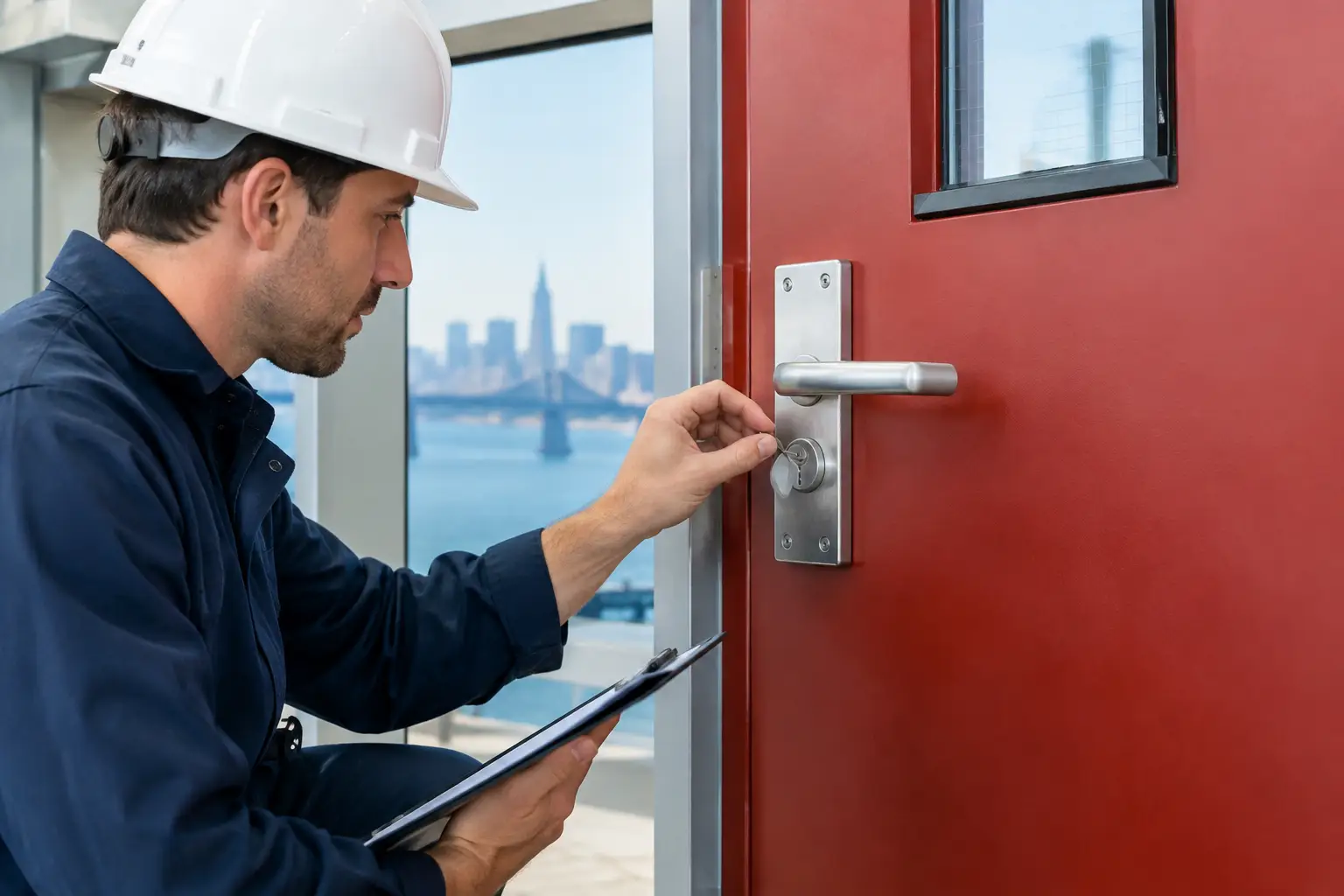
Look for damaged levers, loose trim, missing screws, taped latch bolts, door wedges, altered strikes, and unapproved add-on locks. Check whether the door rubs the frame or floor. A locksmith may be able to correct alignment, replace compatible locking hardware, rekey a mortise cylinder, repair panic hardware, or restore reliable latching without replacing the entire door.
However, some conditions require a fire-door specialist, qualified door technician, contractor, or direction from the local authority having jurisdiction. A damaged label, warped door, compromised frame, excessive gaps, failed glazing, or questions about a rated assembly should not be treated as a routine lock repair.
When to call a professional
Call for service promptly when an exit door will not latch, the hardware is damaged after a break-in, a tenant has added a lock to a fire door, or an access-control system has been changed. Do not leave the door secured with a chain, hasp, temporary padlock, or improvised deadbolt while waiting for a repair. Those temporary fixes can create a worse emergency.
For Bay Area property owners, a licensed, bonded, and insured locksmith can inspect the lock and operating hardware, identify obvious egress and latching problems, and recommend compatible repair options. YES Locksmith can assist with commercial lock repair, rekeying, hardware replacement, and urgent on-site service when a door is not securing or operating correctly. For questions involving the fire rating or code interpretation, the right next step may also include the fire-door manufacturer, a qualified inspector, or the local fire authority.
A fire door should never force you to choose between security and safe escape. If the hardware is questionable, keep the opening in its intended operating condition and get qualified help before the next emergency tests it for you.