
A mailbox key that suddenly will not turn can leave more than letters sitting behind a locked door. Bills, checks, identification documents, and private deliveries may be inaccessible or exposed. Mailbox lock replacement restores secure access quickly when a key is lost, a lock is damaged, or you have moved into a property with an unknown key history.
For homeowners, tenants, landlords, and property managers in San Francisco, Daly City, and nearby Bay Area communities, the right next step depends on the type of mailbox and who owns it. A qualified locksmith can assess the hardware on-site, remove the failed lock with minimal damage, and install a properly fitted replacement when the mailbox is privately owned.
When Mailbox Lock Replacement Is the Right Move
Most mailbox locks are small cam locks. They are simple pieces of hardware, but they are exposed to weather, frequent use, forced entry attempts, and decades of wear. Once the internal pins, keyway, cam, or mounting nut fails, forcing the key can make a manageable problem worse.
Replacement is often the better option when the lock is seized, the key broke inside, the lock spins without opening the door, or there are visible signs of prying or tampering. It is also a smart security decision after a tenant moves out, a mailbox key goes missing, or you purchase a home and do not know who may still have a copy.
Watch for these signs that the lock should be inspected:
- The key must be jiggled, pulled, or turned with excessive force.
- The mailbox door opens even though the lock appears engaged.
- The key enters but will not rotate, or the cylinder rotates freely without releasing the latch.
- The lock or door shows rust, bent metal, drill marks, or pry damage.
A sticky lock does not always require replacement. In some cases, debris in the keyway, a bent key, or a misaligned mailbox door can be corrected. But if the lock is unreliable, replacement is usually more cost-effective than waiting until you are locked out of your own mail.
First, Identify Who Owns the Mailbox
This is the detail that prevents wasted time and unnecessary damage. Not every mailbox can be serviced by a private locksmith.
A mailbox installed at a single-family home, a private business, a privately managed apartment building, or a cluster mailbox owned by a property association may be eligible for locksmith service. The owner or authorized manager can generally approve repair or replacement of the lock, provided the new hardware fits the mailbox correctly.
USPS-owned mailboxes and many community mailbox units are different. The Postal Service controls the locks on those units. If the mailbox is marked as USPS property, serves as a postal cluster box, or is part of a postal-managed installation, contact the local post office for instructions. A locksmith should not bypass or replace a lock that is under USPS control.
If you rent, contact your landlord or property manager before scheduling work unless your lease clearly makes the mailbox your responsibility. Property managers should keep a clear record of mailbox numbers, keys issued, and lock changes. That simple practice helps prevent disputes when residents move in or out.
What a Professional Locksmith Does Differently
Mailbox hardware is compact, often thin-gauge metal, and easy to damage with the wrong tools. Drilling a lock without knowing the mailbox construction can damage the door, bend the latch area, or leave the replacement lock unable to secure properly.
A professional locksmith starts by verifying authorization and examining the mailbox style, door condition, lock diameter, cam length, and latch direction. These details matter. A replacement that looks similar but uses the wrong cam can leave the door loose, prevent it from closing, or make it possible to pull open without a key.
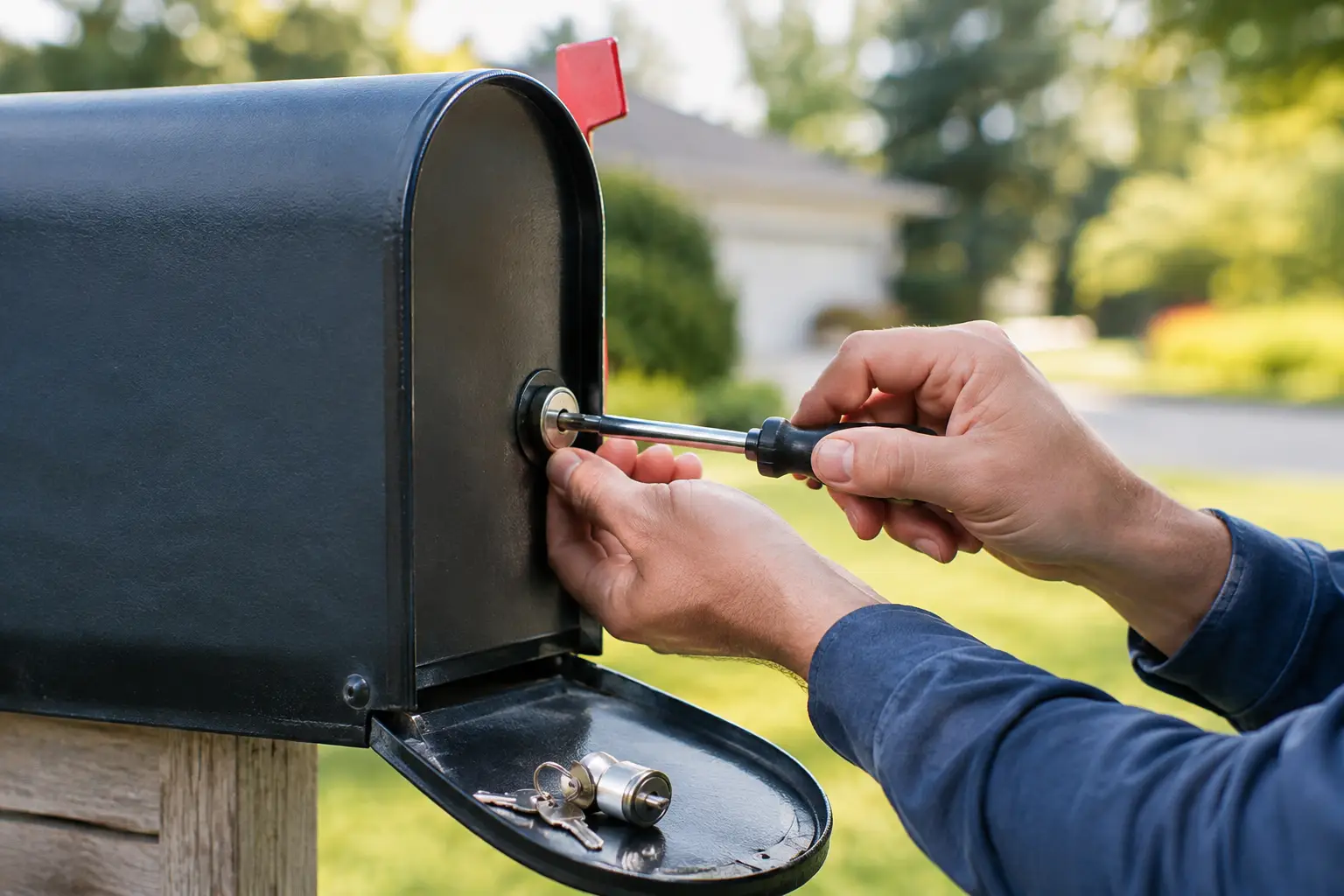
When the lock must be removed, the goal is controlled access with as little disruption as possible. After removal, the technician installs a compatible lock, tests the key repeatedly, checks door alignment, and confirms that the latch fully engages. If the mailbox itself is bent, rusted through, or damaged from a break-in, the honest answer may be mailbox repair or replacement rather than simply fitting a new cylinder.
YES Locksmith provides mobile service for private mailbox lock issues throughout the local Bay Area service region. An experienced technician comes to the property with the tools and common lock hardware needed to address the problem on-site, without asking you to remove the mailbox or take apart the door yourself.
Choosing the Right Replacement Lock
The least expensive lock is not always the right choice. For a basic residential mailbox in good condition, a standard replacement cam lock may be enough. For a rental property or business mailbox, you may want a more durable lock and a key control plan that limits who receives copies.
Fit is the first priority. Mailbox locks vary by cylinder length, mounting hole size, cam shape, cam offset, and rotation direction. A lock can be high quality and still fail if it is not matched to the door and latch mechanism.
Keying is the next consideration. Some owners prefer the new mailbox lock to use its own key so access stays separate from house keys. Others want convenience and ask whether the mailbox can be keyed alike with another private lock. That depends on the lock type and the existing key system. A locksmith can explain what is practical without compromising the security of the rest of the property.
For multi-unit buildings, avoid handing out untracked duplicate keys. Use a documented key issue process, recover keys at move-out, and replace or rekey locks when access cannot be accounted for. The cost of a lock change is small compared with the risk of mail theft, identity fraud, or a tenant complaint that could have been avoided.
What to Do If You Are Locked Out of Your Mailbox
Do not pry the door open with a screwdriver, drill the lock, or use a random replacement part from a hardware store before confirming the mailbox ownership and lock specifications. Those shortcuts often turn a lock service call into a mailbox repair bill.
Instead, gather the information that helps resolve the issue quickly: your address, mailbox number if applicable, a photo of the mailbox and lock, whether you still have a key, and proof that you own or manage the property. If mail has been stolen or you see signs of tampering, document the condition before anything is changed. Report suspected mail theft to the appropriate authorities and notify the Postal Service when postal mail is involved.
If the lock is simply difficult to turn, stop applying force. A key that snaps inside the cylinder may require extraction before the lock can be evaluated. Keeping the damaged key and any spare keys can also help a locksmith identify the correct keyway or determine whether a duplicate is possible.
How to Keep the New Lock Working
A new mailbox lock needs very little maintenance, but small habits extend its life. Keep water and dirt out of the keyway, avoid hanging heavy keychains from the key while turning it, and do not use a bent or worn key. If the door begins rubbing or requires pressure to close, correct the alignment early rather than forcing the lock to compensate.
For coastal and fog-prone Bay Area properties, corrosion deserves extra attention. Rust around the door, hinge, or latch can make a good lock feel defective. Periodic inspection helps you catch deterioration before the mailbox stops closing securely.
When your mail is protected, you should not have to wonder who has a key or whether the door will open tomorrow. Get the mailbox checked as soon as the lock becomes unreliable, and handle ownership questions first. That approach keeps the repair legal, protects the mailbox from avoidable damage, and gets your secure access back where it belongs.