
A door lock can fail at the worst possible time: after a lost key, during a tenant turnover, or when a key suddenly stops turning in the cylinder. Knowing how to replace door lock hardware can help you make a smart decision quickly, but the job needs to be done carefully. A lock that is installed incorrectly may leave your door hard to secure, hard to open, or vulnerable to forced entry.
For many standard residential doors, replacing a deadbolt or keyed knob is manageable with basic tools. But the right approach depends on the lock type, the condition of the door, and whether the problem is truly the lock. If there has been a break-in, attempted forced entry, a damaged frame, or a commercial access concern, professional service is usually the safer choice.
Know Whether You Need Replacement or Re-Keying
Before buying new hardware, confirm that replacement is actually necessary. A lock does not always need to come off the door just because you want new keys. Re-keying changes the internal pins so old keys no longer work while keeping the existing lock body in place. It can be a practical option after moving into a home, losing a key, or changing employee access when the lock is in good condition.
Replacement makes more sense when the lock is worn, damaged, corroded, sticking repeatedly, or no longer provides the level of security you need. It is also the better option when you want to change from a basic keyed knob to a deadbolt, upgrade to keyless entry, or match new door hardware.
If a key is difficult to turn, do not assume the cylinder is the problem. A sagging door, misaligned strike plate, swollen wood, or bent latch can create the same symptom. Replacing the lock without fixing alignment may leave you with the exact same issue.
Choose a Lock That Fits Your Door
The fastest way to turn a simple lock change into a frustrating repair is to buy hardware that does not fit. Measure first, then choose the lock.
Most residential deadbolts and knobs are designed for common door preparations, but dimensions vary. Check the door thickness, which is often 1-3/8 or 1-3/4 inches. Measure the backset as well – the distance from the edge of the door to the center of the bore hole. Standard backsets are commonly 2-3/8 or 2-3/4 inches.
Also look at the bore hole and the edge hole where the latch or bolt passes through. A replacement lock should match these openings unless you are prepared to drill, fill, or modify the door. On an exterior door, avoid making unnecessary alterations that could weaken the door or spoil its appearance.
For front and side entry doors, a deadbolt is generally the primary security lock. A keyed entry knob or lever can provide everyday convenience, but it should not be the only protection on an exterior door. Consider a grade-rated deadbolt from a reputable manufacturer, especially for a property with frequent tenant changes or a visible street-facing entry.
Smart locks can be useful for homeowners, rental property managers, and small businesses, but they have trade-offs. They require proper installation, a reliable power source, and a plan for backup access. A smart lock that is poorly fitted to the door or installed over a misaligned deadbolt will not perform reliably just because it has an app.
Tools to Gather Before Replacing a Door Lock
For a standard deadbolt or knob replacement, you will usually need a Phillips screwdriver and the new lock set. A tape measure, pencil, and small level can help if you are changing the strike plate or checking alignment.
Do not start by removing everything from the door. First, test the new hardware against your measurements and read the manufacturer instructions. Lock sets vary, particularly electronic locks and commercial-grade hardware. Keeping the door open while you work is essential. You do not want to test a new lock for the first time with the door closed and no working key on hand.
How to Replace Door Lock Hardware Step by Step
Remove the old interior trim
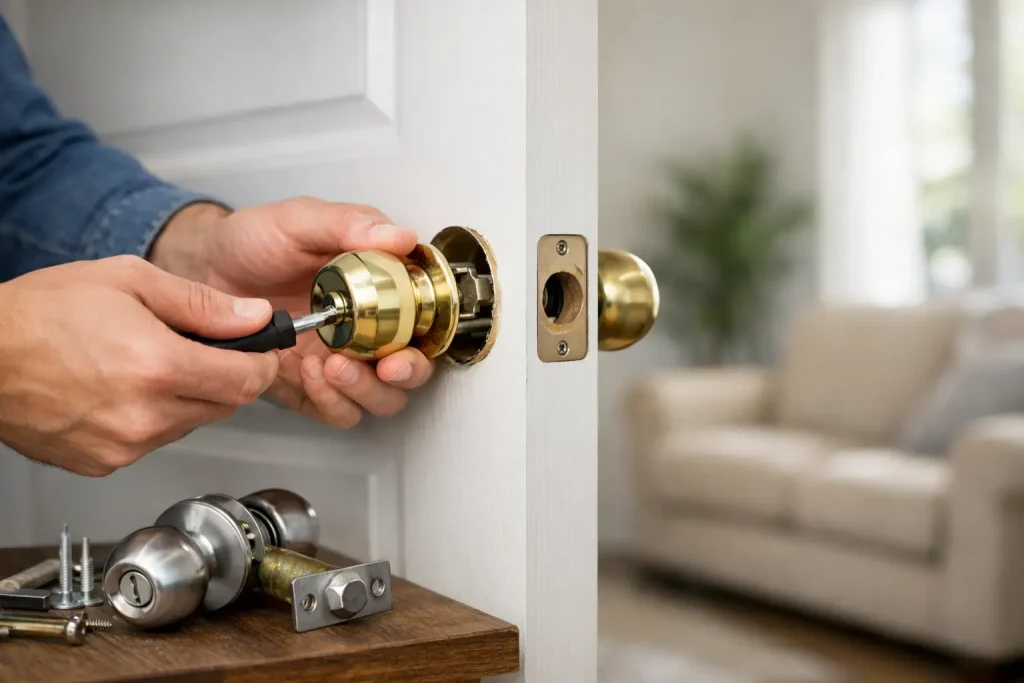
Start on the inside of the door. For a deadbolt, locate the two mounting screws on the interior thumb-turn plate and remove them. Hold the exterior keyed side with one hand as you remove the last screw so it does not fall and scratch the door.
For a keyed knob or lever, the screws may be visible on the inside rose plate or hidden beneath a decorative cover. If the cover is concealed, gently release it according to the hardware design instead of prying aggressively. Forcing trim can damage the finish or split painted wood around the lock.
Remove the latch or deadbolt assembly
With the inside and outside sections removed, open the door and take out the screws on the door edge. Slide the latch or deadbolt out of the edge bore. Then remove the strike plate from the frame if your new lock includes a replacement plate.
Pay attention to the bolt direction as you remove it. On a deadbolt, the beveled side or marked orientation must face the correct way for the bolt to operate properly. A reversed latch may prevent the door from closing or cause the lock to bind.
Install the new latch or bolt
Set the new latch or bolt into the edge of the door, making sure the backset is adjusted correctly if the hardware has an adjustable option. Secure it with the supplied screws, but do not overtighten them. Screws driven too hard can strip wood or pull the latch out of alignment.
Next, place the exterior lock body through the door. Make sure the tailpiece or spindle passes through the latch correctly. Install the interior portion, align the mounting holes, and tighten the screws evenly. The lock should sit flat against the door without being cranked down so tightly that the mechanism binds.
Replace and test the strike plate
Install the new strike plate on the door frame if it matches the existing screw holes and opening. The bolt should enter the opening smoothly when the door is closed. If it hits the edge of the strike plate, do not force it by turning the key harder. Check whether the door is sagging or whether the strike needs minor adjustment.
Test the lock several times with the door open. Turn the key from outside and operate the thumb turn or lever from inside. Then close the door and test it again. The bolt should extend fully without lifting, pulling, or pushing the door.
Common Mistakes That Can Compromise Security
A lock that turns is not automatically a lock that protects the door. One of the most common mistakes is leaving a weak or loose strike plate in place. The strike plate and its screws are critical because they help transfer force into the door frame during an attempted kick-in.
For an exterior deadbolt, use longer screws that reach the framing behind the jamb when the door and frame construction allow it. Short screws that only grip decorative trim or thin jamb material offer far less resistance. If the frame is cracked, soft, or visibly damaged, new screws alone will not solve the security issue.
Another common problem is ignoring door alignment. If you have to shoulder the door, lift the handle, or pull the door tightly to lock it, the issue may be hinges, weather changes, or frame movement. Forcing a deadbolt into a misaligned strike can wear out the new hardware quickly.
Avoid installing a lock that leaves exposed gaps, loose trim, or an exterior cylinder that can be pulled or twisted easily. On commercial doors, storefront doors, metal doors, panic hardware, and high-security systems, installation errors can affect fire safety, code compliance, and daily access. Those jobs should be handled by an experienced locksmith.
When to Call a Locksmith Instead
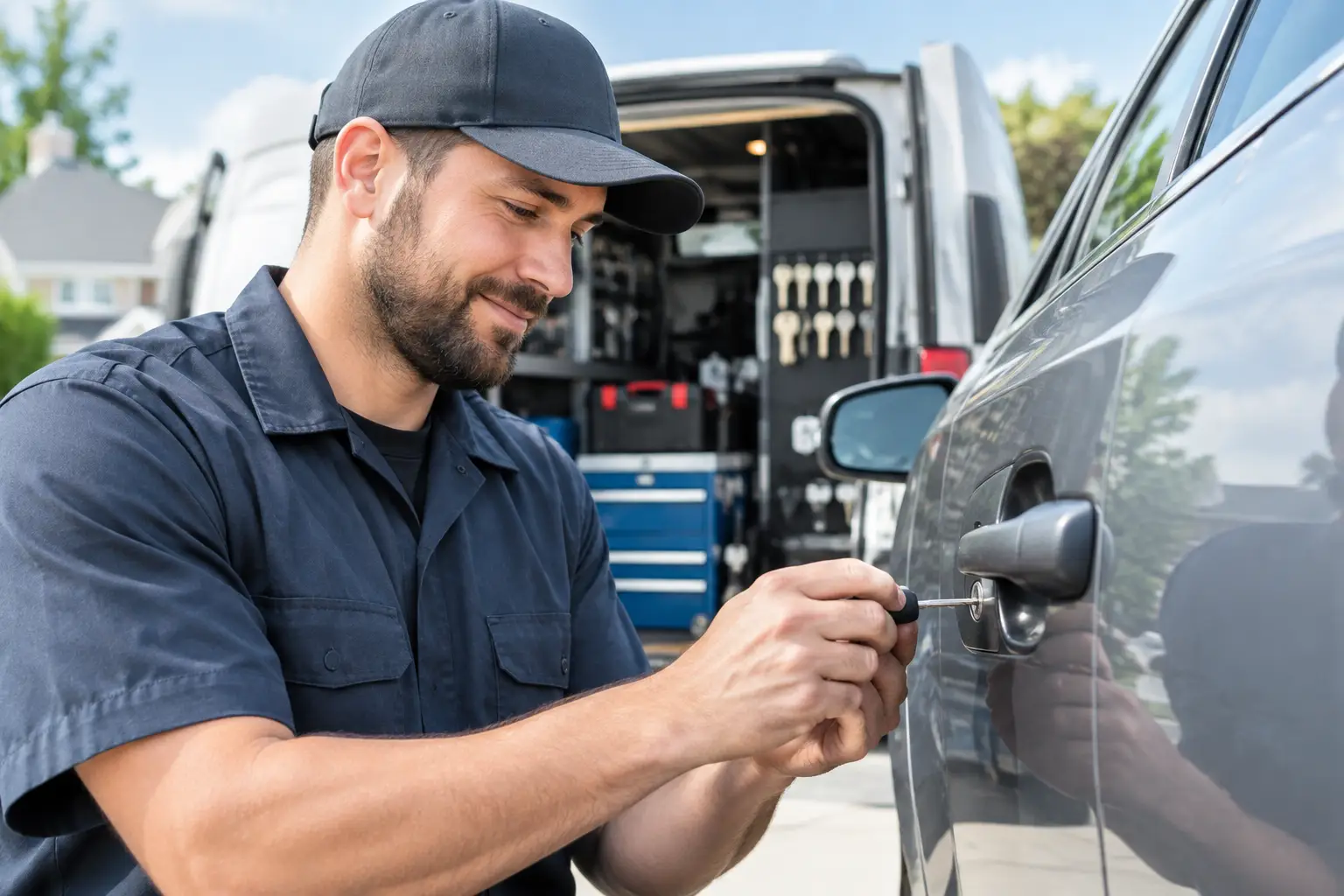
Replacing a standard lock can be straightforward, but some situations call for immediate professional help. Call a locksmith if the lock was damaged during a break-in, the key broke inside the cylinder, the door will not close securely, or you are locked out. The goal is to restore access and security without creating extra damage to the door, frame, or hardware.
Property managers and business owners may also need a broader solution than a single lock replacement. A former employee, lost master key, tenant change, or compromised access point may require re-keying multiple locks, changing access control, or setting up a better key system. Handling only the most visible lock can leave other entry points exposed.
For homeowners and businesses in Daly City, San Francisco, and nearby Bay Area communities, YES Locksmith provides mobile lock replacement, re-keying, repair, and emergency service at your location. A trained technician can identify whether the problem is the lock, the door alignment, or the frame, then complete the repair without unnecessary damage.
A new lock should give you confidence every time you close the door. If the hardware does not operate smoothly, the strike does not align, or the door has been compromised, stop before the problem gets worse and have it checked by a qualified locksmith.